












































































Unforeseen Consequences: The Peril of Regulatory Decisions Without Studies
Explore a historical tale to reveal the importance of forecasting studies before making regulatory decisions. This article explains the difference between primary and secondary consequences and why unbiased research is vital to avoid environmental and economic catastrophes.
A story occasionally emerges that captures, in a single moment, the cost of decisions made without understanding their full impact. A once-vibrant street loses its life after a new parking regulation. A flourishing natural environment collapses after a development project begins. These are not isolated incidents. They are patterns. And at the center of this pattern lies a missing element: structured foresight.


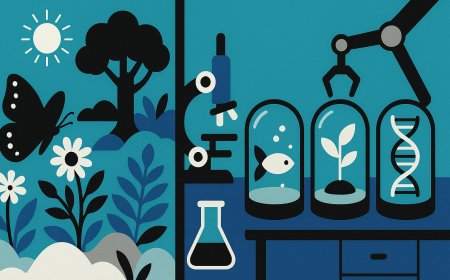
Consider the account of a coastal forest once described as “Eden’s Garden.” It was not merely a landscape, but a living system—dense trees, rare fruits, freshwater springs emerging from the shoreline, and a local economy built around farming, craftsmanship, and tourism. The environment was not only beautiful, but balanced. It sustained itself through a hidden structure that had existed for centuries.
Then came a decision.
Authorities sought to elevate the area into a major tourist destination. The vision was clear: reclaim part of the shoreline, construct large resorts, and attract higher volumes of visitors. From a surface-level perspective, the logic was sound. Tourism would increase. Revenue would grow. The area would modernize.
Construction began.
Midway through the project, the system collapsed.
The forest withered without warning. The freshwater springs disappeared. The land transformed from a thriving ecosystem into a barren space. The project stopped, but not by choice. It stopped because the foundation that made the place valuable had been destroyed. Farms were abandoned. Tourism vanished. What was intended as development became irreversible loss.
When researchers later investigated the cause, they uncovered a reality that had not been considered in the decision-making process. Beneath the visible landscape existed a delicate network of underground freshwater channels. These channels fed the ecosystem, sustained the vegetation, and maintained the balance between land and water. The land reclamation and the weight of the new structures disrupted this system. The channels were sealed, diverted, and permanently altered.
The decision did not fail because the intention was wrong.
It failed because the system was not understood.
This is where the concept of impact studies becomes critical. Every decision produces outcomes, but not all outcomes are visible at the moment of decision. To understand this, it is useful to distinguish between two types of consequences.
Primary consequences are those that decision-makers expect. They are the intended results—the economic growth, the increased activity, the improved infrastructure. These outcomes are often based on projections, models, and assumptions. They represent the objective of the decision.
Secondary consequences are different. They are not planned. They emerge as reactions within the system affected by the decision. They can be positive or negative, but they are often more powerful than primary outcomes because they interact with complex structures that are not immediately visible. These include environmental shifts, behavioral changes, market distortions, or unintended social effects.
In many cases, it is the secondary consequences that define the real outcome.
The challenge is that without systematic study, these consequences remain hidden until they materialize. By that point, the cost of correction is high, and in some cases, irreversible. This is why impact assessment must be integrated into the decision-making process, not treated as an optional step.
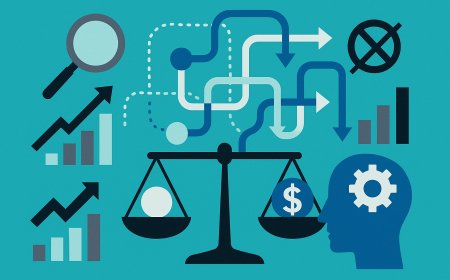
Effective impact studies do not focus on a single dimension. They evaluate decisions across multiple layers—economic, social, environmental, and behavioral. They examine how a change in one variable affects others, how systems interact, and how unintended effects may emerge over time. Most importantly, they compare the proposed scenario with the current state, not assuming that change is inherently beneficial.
One of the most overlooked outcomes of such studies is the possibility that no action may be the better decision. In some cases, maintaining the current system produces fewer risks than introducing a new regulation. In others, alternative approaches may achieve the same objective with lower unintended consequences. Without structured analysis, these options remain invisible.
However, conducting these studies introduces its own challenge.
Bias.
When the same entity responsible for proposing a decision is also responsible for evaluating its impact, objectivity becomes compromised. This is not necessarily due to intentional distortion, but to human nature. Individuals and institutions tend to favor information that supports their intended direction. Risks may be underestimated. Benefits may be overstated. Critical variables may be ignored.
For this reason, impact studies must be conducted by independent entities. Neutrality is not a preference; it is a requirement. Researchers must have the ability to question assumptions, challenge objectives, and present findings without pressure to align with a predetermined outcome.
Equally important is the profile of the researchers themselves. Academic knowledge alone is not sufficient. Impact assessment requires applied experience, the ability to understand real-world systems, and the capacity to interpret interactions across domains. It is not purely a technical exercise. It is an analytical process that combines data, context, and judgment.
There is also a misconception that such studies fall under traditional market research. They do not. Market research focuses on preferences, behavior, and trends. Impact studies focus on systems, interactions, and consequences. The skill set required is different, and the number of individuals capable of performing this work at a high level is limited.
This limitation makes the selection process critical.
Decision-makers must not rely solely on reputation, brand names, or institutional labels. They must evaluate the methodology, the depth of analysis, and the independence of the work. Without this scrutiny, the study itself may become another layer of illusion, reinforcing decisions rather than informing them.
In the end, the lesson is clear.
Every system is more complex than it appears.
Every decision enters that system whether it is understood or not.
And the cost of not understanding it is rarely immediate, but often permanent.
The role of impact studies is not to prevent decisions.
It is to make them real.
To reveal not only what we hope will happen—
but what will happen anyway.
What's Your Reaction?