























































































Bioinformatics and the Quest for Validity: Navigating Methodological Challenges
The intricate methodologies in bioinformatics present unique challenges to ensuring validity. From data preprocessing to algorithm selection, each step impacts the reliability of biological insights. This article examines these layers of methodological scrutiny, offering a comprehensive understanding of how bioinformatics intersects with scientific validity. Through detailed exploration of case studies, computational strategies, and algorithmic innovations, the discussion illuminates the nuanced complexities inherent in bioinformatics research.

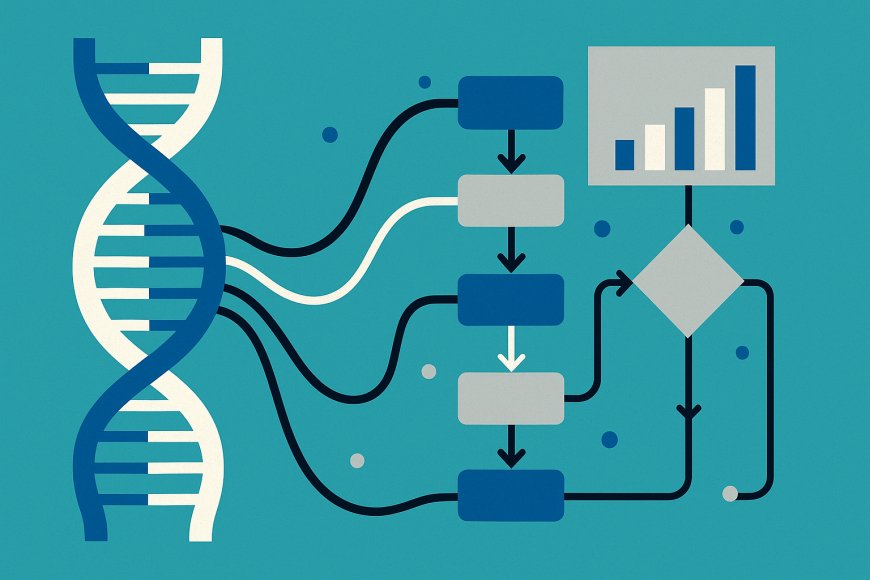
In bioinformatics, the pursuit of validity is both a challenge and necessity. Consider the astounding fact: a single human genome amounts to approximately 3 billion base pairs. This immense data volume demands rigorous methodological frameworks to ensure that any derived insights are valid and reliable. Bioinformatics, with its computational backbone, must navigate this landscape with precision, balancing between algorithmic sophistication and biological relevance.


In a typical study focusing on genetic markers for disease susceptibility, researchers often commence with sequencing data derived from diverse populations. The raw sequences, however, are riddled with noise and artifacts, necessitating preprocessing steps such as quality filtering and trimming. These steps are foundational yet fraught with potential biases. The choice of algorithms for alignment and variant calling further complicates the scenario. Each algorithm possesses unique strengths and weaknesses, and inappropriate selection can skew results, leading to erroneous biological interpretations.
Algorithmic Choices and Their Impact
The heart of bioinformatics lies in its algorithms. For instance, consider a computational pipeline employed for the analysis of RNA-Seq data. Such a pipeline typically includes steps from alignment with tools like HISAT2 or STAR, to expression quantification using HTSeq or Cufflinks. The choice between these tools can dramatically affect gene expression profiles. HISAT2, known for its speed and accuracy, might not capture subtle expression nuances as effectively as STAR under certain conditions. This variability mandates a careful examination of algorithmic validity in context-specific scenarios.
Further complexity arises when integrating multi-omics data. Imagine a case where researchers aim to correlate proteomic and genomic data to unveil cancer biomarkers. The integration process, often facilitated by machine learning models, must contend with dimensionality reduction techniques. Principal Component Analysis (PCA) or t-Distributed Stochastic Neighbor Embedding (t-SNE) each offer pathways to manage data complexity, yet they inadvertently introduce interpretation biases depending on parameter settings.
To address these challenges, bioinformatics as a field has seen a trend towards developing ensemble approaches—combining multiple algorithms to bolster analytical robustness. In one landmark study, an ensemble of variant callers such as GATK, FreeBayes, and VarScan was used to identify rare genetic mutations. The ensemble approach, by leveraging diverse algorithmic perspectives, enhances the validity of mutation detection, underscoring the importance of methodological pluralism in bioinformatics.
Data Interpretation and Validity
Even when methodological rigor is meticulously upheld, the interpretation of vast bioinformatics data presents its own set of challenges. Consider an epidemiological study employing bioinformatics to track pathogen evolution. Here, phylogenetic reconstruction is a critical step, relying on models of sequence evolution. The choice of model—whether a simple Jukes-Cantor model or a complex GTR model—affects the resultant phylogenetic trees, and thus, the interpretation of evolutionary trajectories.
Moreover, bioinformatics applications in metagenomics, where microbial community composition is inferred from environmental samples, face validity issues related to taxonomic classification. Methods such as QIIME and Kraken offer distinct approaches to classification. However, they often disagree on species-level assignments due to differences in reference database comprehensiveness and algorithmic assumptions. This discrepancy raises the question of how validity can be assessed and ensured in the interpretation of metagenomic data.
To mitigate interpretation challenges, bioinformaticians increasingly employ cross-validation techniques, ensuring that findings are consistent across independent datasets. An example involves the validation of predicted drug-target interactions by cross-referencing with publicly available pharmacogenomic datasets, strengthening the reliability of computational predictions.
The Role of Statistical Models
Statistical modeling is indispensable in bioinformatics. In the analysis of gene expression data, for example, linear models such as DESeq2 or edgeR are commonly used to identify differentially expressed genes. The assumptions underlying these models—such as the distribution of count data—are critical for statistical validity. Inappropriate model assumptions can result in false discoveries, thereby compromising the integrity of biological conclusions.
Bayesian methods are increasingly adopted to incorporate prior biological knowledge into statistical analyses, enhancing the interpretability and validity of results. In a study on microbial resistance profiles, Bayesian networks were employed to integrate prior information about antibiotic resistance mechanisms, offering a more comprehensive understanding of resistance patterns.
Despite the sophistication of statistical approaches, challenges remain in accurately modeling the complexity of biological systems. This necessitates ongoing innovation and diligence in the development of statistical methodologies capable of capturing the intricacies of biological data.
The future of bioinformatics hinges on its ability to adapt and refine its methodological arsenal in pursuit of greater validity. As computational power increases and datasets expand, the responsibility to maintain rigorous scientific standards becomes ever more pressing. The journey towards methodological excellence in bioinformatics is one marked by continuous evolution, promising profound scientific advancements and deeper biological insights.
What's Your Reaction?