





















































































The Evolutionary Roots of Scientific Curiosity: A Cognitive Analysis
Scientific curiosity, an inherent human trait, is deeply rooted in evolutionary psychology. This exploration delves into how natural selection has shaped our cognitive architecture to favor inquisitive behaviors, ultimately enhancing problem-solving and adaptive capabilities. By examining the evolutionary pathways that led to the development of curiosity, the article explores its impact on learning, innovation, and scientific inquiry. Through illustrative experiments, the text offers insights into the cognitive processes underpinning curiosity and how these mechanisms have been integral to human survival and cultural advancement.


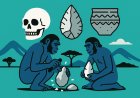
Imagine a world devoid of curiosity, where questions remain unasked, and the unknown is left unexplored. Such a scenario, though seemingly fictional, underscores the evolutionary significance of curiosity as a driving force in human advancement. This intrinsic human trait, often seen as a fundamental aspect of our cognitive architecture, has been shaped by evolutionary pressures that favored inquisitive behaviors, ultimately enhancing our problem-solving and adaptive capabilities. The evolutionary roots of scientific curiosity can be traced back to early hominins who survived and thrived by exploring and understanding their environment.


In this context, curiosity is not merely an abstract concept but a tangible force that has shaped human history and development. It prompts individuals to seek novel information and experiences, fostering a deeper understanding of the world. From an evolutionary perspective, curiosity is a mechanism that promotes learning and adaptation, allowing humans to navigate complex and changing environments effectively. This evolutionary lens provides a framework for understanding how curiosity has become ingrained in the human psyche and how it continues to drive scientific inquiry and discovery.
The Cognitive Mechanisms Underpinning Curiosity
In a typical observational study, participants are presented with a series of puzzles designed to assess their curiosity levels. The findings often reveal a correlation between high levels of curiosity and enhanced problem-solving skills. This relationship is not coincidental; curiosity activates neural pathways associated with reward and motivation, prompting individuals to engage with challenging tasks and seek solutions persistently. The activation of these neural circuits underscores the cognitive benefits of curiosity and its role in fostering intellectual growth.
Furthermore, curiosity-driven exploration is supported by distinct patterns of brain activity, particularly in regions associated with information processing and memory. During a behavioral experiment at a cognitive science institute, rats were placed in a maze with varying levels of complexity. Those exhibiting higher curiosity levels performed better, demonstrating enhanced spatial memory and learning capabilities. This experiment illustrates the profound impact of curiosity on cognitive functions, highlighting its evolutionary significance as a tool for survival and adaptation.
These cognitive mechanisms extend beyond individual problem-solving to influence collective learning and cultural transmission. In human societies, curiosity-driven behaviors facilitate the sharing of knowledge and skills, enhancing group cohesion and cultural evolution. By fostering a culture of inquiry and innovation, curiosity has played a pivotal role in the advancement of science and technology, allowing humans to transcend the limitations of their immediate environment and explore the vast expanse of the unknown.
The Role of Curiosity in Scientific Inquiry
Consider a behavioral experiment where scientists measure the impact of curiosity on learning outcomes in controlled environments. Participants are exposed to new information in the presence of stimuli designed to evoke curiosity. Results consistently indicate that heightened curiosity leads to improved retention and comprehension, demonstrating its critical role in educational settings and scientific inquiry. By fostering an environment that encourages curiosity, educators and researchers can enhance learning outcomes and stimulate intellectual engagement.
Curiosity also drives innovation by encouraging individuals to challenge existing paradigms and explore alternative possibilities. In scientific research, curiosity serves as the catalyst for hypothesis generation and experimental design, prompting researchers to venture beyond conventional boundaries and seek novel solutions. The iterative process of questioning, experimentation, and discovery is underpinned by a relentless curiosity, without which scientific progress would stagnate.
Moreover, curiosity fosters resilience in the face of uncertainty and failure, enabling scientists to persevere in the pursuit of knowledge. By embracing the unknown and viewing failure as an opportunity for growth, scientists embody the essence of curiosity-driven exploration. This resilience is essential for navigating the complexities of scientific inquiry and advancing our understanding of the natural world.
Evolutionary Perspectives on Curiosity and Adaptation
In evolutionary terms, curiosity can be viewed as an adaptive trait that enhances survival by promoting exploratory behaviors. In a typical ecological experiment, primates exposed to novel environments exhibit behaviors indicative of curiosity, such as increased exploration and interaction with unfamiliar objects. These behaviors facilitate the acquisition of new knowledge and skills, enhancing their ability to adapt to changing conditions and increasing their chances of survival.
The evolutionary trajectory of curiosity underscores its role in driving human cultural and technological evolution. By fostering a continuous quest for knowledge, curiosity has enabled humans to develop complex societies, advance technological innovations, and expand their cognitive horizons. This relentless pursuit of the unknown has been instrumental in shaping the course of human history, from the development of early tools to the advent of modern scientific endeavors.
Understanding the evolutionary roots of curiosity provides valuable insights into its enduring relevance in contemporary society. As we confront unprecedented challenges and navigate complex global issues, fostering curiosity-driven exploration and innovation is crucial for addressing these challenges and advancing our collective knowledge. By embracing curiosity as a fundamental aspect of our cognitive and cultural heritage, we can continue to push the boundaries of human potential and explore the infinite possibilities that lie ahead.
The evolutionary roots of scientific curiosity have forged a path of exploration and discovery, defining the course of human history and shaping our cognitive architecture. As we look to the future, nurturing curiosity will be vital in addressing the challenges of an ever-changing world. Through curiosity-driven exploration, we can continue to expand the frontiers of knowledge, fostering a culture of inquiry and innovation that transcends the limitations of our present understanding. This pursuit of the unknown embodies the essence of the human spirit, a testament to our relentless quest for knowledge and exploration.
What's Your Reaction?