


















































































Navigating the Cognitive Science of Entrepreneurial Decision-Making
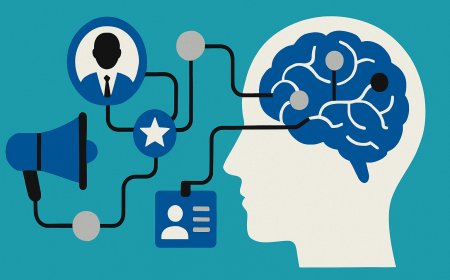
Entrepreneurial decision-making involves complex cognitive processes influenced by heuristics, biases, and risk assessment. This article explores how entrepreneurs use mental models and cognitive mechanisms to navigate uncertainty and make strategic choices.

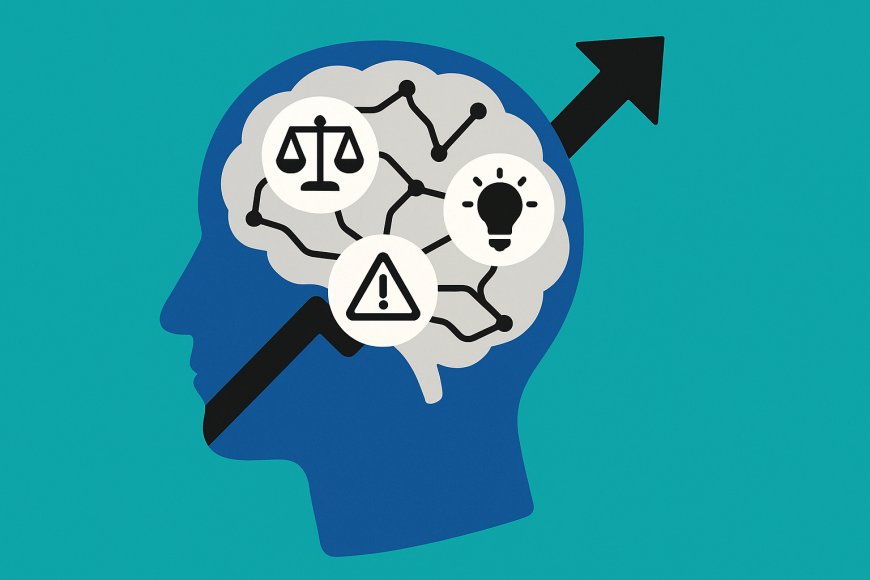
Consider a high-stakes meeting where a tech entrepreneur must decide whether to pivot the company's core technology. The decision involves weighing potential market shifts, the sunk cost of current developments, and the psychological biases of the decision-makers. This scenario illustrates the complexity inherent in entrepreneurial decision-making, a process deeply intertwined with cognitive science.


Entrepreneurs, much like scientists, navigate a sea of uncertainty. They must make decisions based on incomplete information, subjective probabilities, and often, their intuition. Unlike deterministic fields, entrepreneurship demands an understanding of cognitive mechanisms behind decision-making to foster strategic and innovative outcomes. At the heart of this endeavor lies the intricate dance between known cognitive biases and the ability to harness them productively.
Heuristics and Biases in Entrepreneurial Decisions
Heuristics, mental shortcuts used to simplify complex decision-making tasks, play a pivotal role in entrepreneurship. Entrepreneurs often rely on these rules of thumb to make swift decisions amid uncertainty. However, heuristics come with inherent biases. A typical example is the "availability heuristic," where decision-makers judge the likelihood of an event based on how easily instances come to mind. This can lead to overestimating the success of a familiar strategy due to recent high-profile successes in the industry.
In an observational study of startup founders, it was observed that those who frequently encountered failure were more prone to the "sunk cost fallacy." This occurs when individuals continue investing in a venture due to the cumulative prior investment, rather than its future potential. Cognitive biases can thus lead to irrational persistence in unprofitable projects, demonstrating the delicate balance between resilience and rationality in entrepreneurship.
Another key bias is "overconfidence," where entrepreneurs overestimate their knowledge, skills, or control over events. This bias can lead to overly optimistic assessments of venture success. For instance, a behavioral experiment involving simulated business scenarios revealed that entrepreneurs often rated their chances of success significantly higher than objective measures would suggest. While confidence is essential for forging new paths, unchecked, it may lead to overlooking critical risks.
Risk Assessment and Cognitive Mechanisms
Risk assessment is central to entrepreneurial decision-making. It involves quantifying uncertainties and mapping potential outcomes. The cognitive mechanisms of risk perception, such as emotional responses and neural circuitry, play significant roles in this process. Entrepreneurs, through their experiences, develop implicit models for assessing risks, yet their effectiveness hinges on the accuracy of these cognitive maps.
In a controlled study, researchers analyzed the decision-making patterns of entrepreneurs with varied experience levels. Novice entrepreneurs relied more heavily on gut instincts and emotional reactions, whereas seasoned entrepreneurs exhibited a nuanced understanding of risk, often integrating a broader spectrum of information and analytical insights. This highlights the evolution of cognitive strategies with experience.
Neuroscientific research into risk-taking behavior reveals that the brain's prefrontal cortex, the region responsible for complex cognitive behavior and decision-making, is highly active during entrepreneurial decision-making. This suggests that entrepreneurs who excel in risk assessment may possess heightened neural efficiency in processing and interpreting risk-related information.
Mental Models and Strategic Innovation
Mental models are cognitive structures that represent an individual's understanding of the world. Entrepreneurs use these models to simulate different scenarios and predict potential outcomes. The flexibility and adaptability of these mental models can significantly impact an entrepreneur's ability to innovate strategically.
In a case study of a biotechnology startup, the founders developed a mental model that visualized market trends and consumer behavior. By continuously iterating on this model based on real-time data, they successfully pivoted their strategy when initial assumptions proved untenable. This dynamic model exemplifies how adaptive mental frameworks can lead to pivotal shifts in strategic direction.
Entrepreneurs often thrive on identifying and bridging gaps in the market by employing divergent thinking. This ability to produce multiple solutions to a problem is closely tied to the flexibility of their mental models. By challenging existing paradigms and fostering an environment for creative thinking, entrepreneurs can cultivate a climate conducive to groundbreaking innovations.
As the cognitive science of entrepreneurship continues to unfold, it reveals the intricate connections between mental processes and entrepreneurial success. Understanding the cognitive underpinnings of decision-making empowers entrepreneurs to navigate uncertainty more effectively and strategically innovate.
The future of entrepreneurship lies in the synthesis of cognitive insights and practical application. By embracing the complexities of human cognition, entrepreneurs can enhance their decision-making prowess, propelling their ventures toward uncharted territories of innovation and success.
What's Your Reaction?