












































































Making Mental Health a Global Priority: World Mental Health Day 2022
On World Mental Health Day 2022, explore the vision of making mental health and well-being a global priority. This special issue delves into the strategies for promoting mental health and achieving a higher quality of life.
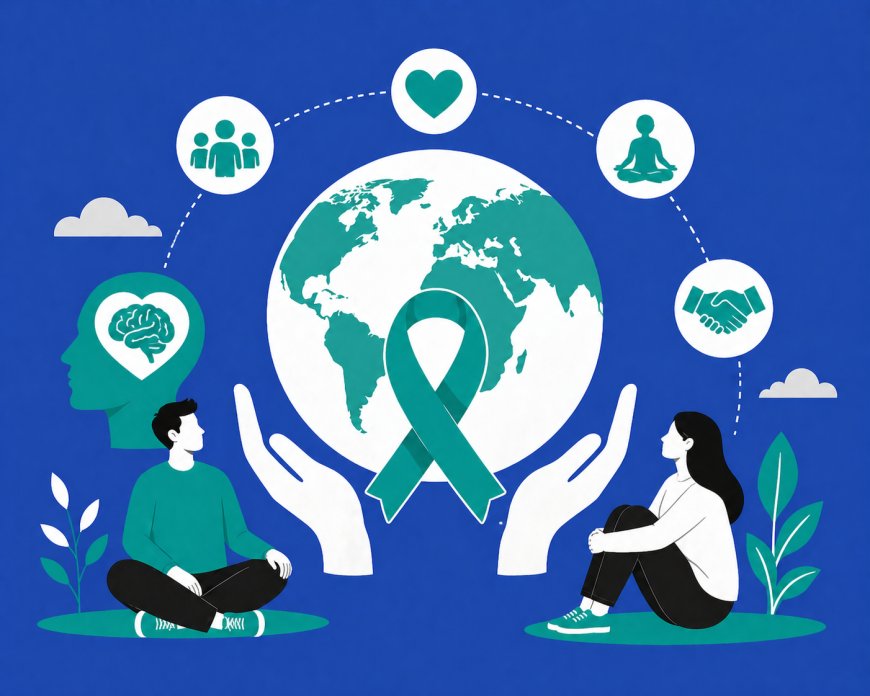
Each year, World Health Organization designates a global theme for World Mental Health Day, not as a symbolic gesture, but as a directional signal. The 2022 theme, “Making Mental Health and Well-being a Global Priority,” marked a shift in emphasis—from awareness to integration, from recognition to implementation. It reflects an evolving understanding that mental health is no longer a specialized concern limited to clinical settings, but a foundational component of how societies function, develop, and sustain themselves.


Traditionally, mental health has been framed within the boundaries of illness—diagnosis, treatment, and recovery from conditions such as depression or anxiety. While this dimension remains essential, it represents only part of the picture. The broader concept introduced alongside it—well-being—extends beyond the absence of illness. It encompasses an individual’s sense of satisfaction with life, their ability to function meaningfully, and their perception of balance between internal states and external demands.
This distinction is not theoretical.
It is operational.
A society that focuses solely on treatment addresses problems after they emerge. A society that integrates well-being into its structure works to prevent those problems from escalating. It creates environments where individuals are supported not only when they struggle, but also when they are building, adapting, and evolving.
In this context, the alignment with national strategy becomes critical. Saudi Arabia’s adoption of “Quality of Life” as a core pillar within Saudi Vision 2030 reflects this broader understanding. Quality of life is not limited to infrastructure, entertainment, or services. It includes psychological stability, social cohesion, and the ability of individuals to live in a state of functional well-being. This integration positions mental health not as a sectoral issue, but as a cross-cutting priority influencing health, education, economy, and community development.
The role of institutions becomes central in translating this vision into practice. Initiatives led by entities such as the National Center for Mental Health Promotion aim to move beyond isolated interventions toward systemic accessibility. The objective is not only to provide services, but to ensure that these services are reachable, acceptable, and effective across all segments of society.
Accessibility, in this sense, is multidimensional.
It includes availability—having sufficient services and tools.
It includes awareness—ensuring individuals recognize when and how to seek support.
It includes cultural alignment—designing interventions that resonate with societal values and norms.
And it includes affordability and simplicity—removing barriers that prevent individuals from engaging with available resources.
A national effort to promote mental health and well-being must therefore operate across these dimensions simultaneously. It must engage specialists, researchers, policymakers, and community organizations. It must draw from scientific evidence while incorporating practical experience. And it must evolve continuously, adapting to emerging challenges and opportunities.
This is where knowledge production plays a defining role.
Inviting contributions from experts and institutions is not merely an academic exercise. It is a mechanism for building a collective understanding of what works, what does not, and what can be improved. Research provides evidence. Experience provides context. Together, they form the basis for strategies that are both effective and applicable.
Equally important is the forward-looking dimension.
Mental health promotion cannot remain reactive. It must anticipate future needs, technological shifts, and societal changes. Strategic thinking in this المجال involves exploring how digital tools, community-based models, and integrated service systems can expand reach and improve outcomes. It involves setting benchmarks not only within the national context, but in comparison with global leaders, with the aim of not only catching up, but contributing new models of practice.
The timeline of such initiatives—structured publication cycles, coordinated awareness efforts, and alignment with global events—serves a purpose beyond organization. It creates momentum. It ensures continuity. It transforms isolated activities into a sustained movement.
In the end, the significance of this direction lies in its scope.
Mental health and well-being are not individual responsibilities alone.
They are collective outcomes.
They reflect how a society designs its systems, allocates its resources, and defines its priorities.
When these elements align, mental health is no longer an issue to be addressed.
It becomes a standard to be maintained.
And when well-being is integrated into that standard, the objective is no longer to move people out of distress—
but to move them toward a life that is stable, meaningful, and fully lived.
What's Your Reaction?