Personal Branding: The Scientific Foundations of Self-Representation
Personal branding transcends superficial self-promotion; it intertwines deeply with cognitive science, social identity, and narrative construction. By exploring how individuals craft personal brands, we uncover intersections of cognitive biases, legitimacy, and perception, revealing insights into self-representation and societal influence. This article delves into experimental studies and theoretical frameworks, illustrating how personal branding affects and is affected by the dynamics of social identity, the perception of authenticity, and the sociocognitive mechanisms underpinning individual narratives. As personal branding evolves, understanding these underlying principles offers opportunities for more authentic and impactful self-representation.

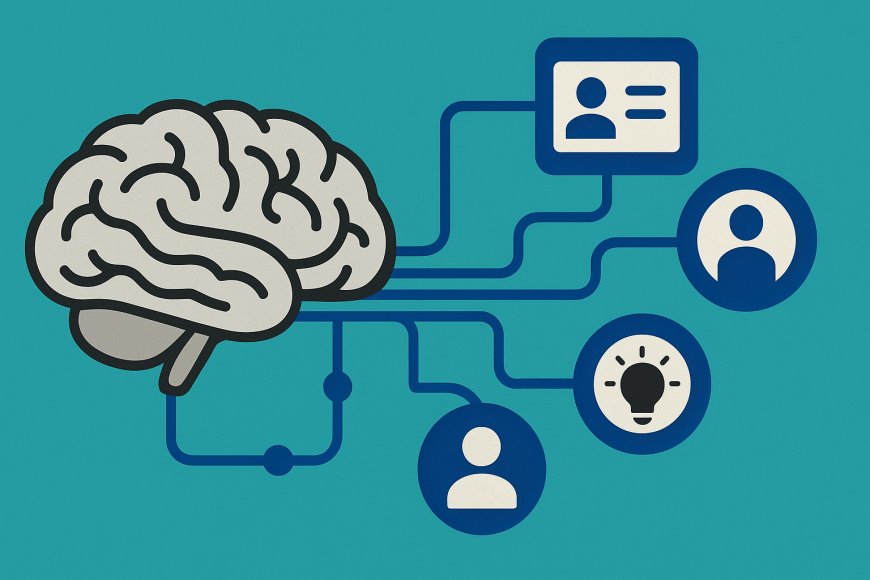
Personal branding often conjures images of strategic self-promotion and calculated image crafting. Yet, at its core, it merges the realms of cognitive science, social identity, and narrative construction. What prompts individuals to shape and project their unique personal brands transcends superficiality, delving into the intricacies of human cognition and social perception.


In a typical scenario, consider a professional navigating the job market. This individual must not only showcase skills and achievements but also construct a coherent narrative that aligns with potential employers' expectations. The narrative must be authentic yet strategically designed to appeal to a targeted audience. This process reveals the cognitive complexity involved in self-representation, where personal identity and brand perception intertwine.
Intersecting Cognitive Bias and Personal Branding
Cognitive biases are unconscious mental shortcuts that influence decision-making and perception. In personal branding, these biases play a pivotal role. For instance, the halo effect, where one positive attribute creates an overall positive impression, can significantly impact how personal brands are perceived. In an experimental setup, participants were asked to evaluate a series of professional profiles. Those with high initial appeal, such as attractive photos or prestigious affiliations, often received more favorable assessments despite similar qualifications to less appealing profiles.
Moreover, confirmation bias, the tendency to favor information that confirms existing beliefs, shapes how individuals interpret personal brands. In a study examining online social platforms, participants engaged more with content that validated their preconceptions about a personal brand, reinforcing their pre-existing views. This highlights the importance of narrative consistency in personal branding, as deviations might trigger cognitive dissonance.
Essentially, personal branding is not merely a reflection of identity; it becomes an intricate dance of perception and persuasion, where cognitive biases serve as the unseen choreographers. Understanding these biases allows individuals to develop more effective strategies for authentic self-representation.
Social Identity and the Authenticity Paradox
Social identity theory posits that individuals derive part of their self-concept from perceived membership in social groups. In personal branding, this theory manifests as individuals craft brands that resonate with group identities they aspire to be part of. Consider a behavioral experiment where participants were tasked with crafting personal narratives to align with different professional communities. The narratives varied significantly depending on the targeted group's perceived values and norms. This reveals how personal branding adapts to social contexts, striving for authenticity while aligning with external expectations.
However, this pursuit of authenticity introduces the paradox of self-presentation. Is the crafted personal brand truly authentic, or merely a facade constructed to gain social acceptance? The tension between self-construction and societal perception is a key challenge in personal branding. In observational studies, professionals who successfully navigate this paradox often blend transparency with strategic self-presentation, maintaining credibility while resonating with broader social identities.
Engaging in personal branding becomes an act of balancing genuine self-expression with the demands of social identity. It requires a nuanced understanding of how authenticity and adaptation coexist within the framework of social expectations.
Narrative Construction and Legitimacy
At the heart of personal branding lies narrative construction, the process through which individuals weave their experiences into compelling stories. The power of a well-constructed narrative lies in its ability to confer legitimacy and influence perceptions. In a controlled experiment, participants who presented their career trajectories as coherent narratives were perceived as more competent and trustworthy than those who listed achievements without context.
Narratives serve as cognitive anchors, helping audiences make sense of an individual’s professional journey. They evoke emotional responses, fostering connections that transcend mere transactional relationships. This narrative construction is not static but evolves as individuals adapt to new experiences and societal changes. The ongoing challenge is maintaining narrative coherence while embracing personal growth and transformation.
The scientific exploration of narrative construction in personal branding underscores its transformative potential. By understanding the mechanisms of narrative influence, individuals can craft brands that resonate deeply, fostering both personal and professional growth.
The science behind personal branding reveals a complex interplay of cognitive biases, social identity, and narrative construction. It extends beyond strategic image crafting, touching upon fundamental aspects of human cognition and societal influence. As personal branding continues to evolve in an interconnected world, the challenge lies in crafting narratives that balance authenticity and adaptation, fostering genuine connections in an increasingly digital society.
Future explorations into the scientific underpinnings of personal branding promise insights into more authentic self-representation, potentially transforming how individuals navigate social and professional landscapes. This evolution may redefine the boundaries between personal identity and public perception, offering profound implications for both personal and societal advancement.
What's Your Reaction?