












































































Bias, Validity, and the AI Learning Paradigm
AI is reshaping learning paradigms through its potential to both replicate and challenge traditional biases, raising questions about validity in data interpretation. The intricacies of bias within AI systems necessitate a refined understanding of how learning models function, evaluate, and adapt. This article delves into the methodological principles governing AI's interaction with bias and validity, offering insights into the potential reconceptualization of learning methodologies. By examining theoretical constructs and real-world applications, it seeks to inspire further inquiry into the relationship between AI, causality, and scientific understanding.

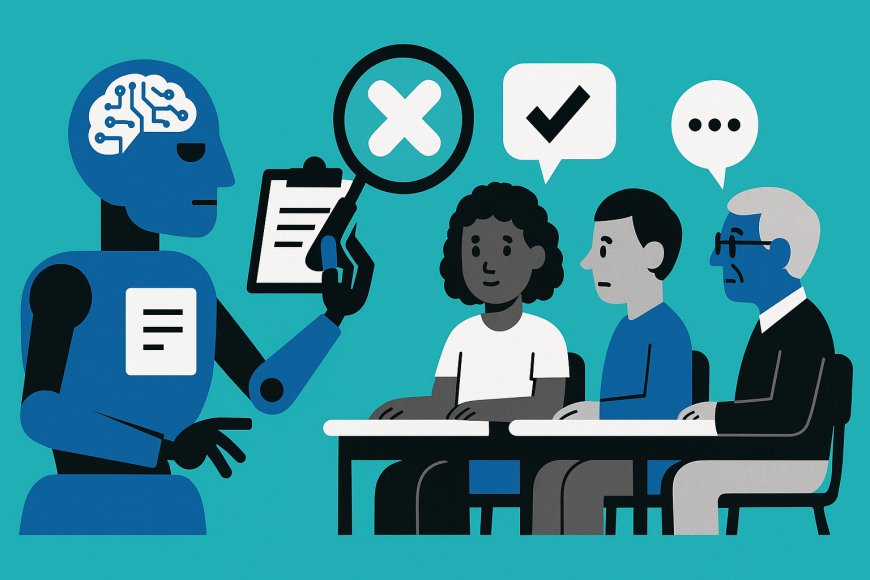
The emergence of artificial intelligence as a transformative force in education offers profound opportunities. AI systems can potentially personalize learning experiences, tailoring content to individual needs. However, this innovation brings into question the reliability and validity of AI-driven educational tools. A notable concern centers on the risk of embedding existing biases into these systems, potentially perpetuating rather than mitigating educational inequality.


In a typical AI-driven classroom scenario, AI algorithms assess student performance using vast datasets. These datasets often contain historical biases, inadvertently integrated into AI predictions and recommendations. As a result, the process may reinforce entrenched stereotypes. For example, consider a system designed to track student progress in mathematics. It might systematically undervalue contributions from underrepresented groups due to biased historical data. The methodological challenge lies in constructing algorithms that recognize and counteract such biases, thereby ensuring equitable educational outcomes.
An exploration into the AI learning paradigm reveals the intricate interplay between data validity and learning accuracy. Validity, in this context, refers to the degree to which AI interpretations and recommendations are grounded in accurate, unbiased data. If an AI system relies on flawed datasets, the validity of its conclusions is inherently compromised. Thus, the scientific community faces a pressing need to develop methodologies that critically assess the datasets feeding AI learning models.
Deconstructing Bias in AI Systems
Bias in AI is not merely a technical issue but a methodological challenge that intertwines with ethical considerations. AI systems learn from data, and if this data reflects societal biases, the AI will inadvertently adopt these biases. In the realm of AI learning, bias can manifest in multiple forms - selection bias, measurement bias, and algorithmic bias, to name a few.
Selection bias occurs when the data used for training is not representative of the broader population. Consider an AI model designed to predict college admission success. If the training data largely consists of applicants from affluent backgrounds, the model may fail to accurately predict outcomes for students from less privileged communities. This underscores the importance of carefully curating training datasets to mitigate selection bias.
Measurement bias, another critical factor, arises when the data collection process itself introduces errors or inconsistencies. For instance, if an AI system is trained on test scores from different educational systems without standardizing the scoring criteria, the resulting predictions will be skewed. AI researchers must implement rigorous testing protocols to identify and correct such biases before deploying these systems in educational settings.
Algorithmic bias, often a byproduct of the programming and training processes, highlights the need for transparency in AI system design. In a hypothetical scenario where an AI-driven learning platform develops personalized educational resources, algorithmic bias may lead to recommendations that preferentially benefit certain groups over others. To address this, developers must incorporate fairness constraints into the AI model architecture, ensuring equal opportunities for all users.
Reevaluating Validity in AI Learning Models
Validity, a cornerstone of scientific inquiry, demands rigorous evaluation within the AI learning paradigm. Validity assessments determine whether AI outputs genuinely reflect the phenomena they aim to measure. In educational contexts, this involves scrutinizing whether AI-driven curriculum adjustments truly enhance learning outcomes.
Consider a behavioral experiment where an AI system adjusts teaching methods in real-time, based on student engagement metrics. Here, validity hinges on the accuracy of engagement measurements. If the system misinterprets behaviors such as silence or lack of participation as disengagement, the resultant interventions may be ineffective or counterproductive.
One approach to enhancing validity in AI models is through continuous feedback loops. By integrating real-time student feedback, AI systems can dynamically adjust their learning strategies. This iterative process not only enhances model accuracy but also aligns AI-driven interventions with actual student needs, promoting valid educational outcomes.
Furthermore, interdisciplinary collaboration is essential for refining validity in AI learning models. By leveraging insights from cognitive psychology, educational theory, and computer science, researchers can develop more robust models that accurately capture the nuances of human learning.
Methodological Implications and Future Directions
The integration of AI in education necessitates a reevaluation of traditional methodological frameworks. As AI systems assume greater roles in shaping learning environments, the concepts of bias and validity must be critically examined. This scrutiny will inform the development of algorithms that enhance educational equity and efficacy.
Future research should focus on creating AI systems capable of self-assessment and adaptation. By embedding meta-learning capabilities, these systems could autonomously identify and correct biases, thereby improving their own reliability and validity over time. Such advancements will require concerted efforts from the scientific community, fostering collaboration across disciplines to push the boundaries of current AI methodologies.
As the educational landscape evolves, the pursuit of unbiased and valid AI systems will remain paramount. The potential to transform learning experiences is immense, yet it is contingent upon a nuanced understanding of AI's methodological underpinnings. Through ongoing research and innovation, the promise of AI in education may be fully realized, heralding a new era of learning that is both inclusive and effective.
What's Your Reaction?