

















































































The Entropic Foundations of Information Theory in Biological Systems
Explore the role of entropy in information theory within biological systems, examining data communication, genetic information processing, and organismal complexity. Understand how entropy quantifies uncertainty, influences genetic codes, and explains intricate biological networks, offering new insights into evolutionary biology.

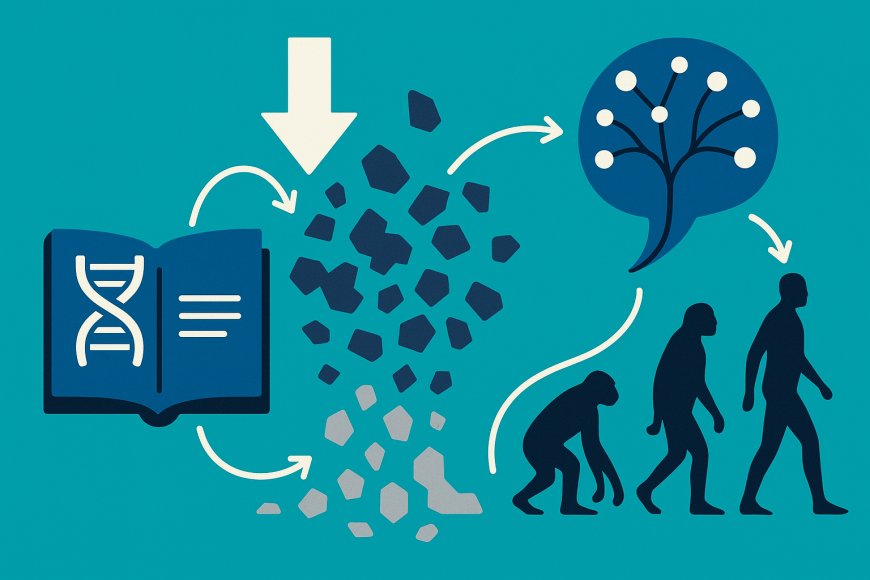
Entropic principles govern the behavior of complex systems. In biological contexts, entropy provides a robust framework for understanding information flow and transformation. Consider a cellular environment where genetic information is encoded, transmitted, and interpreted. Here, entropy plays a decisive role, quantifying uncertainty and providing insights into the efficiency of biological communication mechanisms.


In a hypothetical experimental setup, imagine analyzing the transcriptional processes in a eukaryotic cell. The genetic information, stored within DNA, is subject to transcription into mRNA. This process, while seemingly straightforward, is rife with potential for error due to the inherent uncertainties in molecular interactions. Entropy quantifies these uncertainties, serving as a metric for the fidelity and reliability of information transfer within the cell.
Information theory, as applied to biology, hinges on the concept of entropy to understand the stochastic nature of genetic processes. The information carried by DNA sequences embodies a probabilistic structure, with certain sequences more likely than others to be transcribed and translated, based on evolutionary pressures. Entropy, in this context, provides a measure of the genetic diversity and complexity, aiding in the prediction of evolutionary outcomes.
Entropy and Genetic Information Processing
Genetic information processing is deeply entwined with entropic principles. In a typical observational study of gene expression, researchers may track how different environmental conditions affect the transcriptional response of an organism. Here, entropy serves as a theoretical tool to quantify the variability in gene expression patterns. High entropy indicates a broad distribution of possible gene expression states, suggesting a flexible response to environmental changes.
Consider a behavioral experiment where an organism is subjected to fluctuating temperatures. The genetic apparatus must adaptively respond, with associated changes in the expression levels of heat-shock proteins. The entropy of the system increases as the organism navigates these changes, reflecting the growing complexity and variability in its genetic response. This adaptability underscores the role of entropy in maintaining homeostasis under stress.
Within the realm of molecular biology, entropy is also pivotal in exploring the fidelity of genetic replication and repair. DNA polymerases, responsible for copying genetic material, operate with a precision that minimizes errors. The entropic cost of maintaining this precision is significant; however, it ensures the stability of genetic information across generations. Entropy thus not only measures disorder but also reflects the delicate balance between genetic variability and stability.
Complexity in Biological Networks
Biological networks, characterized by their intricate interconnections and dynamic behaviors, exemplify the principles of information theory and entropy. Consider the neural networks within the human brain, wherein billions of neurons communicate through synapses. These connections form a complex web of information processing, with entropy quantifying the diversity of neural activity patterns.
In cognitive neuroscience, entropy helps elucidate the brain's capacity to store and retrieve information. During a typical cognitive task, such as problem-solving, the brain's neurons exhibit a range of activity patterns. High entropy in neural activity suggests a vast repertoire of potential cognitive states, enabling flexibility and innovation in thought processes. This variability is crucial for adaptive behavior and learning.
Furthermore, in metabolic networks, entropy aids in understanding the flow of energy and materials within a cell. These networks, akin to complex communication systems, rely on entropic principles to optimize pathways for efficient resource utilization. In metabolic studies, entropy can reveal insights into how organisms adapt their biochemical pathways in response to resource availability or environmental pressures, offering a deeper understanding of biological resilience.
Evolutionary Implications of Entropy
Entropy's role in biological systems extends beyond immediate genetic and metabolic processes to encompass evolutionary dynamics. In evolutionary biology, entropy quantifies the diversity of genetic material within a population, correlating with the potential for evolutionary change. Populations with high genetic entropy are poised to adapt more readily to environmental shifts, enhancing survival prospects.
In a longitudinal study of a bacterial population undergoing selective pressures, researchers might examine the genetic mutations arising over generations. Here, entropy provides a measure of the genetic variation within the population, serving as a proxy for evolutionary potential. High entropy correlates with a rich diversity of mutations, increasing the likelihood of beneficial adaptations emerging over time.
Moreover, entropy in evolutionary contexts also relates to the concept of thermodynamic efficiency. Organisms that optimize energy use tend to exhibit lower entropy, reflecting streamlined biological processes. This efficiency can confer selective advantages, enabling organisms to thrive in resource-scarce environments. Thus, entropy not only measures variability but also underscores the strategic adaptations that drive evolutionary success.
The entropic principles underlying information theory offer profound insights into the complexity of biological systems. By quantifying uncertainty and diversity, entropy enables a deeper understanding of genetic information processing, biological networks, and evolutionary dynamics. As research progresses, the integration of entropic frameworks could revolutionize our comprehension of life's intricate mechanisms, paving avenues for groundbreaking scientific discoveries and biotechnological innovations.
What's Your Reaction?