Reconsidering the Scientific Pedagogy: Innovative Methods in Education
This article explores the necessity of rethinking traditional education methods, especially in scientific pedagogy. It examines innovative strategies such as inquiry-based learning and interdisciplinary approaches, arguing for their potential to enhance student engagement and understanding. The discussion also delves into the challenges of implementing these new methods and their implications for the future of education.

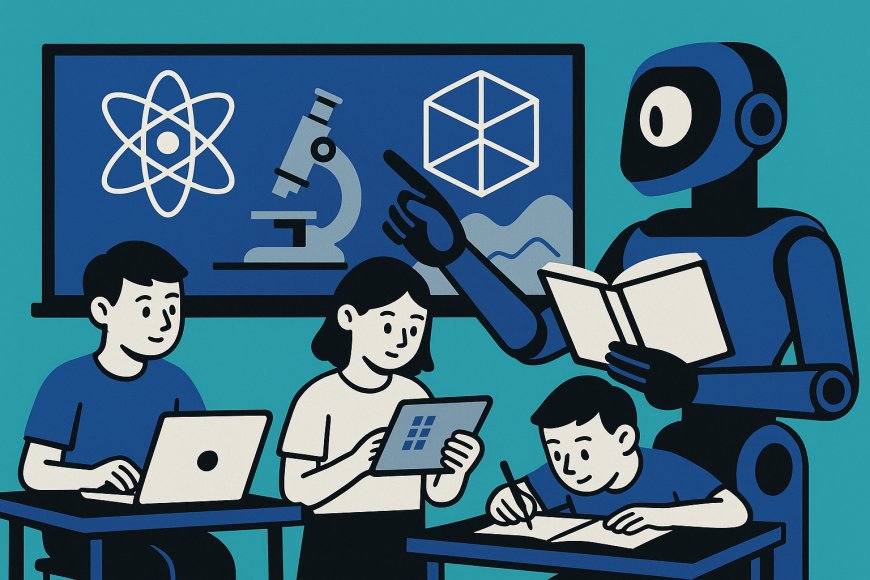
In the ever-evolving field of education, the question arises: are traditional pedagogical methods keeping pace with the rapid advancement of scientific understanding? Educational institutions are grappling with this fundamental inquiry, especially in the context of teaching science. The established lecture-based approach, while historically effective in conveying vast amounts of information, often falls short in fostering critical thinking and genuine engagement among students.


Consider a typical high school physics class. Here, students are commonly exposed to theoretical concepts through lectures, textbook readings, and standardized tests. Yet, recent studies from interdisciplinary educational research highlight a concerning trend: students often emerge from these classes with a rote memorization of facts rather than a deep understanding of scientific principles. This gap between knowledge and comprehension calls for a reevaluation of teaching methodologies.
Innovative Pedagogical Strategies
One promising approach gaining traction is inquiry-based learning, which encourages students to ask questions, conduct experiments, and engage in problem-solving activities. This method shifts the focus from passive reception of information to active participation in the learning process. In a controlled study by a collaborative educational research group, high school students were divided into two cohorts: one following traditional instruction, the other engaging in inquiry-based modules. The results were telling. The latter group not only displayed higher retention rates but also demonstrated superior analytical skills when confronted with novel scientific problems.
Another notable innovation is the interdisciplinary approach. By integrating multiple fields, such as biology with art or physics with philosophy, educators can create a more holistic learning environment. A pilot program in a progressive educational institution employed this strategy by combining environmental science with local geography and community history. Students worked on projects that required them to analyze local environmental issues through multiple lenses, fostering a more comprehensive understanding and an appreciation for the interconnectedness of knowledge.
Despite these promising developments, implementing such innovative strategies is not without its challenges. Teachers often require new training to effectively facilitate inquiry-based and interdisciplinary learning. Moreover, educational systems, which are typically structured around standardized testing, may resist changes that do not easily conform to existing assessment models. The transition demands both institutional support and a paradigm shift in educational policy and philosophy.
The Role of Technology in Modern Pedagogy
Technology plays a crucial role in contemporary educational reform. Virtual labs, simulation software, and interactive digital platforms can significantly enhance the inquiry-based learning process. In a case study involving middle school students, virtual reality simulations were used to explore complex biological processes, such as cellular division. Students reported higher engagement and a clearer understanding of the concepts, compared to traditional textbook diagrams.
Moreover, adaptive learning technologies, which tailor educational content to individual student needs, show promise in supporting diverse learning styles. For example, an experimental study in a technologically advanced school district used AI-driven platforms to customize math instruction. Students demonstrated marked improvements in both engagement and performance, indicating that personalized learning paths could be the future of education.
However, reliance on technology also poses the risk of widening educational inequalities. Access to these advanced tools is not uniform across different socio-economic backgrounds, raising ethical questions about equitable education. Measures must be taken to ensure that technological advancements benefit all students, not just those in well-funded districts.
Implications and Future Directions
As educational methodologies evolve, they challenge the very foundation of how knowledge is imparted and assessed. The shift towards inquiry-based and interdisciplinary learning, supported by cutting-edge technology, has the potential to redefine educational landscapes. Yet, this transition is fraught with hurdles, from teacher preparedness to systemic resistance.
In looking forward, the future of education may hinge on the ability of institutions to balance innovation with tradition. A successful integration of new pedagogical strategies requires a collaborative effort from educators, policymakers, and communities. By embracing these changes, we can cultivate a generation of learners who are not only knowledgeable but also adept at critical thinking and problem-solving, equipping them for the complexities of the modern world.
What's Your Reaction?