The Saudi Government's Role in Combating Post-Bariatric Surgery Obesity
A report on the new Saudi health insurance policy for bariatric surgery and the factors that contribute to continued obesity after these operations.
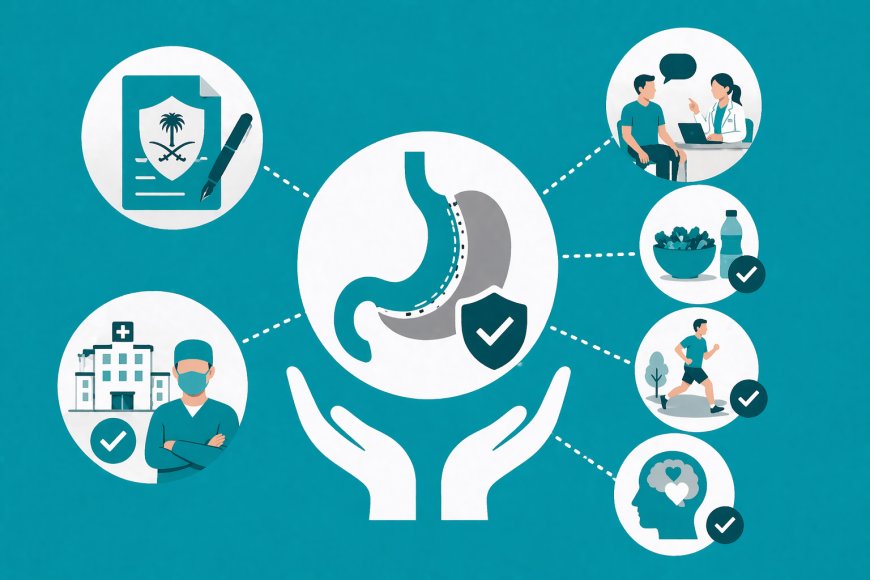
n the Kingdom’s ongoing efforts to reduce obesity rates and improve both life expectancy and quality of life, the Health Insurance Council updated its policy to include coverage for bariatric surgeries. This coverage applies to individuals with a body mass index above 35 without comorbidities, or above 30 in the presence of chronic conditions such as diabetes or hypertension, with a maximum coverage of 20,000 Saudi riyals.


Despite this expansion in access to treatment, recent studies indicate that approximately 60 percent of individuals who underwent weight loss surgeries, such as sleeve gastrectomy or gastric bypass, did not achieve sustained weight loss or remained within the clinical classification of obesity. A previous Saudi study published in late 2023 showed that around 33 percent of individuals who underwent such surgeries were still classified as obese. These findings highlight that surgical intervention alone is not sufficient, and that behavioral and lifestyle changes remain central to long-term outcomes.
In a recent study conducted by Saudi researchers, including participants from all regions of the Kingdom with a sample exceeding 15,000 individuals, we aimed to understand the behavioral and lifestyle factors that contribute to continued obesity or weight regain after bariatric surgery. This report summarizes the study’s objective, methodology, key findings, and conclusions.
The goal of the study
The study aimed to examine the health, lifestyle, and nutritional behaviors that contribute to failure in achieving normal weight, continued obesity, weight regain after initial loss, and the potential need for repeat surgical interventions. The analysis focused on factors identified in previous research as influential in limiting successful outcomes.
Study methodology
Data were derived from the Sharik Health and Food Survey, an annual national survey. Information was collected through structured telephone interviews with adults aged 18 years and older across all regions of the Kingdom. The sampling design ensured balanced representation by age, gender, and region to minimize bias.
The dataset included participants from 2020, 2021, and 2023, totaling 15,000 individuals. Of these, 4,069 participants met the inclusion criteria for the study.
Participants were divided into three groups:
- Individuals classified as obese and eligible for bariatric surgery but who had not undergone any procedure
- Individuals who underwent bariatric surgery and successfully lost weight (no longer classified as obese)
- Individuals who underwent bariatric surgery but did not achieve sufficient weight loss and remained classified as obese
Main results
The study identified significant statistical differences in behavior and lifestyle patterns among the three groups. These differences were observed in physical activity levels, cigarette smoking, shisha use, effort exerted toward weight loss or maintenance, consumption of food prepared outside the home, and the frequency of skipping breakfast.
Differences were also observed in general health indicators, including self-assessed health status, weight classification based on body mass index, and the risk of anxiety, depression, or both combined.
From a dietary perspective, the study found notable variations in the consumption of vegetables, fruits, chicken, and beverages of all types, including natural juices, processed drinks, soft drinks, and energy drinks.
In a focused comparison between two groups, those who underwent surgery but did not overcome obesity and those who remained obese without surgery, the analysis identified 18 key factors contributing to failure in overcoming obesity. These included physical activity, smoking behaviors, effort toward weight control, eating patterns outside the home, general health perception, mental health risks, and dietary habits related to both food and beverage consumption.
Demographic analysis further showed that older age, lower educational level, female gender, and lower monthly income were associated with a higher likelihood of not achieving satisfactory outcomes after surgery.
Conclusions
Achieving sustainable results from bariatric surgery requires more than the procedure itself. It depends on consistent lifestyle and behavioral change. This includes increasing physical activity, quitting smoking in all forms, and improving mental health.
It also requires adherence to a balanced diet that emphasizes higher consumption of vegetables, fruits, and protein sources such as chicken, while reducing intake of high-calorie beverages, including natural and canned juices, soft drinks, and energy drinks.
Behavioral change is not temporary. It is a continuous commitment that determines whether surgical intervention becomes a lasting solution or a temporary phase.
What's Your Reaction?