





















































































Psychological Fear: Understanding Its Types and Triggers
An overview of psychological fear, including its various forms like phobias and social anxiety. This article explains how these fears are tied to thoughts and beliefs rather than physical threats and discusses common treatments.

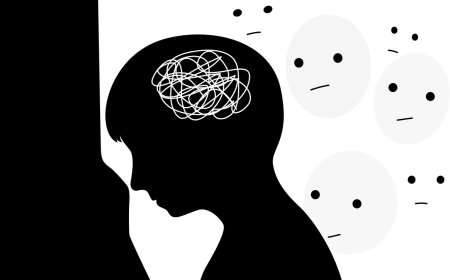
Psychological fear is one of the most complex responses the human mind can produce, not because it is rare, but because it operates without the need for a real, immediate threat. Unlike physical fear, which is triggered by direct danger, psychological fear emerges from interpretation. It is born from thoughts, beliefs, and memories that construct a sense of threat even when nothing harmful is happening in the present moment. The danger, in this case, is not outside the individual. It is perceived internally, yet experienced as real.


This distinction is critical. The body does not differentiate between a real threat and a perceived one. When psychological fear is activated, the same physiological responses occur. The heart rate increases, adrenaline is released, and the body prepares for action. But instead of responding to an external stimulus, the body is reacting to a mental scenario. This creates a paradox where the individual feels genuine fear without a tangible source, leading to confusion, distress, and often self-doubt.
The origins of psychological fear vary, but they often follow identifiable patterns. Phobias represent one of the most direct forms, where specific objects or situations—such as heights, flying, or confined spaces—trigger disproportionate fear responses. These fears are not always rooted in direct experience, yet they become deeply ingrained through association and repetition.
Social anxiety introduces another dimension, where the perceived threat is not physical harm, but judgment. The individual becomes hyper-aware of how they are seen, evaluated, and interpreted by others. This awareness can become overwhelming, transforming ordinary social interactions into sources of intense stress. The fear is not of the situation itself, but of the imagined consequences within it.
In cases such as Post-Traumatic Stress Disorder, psychological fear is tied to memory. Past experiences, particularly traumatic ones, are not processed as completed events. Instead, they remain active within the mind, capable of being reactivated by triggers that may appear unrelated. The individual does not simply remember the event; they relive it, both emotionally and physically.
Similarly, Generalized Anxiety Disorder represents a broader, more diffuse form of psychological fear. Here, the fear is not attached to a single object or event, but to life itself. The individual experiences a persistent state of worry, often without a clear cause, where the mind continuously anticipates negative outcomes. This anticipation becomes a constant background state, influencing decisions, behavior, and perception.
What unites these different forms is not the source of fear, but its mechanism. Psychological fear operates through projection. It takes a possibility and treats it as probability. It takes uncertainty and fills it with imagined outcomes. Over time, these imagined scenarios become familiar, and familiarity gives them a false sense of reality. The individual begins to respond not to what is happening, but to what could happen.
This has direct consequences on behavior. Avoidance becomes a common strategy. Situations that trigger fear are minimized or eliminated, not because they are dangerous, but because they are uncomfortable. While avoidance provides temporary relief, it reinforces the fear. The mind learns that the situation must be dangerous, because it is consistently avoided. This creates a cycle where fear reduces exposure, and reduced exposure strengthens fear.
Breaking this cycle requires intervention at the level of thought, not just behavior. Approaches such as Cognitive Behavioral Therapy focus on identifying and restructuring the thought patterns that generate fear. The goal is not to eliminate fear entirely, but to align it with reality. To distinguish between what is possible and what is probable. To recognize that not every thought represents truth.
In some cases, pharmacological support may be necessary, particularly when the intensity of the fear interferes significantly with daily functioning. However, the core of treatment remains cognitive and behavioral, addressing the patterns that sustain the fear rather than only its symptoms.
Beyond clinical intervention, awareness plays a crucial role. Understanding that psychological fear is constructed, not imposed, changes the way it is experienced. It introduces a gap between the individual and the fear, allowing observation instead of immediate reaction. This gap is where control begins.
To support this process of awareness and self-assessment, structured tools become valuable. Developing a psychological fear scale in Arabic represents an important step in making this understanding accessible and measurable within the local context. Such tools allow individuals to evaluate their own patterns, identify triggers, and recognize the extent to which fear influences their thinking and behavior.
Psychological fear, in essence, is not a flaw.
It is a function.
A protective system that has expanded beyond its original purpose.
The challenge is not to eliminate it, but to recalibrate it.
To bring it back from imagination to reality.
And to ensure that what the mind creates—
does not control what the person becomes.
What's Your Reaction?