















































































Scientific Inquiry into Personal Branding: Reconstructing the Constructs of Identity
Personal branding, often perceived as a subjective endeavor, can benefit from scientific examination to uncover its cognitive and social underpinnings. Through experimental scenarios exploring self-perception and identity construction, this article challenges the conventional views of personal branding as an art form devoid of empirical basis. By leveraging cognitive science and social psychology, we examine how identity is not merely constructed through self-representation but also influenced by societal perceptions. New insights into the mechanics of personal branding reveal the delicate balance between self-presentation and authenticity, offering a nuanced understanding of identity formation in contemporary contexts.


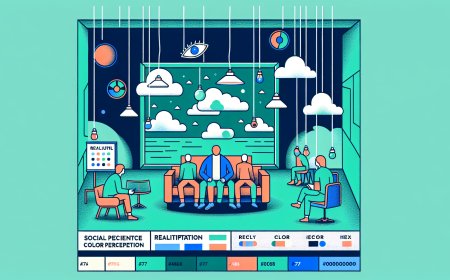
In the realm of personal branding, identity often feels like an abstract, intangible concept, untethered from empirical scrutiny. Yet, beneath its veneer of subjectivity lies a complex interplay of cognitive and social processes. Consider an experiment where participants are prompted to construct online profiles reflecting their professional personas. Cognitive scientists measure changes in their self-perception and how these profiles influence external perceptions. This setup reveals that personal branding is more than mere self-representation; it is a dynamic construct shaped by both internal and external forces.


The notion that personal branding is an art form, divorced from scientific inquiry, is being challenged. Traditional thought relegates it to the domain of marketing and subjective aesthetics. However, recent investigations into the cognitive mechanisms underlying identity formation suggest otherwise. Through carefully designed social experiments, researchers have demonstrated that personal branding involves cognitive processes similar to those engaged in identity construction. These processes include self-assessment, audience analysis, and feedback incorporation, each contributing to the evolving narrative of one's professional persona.
Identity Construction Through Cognitive Frameworks
Identity construction is a multifaceted process, deeply rooted in cognitive frameworks that govern our understanding of self. A cognitive framework, in this context, refers to the mental structures that influence perception and decision-making. In a controlled setting, participants are tasked with articulating their core values and professional goals. This introspective exercise is not merely an indulgence in self-reflection but a scientific probe into the cognitive biases and heuristics that inform personal branding.
In a related study, subjects were exposed to various scenarios simulating peer and societal feedback on their public profiles. The results indicated significant neural activity in regions associated with social processing and self-reflection, suggesting that personal branding is partially a response to external validation. This neural engagement illustrates how cognitive science can unravel the intangible threads connecting self-perception and external image.
The implications of these findings extend beyond individual identity. In organizational contexts, understanding how employees construct and project their professional identities can inform corporate branding strategies. Companies may leverage these insights to foster authentic representations that align with their core values while resonating with broader societal expectations.
The Societal Impact of Self-Representation
While cognitive processes are crucial to personal branding, societal perceptions play an equally pivotal role. In a behavioral study, participants were asked to revise their online profiles to appeal to different audiences. This exercise revealed the adaptive nature of identity, contingent upon social contexts. Participants demonstrated a propensity to modify self-presentations based on perceived audience expectations, underscoring the fluidity of identity.
Moreover, the societal impact of personal branding extends into professional spheres. In a corporate environment, employees frequently navigate the intersection of personal and organizational identities. The ability to authentically integrate these identities while adhering to professional norms can enhance not only individual career trajectories but also organizational cohesion and innovation.
As organizations increasingly value diversity and inclusion, understanding the nuanced interplay between individual and collective identity becomes paramount. Personal branding is not merely a tool for individual advancement; it is a catalyst for organizational growth and cultural evolution.
The Balance of Authenticity and Perception
Authenticity remains a cornerstone of effective personal branding. Yet, achieving authenticity requires navigating the tension between self-perception and external image. In a reflective exercise, participants were encouraged to align their self-representation with core personal values while considering audience perceptions. The challenge lies in maintaining integrity without succumbing to external pressures to conform.
For instance, in a case study involving corporate professionals, those who maintained congruence between personal values and public personas reported higher job satisfaction and career fulfillment. This finding aligns with psychological theories suggesting that authenticity fosters psychological well-being and professional efficacy.
In a rapidly evolving digital landscape, personal branding transcends traditional boundaries, necessitating a scientific approach to understanding its complexities. By recognizing the balance between internal authenticity and external perception, individuals can craft compelling personal narratives that resonate with diverse audiences without sacrificing personal integrity.
The future of personal branding lies in its ability to merge scientific inquiry with artistic expression. As we continue to explore its cognitive and societal dimensions, the potential for innovation in identity construction is boundless. Embracing this scientific perspective not only enriches our understanding of personal branding but also illuminates the transformative power of identity in navigating contemporary challenges.
What's Your Reaction?