
















































































Ultra-Processed Foods: A Hidden Danger in Our Diet
This article explores the concept of ultra-processed foods, their negative health impacts, and the reasons why they have become so prevalent in modern diets.
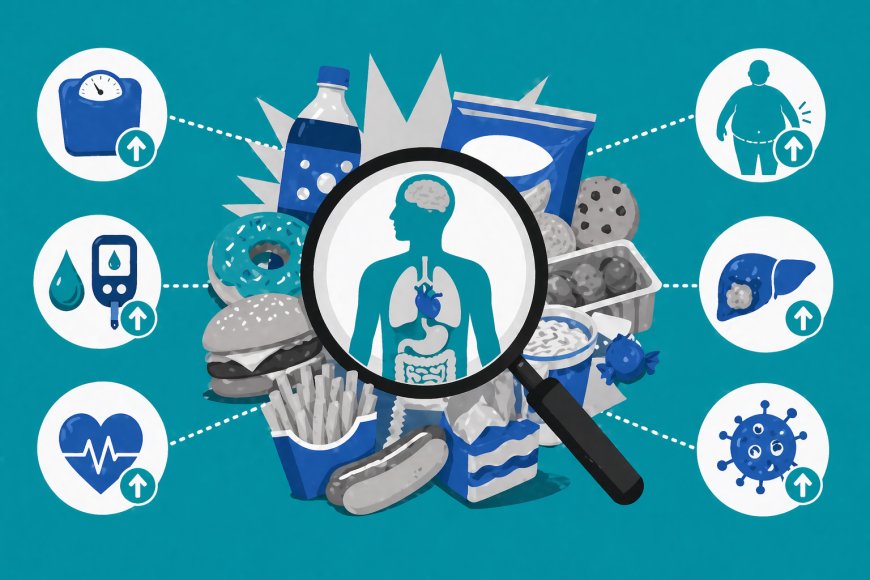
Shopping or going to the supermarket has become a more complex task than it appears, given the wide range of food options available on every shelf. Among these options are ready meals often high in salt and preservatives, breakfast cereals that rival chocolate bars in sugar content, and processed meats containing additives such as nitrites, which may form harmful compounds when cooked. In this context, the term ultra-processed foods has emerged.


Chris van Tulleken, a physician and television presenter, argues in his book Ultra-Processed People that these foods dominate food supplies in high-income countries and are increasingly spreading into low and middle-income countries. With their growing presence, concerns about their impact on human health have intensified.
The concept of ultra-processed foods was introduced by Carlos Monteiro, a Brazilian scientist, in 2009. His research team observed that despite a decline in the direct purchase of sugar and oil in Brazil, rates of obesity and type 2 diabetes continued to rise. The explanation was a shift toward packaged snacks and ready-made meals rich in sugar, fat, and additives.
In response, Monteiro proposed a classification system based on the level of food processing. Known as the Nova classification, it divides foods into four categories: unprocessed or minimally processed foods, processed culinary ingredients, processed foods, and ultra-processed foods. This framework allows for a more precise distinction between levels of processing, recognizing that foods such as rice, oil, and flour, which undergo minimal processing, differ fundamentally from highly engineered products.
Ultra-processed foods typically undergo multiple industrial processes. While this does not automatically make them unhealthy, frequent consumption raises concerns. These foods often contain combinations of artificial ingredients, high levels of salt and sugar, and relatively low nutritional value. In many cases, they resemble industrial formulations more than traditional food.
Their design plays a significant role in consumption patterns. Enhanced flavor, texture, and convenience make them easier to consume in large quantities compared to whole foods.
Evidence of their impact has been explored in controlled settings. In 2019, researchers at the National Institutes of Health conducted a study in which participants were allowed to eat freely from either ultra-processed or unprocessed diets. Over two weeks, those consuming ultra-processed foods ate approximately 500 additional calories per day, leading to weight gain, while those on unprocessed diets consumed less and lost weight.
Observational studies have also linked high consumption of ultra-processed foods to increased risk factors for cardiovascular diseases, which remain a leading cause of mortality. Additional research suggests associations with higher risks of certain cancers and negative effects on the gut microbiome, the complex community of microorganisms that supports multiple aspects of health.
It is important to note that such studies primarily identify associations rather than direct causation. Randomized controlled trials would provide stronger evidence, but may be difficult to conduct due to ethical considerations. Nonetheless, substantial evidence already connects many components commonly found in ultra-processed foods, including added sugars, excess salt, refined carbohydrates, and saturated fats, with adverse health outcomes.
In this context, the discussion is not limited to the existence of ultra-processed foods, but to their role within daily dietary patterns and the long-term implications of their frequent consumption.
What's Your Reaction?