






































































The Infinite Journey: Discovery, Creativity, and the Mind of the Questioner
Explore the journey of knowledge creation, from discovery to creativity. This article delves into the importance of questioning, the conflict between scientific authority and fallibilism, and how societies that encourage intellectual freedom lead in innovation.

“Knowledge is the beginning of the infinite.” This is not a poetic statement. It is a structural truth about how humanity advances, how individuals grow, and how civilizations rise or stagnate. The difference between a society that leads and one that follows is not intelligence, resources, or even opportunity. It is the relationship with knowledge itself—whether it is consumed or created, inherited or questioned, repeated or redefined.


From the earliest stages of existence, human survival depended on discovery. The ability to observe, interpret, and adapt was not optional. It was the difference between continuity and extinction. When environments changed, those who explored survived. When uncertainty appeared, those who questioned advanced. Discovery was not an intellectual luxury. It was a necessity embedded in the structure of life.
Over time, this necessity evolved into something more complex. Humans did not stop at discovering their environment. They began to build knowledge upon knowledge, creating systems, tools, and technologies that extended beyond their physical limitations. What once required generations to uncover could later be learned in hours. This acceleration did not come from intelligence alone, but from a critical shift: the transmission of methodologies, not just information.
This is where the hierarchy of knowledge emerges.
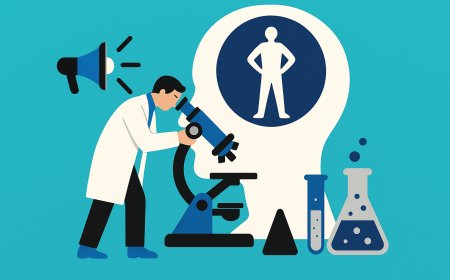
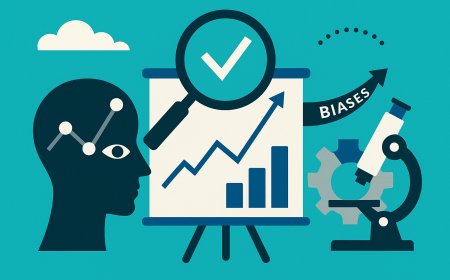
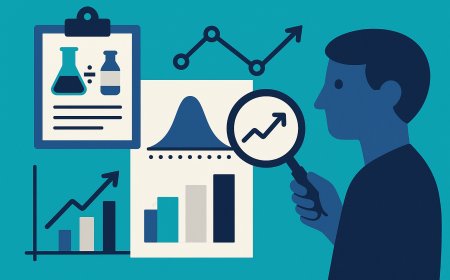
There is a difference between knowing facts and knowing how those facts were discovered. The first creates users. The second creates creators. When societies focus only on transmitting information, they produce individuals who depend on existing knowledge. But when they teach the methods of discovery—how to question, test, analyze, and verify—they produce individuals capable of generating new knowledge.
This distinction defines the structure of progress.
Human advancement operates across three interconnected stages. The first is the development of discovery methodologies—the intellectual tools used to explore reality. The second is the generation of new knowledge using these tools. The third is the application of that knowledge to create value in the real world. When these stages are balanced, societies progress. When the first stage is missing, the entire system becomes dependent on others.
This imbalance is visible today.
Many societies excel in learning and applying knowledge, yet remain dependent on external sources for innovation. They wait for new technologies, new treatments, new ideas to arrive from elsewhere. They become efficient consumers, but not producers. This is not due to a lack of ability, but a lack of intellectual infrastructure. The foundation—the ability to question and create methodologies—was never fully developed.
At the individual level, this pattern begins early.
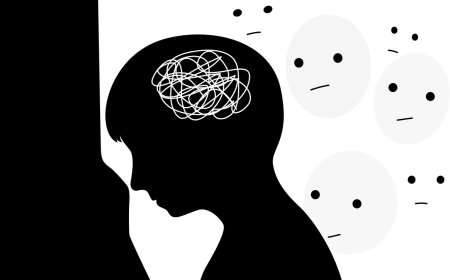
A child is naturally driven by curiosity. Questions emerge without instruction. Exploration happens without permission. This is not accidental. It is a fundamental human trait. Yet, over time, this instinct is often suppressed. Systems of education, social expectations, and cultural norms may shift the focus from questioning to memorization, from exploration to conformity. The child who once asked “why” begins to accept “what is.”
The cost of this shift is not immediate.
But it is profound.
Creativity diminishes. Initiative weakens. The individual becomes reliant on external answers rather than internal inquiry. The question is no longer how to discover, but where to find the answer. This transforms learning into consumption.
In contrast, individuals who maintain their capacity for questioning operate differently. They do not accept knowledge as final. They see it as provisional, open to refinement. This aligns with the philosophy of fallibilism—the idea that knowledge is never complete, that it always contains the possibility of error, and that progress depends on identifying and correcting these errors.
This stands in opposition to the concept of scientific authority—the belief that knowledge must be accepted based on its source rather than its method. When knowledge is tied to authority, questioning becomes resistance. When it is tied to methodology, questioning becomes progress.
The difference between these two approaches is civilizational.
One produces stability at the cost of stagnation.
The other produces growth at the cost of discomfort.
This discomfort is real.
Discovery is not always safe. It challenges existing beliefs, disrupts established systems, and creates uncertainty. Societies often resist this process, not because they reject progress, but because they fear instability. This resistance can become cultural, where questioning is discouraged, and conformity is rewarded.
History provides consistent evidence of this pattern.
Innovators, thinkers, and pioneers are often met with skepticism, resistance, and even hostility. Their ideas threaten not only existing knowledge, but the structures built upon it. Yet, it is precisely these individuals who drive transformation. They move beyond accepted limits, not because they are certain, but because they are willing to question.
The process of discovery is deeply personal.
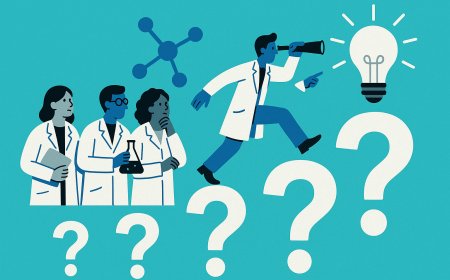
It does not begin in institutions. It begins in the mind of the individual. It is driven by a simple but powerful shift: from asking why something is not done, to asking whether it can be done. This shift transforms the individual from an observer to a participant, from a critic to a creator.
The story of innovation often follows this pattern.
A problem appears. The initial response is external: why has no one solved this? When answers fail, the question turns inward: can I solve it? This is the moment of transition. Responsibility shifts. Action begins. Failure becomes part of the process, not a signal to stop. Iteration replaces hesitation. Over time, the individual not only solves the problem, but advances the field itself.
This is the essence of creativity.
It is not a sudden event.
It is a sustained process of questioning, testing, and refining.
It requires freedom—intellectual, emotional, and structural. Freedom to think beyond limits, to explore without immediate validation, to fail without final judgment. Without this freedom, ideas remain constrained, and potential remains unrealized.
Educational systems, therefore, must be re-evaluated.
Certificates and degrees provide access. They grant legitimacy and sometimes opportunity. But they do not guarantee discovery. They are tools, not outcomes. The real measure of growth is not the accumulation of credentials, but the ability to generate new understanding and apply it meaningfully.
At the highest level, discovery becomes more than a function.
It becomes a form of existence.
The individual moves beyond proving existence through possession or status, and begins to prove it through contribution. Knowledge is no longer something to acquire, but something to create and share. This shift represents a higher stage of development—one based on giving rather than taking.
In the end, the path is clear.
Discovery is not optional for progress.
It is its foundation.
Societies that cultivate questioning lead.
Individuals who embrace uncertainty grow.
And knowledge, when approached not as an answer but as a process, becomes what it truly is—
the beginning of the infinite.
What's Your Reaction?