Causality in Employee Experience: A Methodological Inquiry
Employee experience is a complex domain influenced by various factors such as organizational culture, leadership styles, and personal motivations. This article dissects the methodological intricacies of understanding causality within this sphere. It elucidates how methodological biases can skew interpretations and emphasizes the importance of validity in research findings. Through hypothetical case studies, the article illustrates how experimental and observational methods can be applied to untangle the causal relationships that shape employee experiences, providing a nuanced understanding that transcends traditional anecdotal insights. This exploration aims to refine the analytical frameworks used to design interventions for enhancing workplace satisfaction and productivity.

Imagine a scenario where a software company observes a sudden decline in employee satisfaction scores. Managers are perplexed, noting that no substantial changes in policies have occurred. This raises a foundational methodological question: what causes shifts in employee experience, and how can these causes be accurately identified?


Employee experience is a multifaceted construct influenced by numerous variables such as leadership style, organizational culture, and individual motivations. Identifying causality within this domain poses significant challenges. Understanding these causal relationships is crucial for devising effective interventions aimed at improving workplace satisfaction and productivity.
The Complexity of Establishing Causality
In a typical observational study within a corporate setting, researchers may seek to determine if changes in leadership are causally related to shifts in employee morale. However, observational studies are fraught with challenges, primarily due to the presence of confounding variables. For instance, consider a company that simultaneously introduces a new management team and a revamped employee recognition program. Changes in morale could be attributed to either or both interventions, making it difficult to isolate causality.
The intricacy lies in distinguishing correlation from causation. While data may indicate a strong association between leadership changes and employee morale, this does not establish a causal link. Researchers must employ rigorous statistical techniques, such as propensity score matching, to control for confounding factors and better estimate causal effects.
Yet, even with advanced statistical methods, the risk of methodological bias remains. Selection bias, for example, can occur if the individuals surveyed are not representative of the entire workforce, leading to skewed results. Additionally, outcome reporting bias may arise when companies selectively report positive outcomes, ignoring negative findings. These biases must be diligently accounted for to fortify the validity of causal inferences.
One experimental approach to discerning causality involves randomized controlled trials (RCTs). In a hypothetical scenario, a company could randomly assign departments to either maintain or change their leadership structure, subsequently measuring resultant changes in employee satisfaction. While RCTs offer strong causal evidence, they can be impractical or ethically questionable in workplace settings, where employee well-being might be at stake.
Methodological Biases and Validity
The intricacies of bias and validity are critical when investigating employee experience. Consider a behavioral experiment where a company's HR department introduces a flexible working policy to improve job satisfaction. If the evaluation only involves departments with a pre-existing tendency to adapt well to change, selection bias skews results, overestimating the policy’s effectiveness.
Validity, meanwhile, encompasses construct, internal, and external dimensions. Construct validity examines whether the measurement tools used genuinely assess employee experience. For instance, a survey questionnaire may fail to capture the nuances of employee sentiment if poorly designed. Internal validity ensures that the observed effects can be attributed to the intervention itself rather than external factors, while external validity assesses whether findings are generalizable to broader contexts.
Enhancing validity requires meticulous research design. For example, using mixed methods, such as combining qualitative interviews with quantitative surveys, can provide comprehensive insights into employee experiences. This approach triangulates data sources, enhancing the robustness of conclusions drawn.
Furthermore, incorporating longitudinal studies can help discern causality over time. By tracking employee sentiment across various intervention phases, researchers can observe temporal shifts and better establish causal pathways. This methodological rigor is critical in ensuring the accuracy and reliability of findings.
Innovations in Causal Inference
Recent advancements in causal inference methodologies offer promising avenues for exploring employee experience. Machine learning algorithms, for instance, can uncover hidden patterns within complex data sets, offering deeper insights into causal relationships. These tools can aid in identifying potential causal pathways that traditional methods might overlook.
However, the application of machine learning in understanding causality requires careful interpretation. Algorithms can model interactions between variables but cannot inherently distinguish causation from correlation. Thus, combining these technologies with traditional methods can enhance the robustness of causal inferences.
Consider a hypothetical machine learning model applied to employee feedback data. The model might reveal patterns linking leadership communication frequency to job satisfaction. Yet, without further methodological scrutiny, such findings remain speculative.
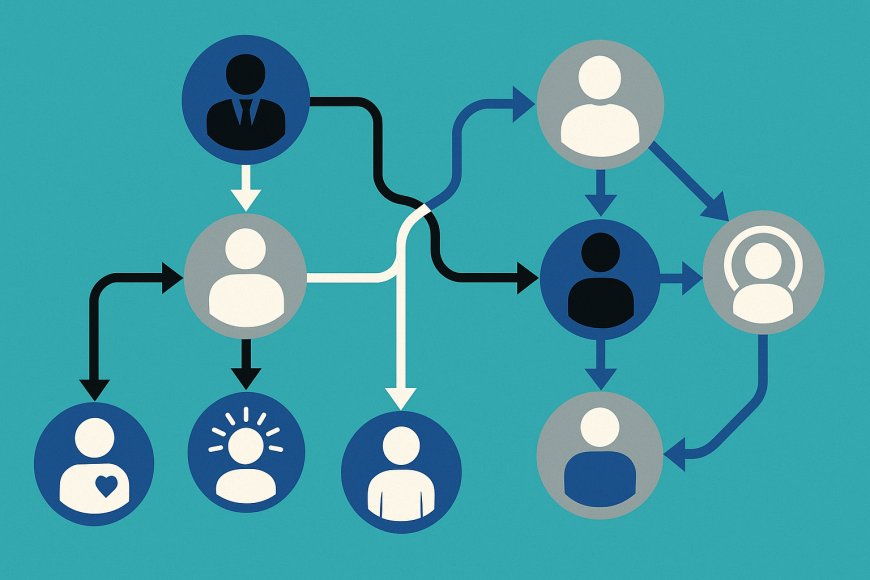
Innovatively, the integration of causal diagrams, such as Directed Acyclic Graphs (DAGs), can offer visual representations of causal hypotheses. By mapping relationships between variables, DAGs help identify potential confounding factors and guide subsequent analytical steps, improving causal clarity.
Ultimately, refining causal inference methodologies in the realm of employee experience is essential. As organizations strive to cultivate positive workplace environments, precise identification of causation enables targeted interventions, fostering sustainable improvements in employee satisfaction and productivity.
As the field of employee experience continues to evolve, embracing methodological rigor is pivotal. Deconstructing the causal mechanisms that underpin employee sentiment not only enhances theoretical understanding but also equips practitioners with actionable insights. The future of workplace satisfaction hinges on our ability to unravel these complex causal webs, paving the way for innovative, evidence-based interventions.
What's Your Reaction?