




















































































The Illusion of Innovation: Why Creativity Cannot Be Taught
This article debunks the myth that innovation can be taught through workshops and methodologies like design thinking. It argues that true creativity is an act of rebellion and requires an environment of intellectual freedom, not a rigid set of steps.

There is an increasing obsession in modern institutions with the idea that innovation can be engineered, packaged, and delivered through structured programs. Workshops promise to unlock creativity in days, courses claim to teach “design thinking” as if it were a universal formula, and organizations invest heavily in innovation labs that attempt to operationalize what is, by its very nature, resistant to control. The assumption behind all of this is simple but flawed: that creativity can be reduced to a process, and that by following a defined set of steps, anyone can become an innovator.


The paradox lies in the contradiction between the nature of innovation and the way it is being approached. Innovation is not a repetition of known patterns—it is a break from them. It does not emerge from compliance, but from deviation. It is not born from certainty, but from exploration. And yet, the very systems that claim to cultivate it often impose rigid frameworks that limit the freedom required for it to exist. When creativity is forced into predefined stages, it loses its unpredictability. When it is measured prematurely, it loses its depth. And when it is standardized, it ceases to be creative at all.
This does not mean that methodologies like design thinking are useless. On the contrary, they can be effective tools within specific contexts. But the problem arises when these tools are presented as universal solutions, when they are marketed as the definitive path to innovation, and when they replace the deeper conditions required for creativity with superficial processes that mimic it. In such cases, what is produced is not innovation, but imitation—variations of existing ideas structured within familiar frameworks, rather than genuine breakthroughs that redefine the boundaries of possibility.
The failure becomes even more apparent when these approaches are implemented at the institutional level. Many organizations proudly establish innovation centers, launch creativity programs, and encourage employees to “think outside the box,” yet continue to operate within rigid bureaucratic systems that punish risk and reward conformity. The result is predictable. Employees are invited to innovate, but only within acceptable limits. They are encouraged to experiment, but only in ways that do not disrupt existing structures. Creativity becomes a performance, not a practice—a visible effort that produces little real change.
The issue, therefore, is not the absence of tools, but the absence of environment. Creativity does not emerge from instruction alone. It requires a context that tolerates uncertainty, accepts failure, and allows individuals to move beyond predefined boundaries without fear of immediate judgment. Without this, no methodology—no matter how sophisticated—can produce meaningful innovation. Because innovation is not something that can be imposed externally. It is something that develops internally when conditions allow it.
To understand why these efforts fail, it is necessary to look earlier in the process—before the workplace, before professional training, at the stage where thinking itself is formed. Education, as it is commonly structured, prioritizes correctness over exploration. Students are trained to arrive at the right answer, to follow established procedures, and to operate within defined expectations. Divergence is often discouraged, not explicitly, but structurally. There is one correct method, one acceptable outcome, one measurable standard.
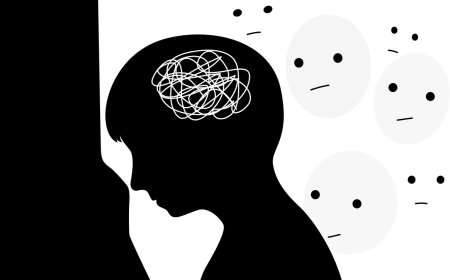
This creates a form of cognitive conditioning. Individuals learn to optimize for accuracy rather than originality. They become efficient at solving known problems, but hesitant to engage with unknown ones. By the time they reach environments that demand innovation, the habits required for it have already been suppressed. And no short-term training program can reverse years of structured thinking.
Scientific research reinforces this reality. Studies in cognitive psychology distinguish between convergent thinking—the ability to find the correct solution within a known framework—and divergent thinking—the ability to generate new possibilities beyond it. Traditional education and many professional training systems emphasize the former while neglecting the latter. As a result, individuals become highly capable within defined parameters but struggle when those parameters are removed.
Neuroscience adds another layer to this understanding. Creative thinking is associated with brain activity that thrives in environments of openness, flexibility, and reduced constraint. When individuals operate under strict expectations or fear of evaluation, this activity diminishes. The mind shifts from exploration to protection. Instead of asking “what is possible,” it asks “what is acceptable.” And in that shift, creativity contracts.
This explains why certain ecosystems consistently produce innovation while others do not. It is not because they have better training programs, but because they have different cultures. Environments such as Silicon Valley are not defined by methodologies, but by conditions—freedom to experiment, tolerance for failure, and diversity of perspectives. Ideas are not forced into structure prematurely. They are allowed to evolve, to fail, to collide with other ideas, and to transform.
In contrast, institutions that attempt to control innovation often create its opposite. By imposing structure too early, by evaluating ideas before they mature, and by prioritizing predictability over exploration, they eliminate the very uncertainty from which creativity emerges. The system becomes efficient, but not inventive.
The implication is clear: innovation cannot be taught in the traditional sense. It cannot be transferred as information or replicated as a skill. It can only be enabled. This requires a fundamental shift in how individuals, organizations, and societies approach creativity. Instead of asking how to teach innovation, the question must become: what conditions allow it to appear?
The answer lies not in more workshops, but in more freedom. Not in more frameworks, but in more openness. Not in more control, but in more trust.
A culture that accepts mistakes does more for innovation than any structured program. Intellectual diversity—where different disciplines, perspectives, and experiences intersect—creates more creativity than uniform expertise. And an environment that allows individuals to question, to challenge, and to explore without immediate constraint produces ideas that no predefined process can generate.
Ultimately, innovation is not a recipe. It is a state. A way of engaging with reality that prioritizes possibility over certainty, exploration over repetition, and creation over imitation.
And this state cannot be imposed.
It must be allowed.
What's Your Reaction?