


















































































Revisiting the Foundations of Information Entropy in Complex Systems
In the realm of complex systems, the established concept of information entropy presents both foundational insights and challenges. This article explores the historical development, current applications, and future implications of entropy in information theory, questioning its limitations and potential expansions. Through hypothetical examples, such as a network of cognitive agents and evolving bioinformatic algorithms, it probes the adequacy of classical entropy models in capturing the dynamic interdependencies and emergent properties of data-rich environments. The discussion culminates in contemplating future directions, advocating for an enriched framework that transcends traditional boundaries, offering a more nuanced understanding of information flow within intricate systems.

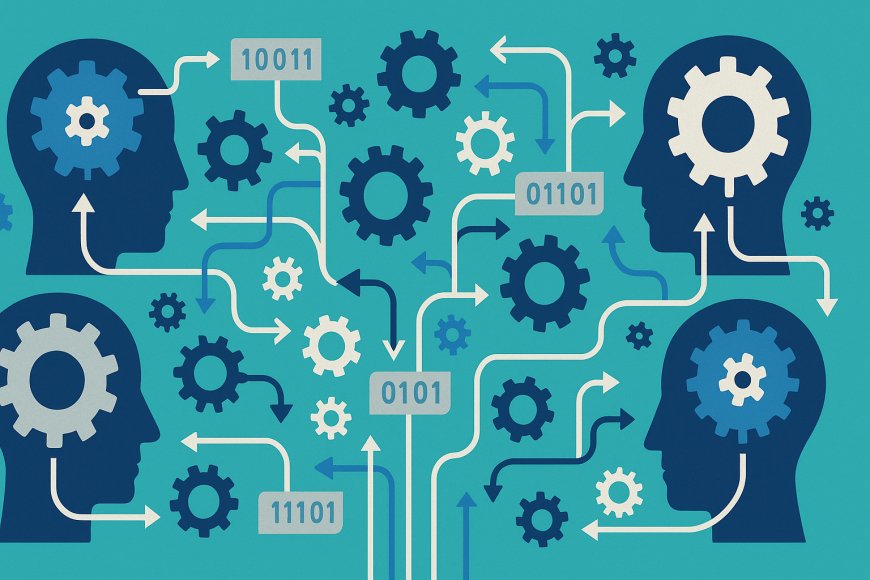
Imagine a network of cognitive agents, each processing vast amounts of data, interacting dynamically to share and reinterpret information. At the heart of understanding such a network lies the concept of information entropy—an idea borrowed from thermodynamics to describe the degree of uncertainty or information contained within a system. While information entropy has been a cornerstone in the field of information theory since its inception in the mid-20th century, its application to complex systems requires reevaluation. The classical models of entropy, originally designed for relatively simple, isolated systems, face challenges when applied to multifaceted networks exhibiting non-linear interactions and emergent behaviors. The question arises: Is our current understanding of information entropy adequate to capture the intricacies of modern, interconnected systems?


Information entropy, formally introduced by a seminal thinker at a renowned institution, provides a quantitative measure of uncertainty. It is expressed mathematically as a function of probabilities associated with the states of a system. In simple terms, entropy increases as the number of potential arrangements of a system's components increases, reflecting greater uncertainty. However, in a typical observational study of complex networks—such as biological ecosystems, social media platforms, or digital communication systems—these classical measures may fall short in accounting for the interdependencies and feedback loops inherent in such systems. Consider a behavioral experiment where agents adapt and evolve based on shared and newly acquired data; the traditional entropy formula fails to encapsulate the dynamic nature of their interactions.
Entropy Beyond Traditional Bounds
In a hypothetical scenario, envision a bioinformatics algorithm tasked with analyzing genomic data to predict disease susceptibility. As the algorithm learns and refines its parameters through iterative processes, it generates an evolving landscape of probabilistic states. Here, the notion of static entropy proves insufficient. The algorithm does not simply process data in isolation; it interacts with layers of prior knowledge and environmental feedback, introducing complexities that classical entropy models cannot fully capture. The need arises for a modified definition of entropy that accounts for learning, adaptation, and self-organization.
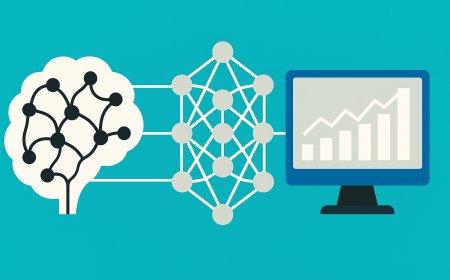
The implications of redefining information entropy extend into the realm of artificial intelligence and machine learning. Consider a neural network trained to recognize patterns in visual data. Traditional entropy might quantify the uncertainty within individual layers of the network. Yet, as data flows and transforms across layers, emergent patterns and representations develop—an aspect of entropy unaccounted for in classical formulations. The entropic measure must evolve to incorporate the transformations and coherence across interconnected structures, thereby reflecting the true informational complexity of the system.
A methodological shift in measuring entropy in these contexts could also prompt innovations in cybersecurity. Cryptographic systems rely on information entropy to ensure secure communication. In systems where data is dynamic and agents continuously adapt, a more flexible understanding of entropy could offer enhanced protection against evolving threats. By recognizing the interconnected, fluid nature of information, new cryptographic frameworks could dynamically adjust and respond to real-time changes, bolstering security measures against malicious interference.
Implications for Data Complexity and Interdependence
In complex systems, where components interact in multifaceted ways, traditional perspectives on entropy often overlook the significance of interdependencies. For example, in a social network analysis, individual nodes (representing people or entities) do not exist in isolation but rather as part of an intricate web of relationships and influences. The interdependent nature of these nodes creates a network whose informational content cannot be fully appreciated through classical entropy measures. A deeper understanding requires integrating concepts of conditional entropy and mutual information, which capture the degree to which the state of one component informs about another—a crucial insight into the emergent properties of complex systems.
To address these gaps, researchers are exploring the use of entropy measures that account for such dependencies. In evolving ecological models, for instance, species interactions and environmental factors create a dynamic web that challenges static entropy calculations. By incorporating joint entropy and transfer entropy, which quantify information transfer and dependencies within a system, researchers can better predict ecological outcomes and understand resilience in the face of perturbations.
Furthermore, the concept of entropy in complex systems raises philosophical questions about the nature of information and reality. If information entropy is inherently bound to the observer's ability to perceive and interpret data, then the act of measurement itself influences the system's entropy. This challenges traditional scientific narratives that assume an objective reality independent of observation. By embracing a more holistic view of entropy, informed by both theoretical insights and practical observations, the scientific community can move towards a more comprehensive understanding of data complexity.
New Directions in Entropy Research
As we reconsider the role of information entropy in complex systems, the potential for new theoretical frameworks becomes evident. Future research could focus on developing adaptive entropy models that dynamically adjust to changes in data structure and interaction patterns. Such models would not only enhance our understanding of existing systems but also provide insights into the creation and evolution of future technologies, such as adaptive AI and bioinformatics.
In a world increasingly defined by interconnected systems and data-driven decision-making, the quest for a refined understanding of information entropy is crucial. By transcending traditional boundaries, enriching our theoretical frameworks, and embracing the complex relations within data, we can pave the way for breakthroughs in how we perceive, protect, and utilize information in the modern age.
What's Your Reaction?