The Role of Embodied Cognition in Skill Acquisition
This article explores the concept of embodied cognition and its implications for skill acquisition. By examining studies that highlight the integration of bodily experiences with cognitive processes, it underscores the significance of this approach in enhancing learning outcomes. The connection between physical interactions and mental representations is dissected, offering insights into how this relationship could reshape educational methodologies and occupational training programs. Through detailed case studies and experimental scenarios, the potential of embodied cognition to improve human skills is demonstrated, paving the way for innovative strategies in diverse domains.

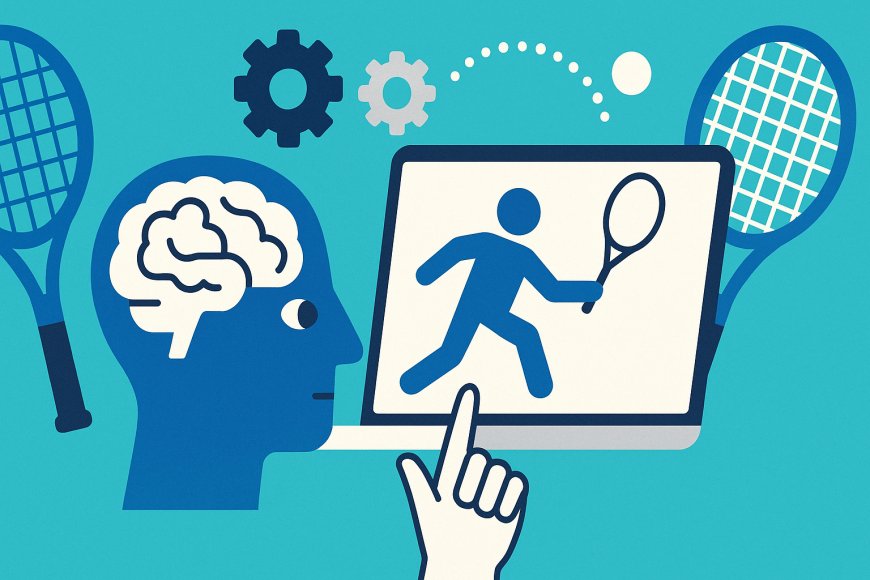
Consider the act of learning a complex dance routine. Each movement must not only be memorized but also internalized through physical repetition. This scenario exemplifies a foundational principle of embodied cognition: the notion that cognitive processes are deeply rooted in the body's interactions with the world. In recent years, this theory has gained traction, challenging traditional views that regard cognition as solely a cerebral activity. By integrating sensory and motor systems, embodied cognition offers a holistic understanding of how skills are acquired and refined.


Embodied cognition posits that our understanding of concepts is inherently linked to our sensory and motor experiences. This perspective has profound implications for how skills are taught and learned. In a typical study investigating these dynamics, participants might be asked to learn a new language involving gestures. Those who engage physically with the gestures often show improved retention and understanding compared to those who learn the language through verbal instruction alone. Such findings suggest that incorporating bodily movement into learning paradigms can enhance cognitive outcomes.
In educational settings, this approach has led to innovative teaching methods. For instance, in a mathematics classroom, students might use hand movements to understand geometric shapes. The physical manipulation of shapes enables a deeper grasp of abstract concepts, bridging the gap between theoretical math and practical understanding. By engaging multiple senses, embodied cognition facilitates a richer learning experience, making abstract ideas more tangible and accessible.
Physical Interaction and Cognitive Development
The relationship between physical interaction and cognitive development is not merely theoretical; it is supported by empirical evidence. In a series of controlled experiments, children tasked with solving spatial reasoning problems demonstrated better performance when allowed to physically manipulate objects. This tactile engagement facilitated the formation of mental models, essential for understanding spatial relationships. The incorporation of bodily movement into cognitive tasks activates neural pathways associated with both motor and cognitive functions, indicating a deeply interconnected system.
Beyond childhood education, embodied cognition plays a crucial role in professional skill development. Consider a medical training program where surgeons use virtual reality simulators to practice procedures. The physical motions, replicated in a digital environment, contribute to the cognitive anchoring of surgical techniques. This practice enhances precision and decision-making under pressure, underscoring the importance of embodied experiences in skill refinement.
Moreover, embodied cognition is pivotal in sports psychology, where athletes are trained to visualize physical movements as part of mental rehearsal. This method capitalizes on the brain's ability to simulate physical activity, promoting skill acquisition without physical exertion. The blending of visualization techniques with physical practice strengthens neural circuits involved in skill execution, optimizing performance outcomes.
Embodied Cognition and Technological Interfaces
As technology advances, the intersection of embodied cognition and interactive interfaces becomes increasingly relevant. In human-computer interaction, the design of interfaces that leverage physical gestures can significantly impact user experience and learning efficiency. For instance, touchscreen devices that require pinching or swiping engage users' motor skills, enhancing memory retention and user engagement. This integration of physical actions with digital tasks reflects the principles of embodied cognition, suggesting that technology can be a powerful tool in skill development.
Consider the rise of wearable technology in fitness training. Devices that track physical activity and provide real-time feedback encourage users to form habits based on embodied experiences. The integration of movement and data fosters a more intuitive understanding of fitness goals, supporting long-term behavioral change. These interfaces not only gather data but also influence how users perceive and interact with their physical selves, blending cognitive and physical domains.
In the realm of virtual reality, embodied cognition principles are harnessed to create immersive learning environments. Virtual simulations that require physical interaction enable users to explore and experiment within safe, controlled settings. This approach is particularly beneficial in fields such as aviation, where pilots can practice emergency procedures without real-world risks. The embodiment of tasks in virtual landscapes promotes experiential learning, demonstrating the utility of embodied cognition in a digital age.
Embedding embodied cognition in educational and professional contexts promises a future where learning is not confined to abstract mental exercises but is enriched by physical engagement. As research continues, the potential applications across diverse fields become evident, offering new strategies for training and development.
As we look to the future, the implications of embodied cognition continue to expand, offering innovative pathways for enhancing human skills. The integration of physical and cognitive processes holds promise not only for individual development but also for the evolution of educational and occupational frameworks, ensuring that learning is a dynamic, holistic experience.
What's Your Reaction?