





















































































The Dangers of Success: Why Your Friends Might Be Your Biggest Challenge
Success can reveal hidden enemies, often among your friends who subtly sabotage your ambition through clique-dom and the theft of your most precious resource: time. Learn to recognize these relationships and prioritize your dreams over social norms.

There is a form of loss that rarely feels like loss while it is happening. It does not come through conflict, nor through failure, nor through visible harm. It comes quietly, through presence—through people, routines, and moments that appear harmless, even warm, yet gradually consume the only resource that cannot be recovered: time. These are not relationships that damage you in obvious ways. They do not take your money, nor do they openly obstruct your path. But they take something more decisive. They take your capacity to build.


What makes this dynamic difficult to detect is its softness. It is covered by familiarity, by politeness, by the unspoken expectations of social continuity. Conversations repeat, meetings extend, gatherings accumulate, and without noticing, your days begin to resemble each other. The exceptional disappears, not because you rejected it, but because it no longer fits into the structure of your time. Routine becomes dominant, and within it, ambition begins to contract.
This is not because those around you intend harm. In most cases, they do not. They operate within their own frame of stability. They value presence, continuity, and shared experience. And within that frame, your attempt to move beyond it appears unnecessary, sometimes even disruptive. They prefer that you remain—not out of malice, but out of alignment with what they understand.
Here, the tension becomes internal.
You are not facing opposition.
You are facing inertia.
The environment does not push you down. It holds you in place.
And this is where the real cost emerges. Not in what is taken from you, but in what is prevented. The hours that could have been invested in building something that extends beyond the present are absorbed into maintaining what already exists. The mind, instead of entering depth, remains in circulation. Thought becomes reactive rather than generative. And over time, the ability to focus—true, uninterrupted focus—weakens.
This is the soft boundary.
A limit that does not declare itself as a limit.
It feels like belonging, but functions as containment.
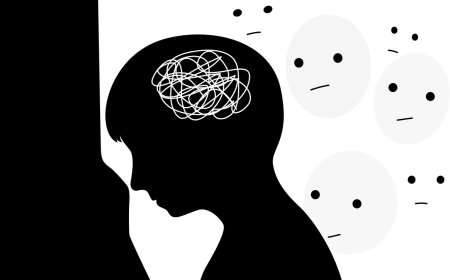
Within this structure, something else develops—a form of psychological ceiling. A shared standard of what is normal, acceptable, and expected. Any movement beyond it begins to feel like deviation. Not because it is wrong, but because it is unfamiliar. And unfamiliarity, within close circles, often triggers subtle resistance.
Not direct rejection.
But quiet discouragement.
A shift in tone.
A question that suggests reconsideration.
“Why are you pushing this far?”
“Is it necessary?”
“Can’t you slow down?”
These are not attacks. They are reflections of a different equilibrium.
And if not recognized, they become internalized.
You begin to negotiate with your own ambition. To reduce its intensity in order to maintain harmony. To adjust your direction so that it fits within the expectations around you.
This is where many trajectories are altered.
Not by failure.
But by accommodation.
Because growth, in its early stages, requires a condition that is often uncomfortable: separation. Not permanent isolation, but temporary withdrawal from constant engagement. The ability to step away from noise, from repetition, from social obligation, and to enter a space where thought can deepen and direction can solidify.
This is not a rejection of relationships.
It is a redefinition of priority.
Because building anything that matters—whether intellectual, professional, or personal—demands uninterrupted time. It requires a form of attention that cannot coexist with continuous social presence. Depth and dispersion do not operate together.
This is why solitude becomes functional.
Not as an emotional state, but as a strategic one.
In solitude, the mind reorganizes. It moves from reaction to creation. It begins to connect ideas, to refine direction, to engage with complexity without interruption. What appears from the outside as absence is, in reality, construction.
And this construction produces difference.
Not immediately visible, but structurally significant.
When you return, you are not the same.
Your thinking is sharper.
Your direction is clearer.
Your standards have shifted.
And this difference often creates distance—not because you moved away, but because you moved forward.
This is where another misconception must be addressed.
Success is often associated with recognition within one’s immediate environment. Being known, appreciated, and validated within a local circle. But this form of recognition, while satisfying, is not indicative of impact. It reflects familiarity, not contribution.
True impact operates differently.
It is not constrained by proximity.
It is measured by influence beyond immediate circles.
By the ability to produce something that carries weight outside the environment in which it was created.
This requires a different orientation.
Not toward being seen, but toward building.
Not toward maintaining presence, but toward creating substance.
And this brings the responsibility back to choice.
Relationships are not inherently limiting.
But unexamined relationships can become so.
The question is not who is around you.
It is how your time is structured within that environment.
Are your interactions aligned with your direction?
Do they expand your thinking, or maintain your current state?
Do they create momentum, or absorb it?
Answering these questions requires honesty.
Because the cost of misalignment is not immediate.
It accumulates.
And accumulation, over time, becomes outcome.
This does not require complete withdrawal.
It requires precision.
To choose when to engage, and when to step back.
To maintain connection without sacrificing direction.
To value relationships without allowing them to define your limits.
Because in the end, success is not prevented by the presence of others.
It is prevented by the absence of boundaries.
And the ability to set those boundaries—quietly, consistently, without justification—is what allows a person to move from participation to creation.
From being part of a circle,
to becoming an exception within it.
What's Your Reaction?