













































































Identity: When Authenticity Becomes an Obstacle to Growth
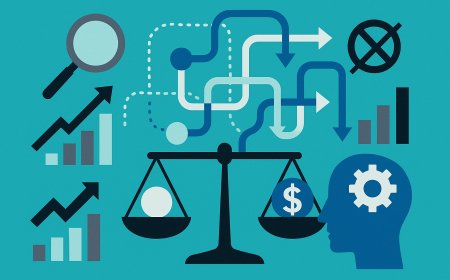
Identity, while a source of belonging, can become a conceptual prison that hinders growth. This article challenges the blind sanctification of authenticity, arguing that a mature identity must be a living system open to criticism and refinement for true progress.
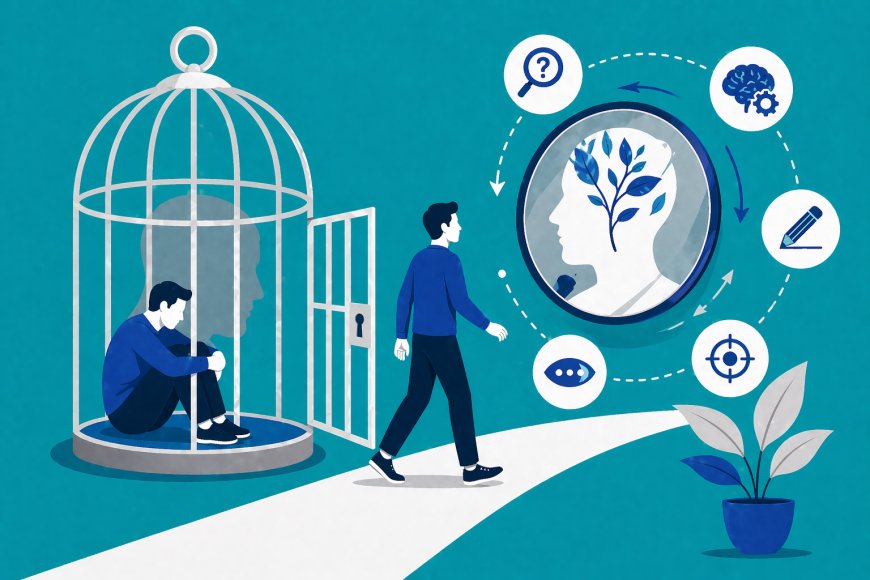
Modern societies, along with the vast expanse of contemporary human consciousness, are confronting a growing dilemma around the concept of identity and its limits. Identity, in its origin, is a means of self-definition and a way to anchor belonging in a shifting world. Yet its transformation into an absolute, unquestionable value has, in many cases, turned it into a rigid instrument not unlike the very ideologies it once resisted.


This raises an uncomfortable but necessary question: is everything we call cultural identity worthy of protection? Or has authenticity, in some of its forms, become a refined justification for preserving what no longer serves human dignity or progress?
Not every identity deserves preservation. This is a statement that demands courage, because it challenges deeply rooted assumptions. Ethical protection should not be granted based on age, emotional attachment, or inherited loyalty, but on what an identity contributes: dignity, awareness, justice, and the capacity to evolve.
Across many societies, particularly within Arab contexts, we witness a subtle but consequential confusion. Authenticity is often mistaken for rigidity, loyalty for stagnation, and identity for a fixed narrative that resists examination. The problem is not in valuing identity, but in placing it beyond critique. When criticism is framed as betrayal, identity ceases to be a living framework and becomes a closed system.
Some of what is preserved under the banner of identity is not neutral. It can carry forms of normalized harm embedded in customs, education, and discourse, until repetition transforms it into perceived virtue. The danger is not in belonging, but in freezing consciousness at the level of belonging.
Identity is not a static inheritance. It is a narrative system, shaped by both what we choose to retain and what we choose to become. It is not simply received. It is continuously constructed.
Identity as a Psychological Defense Mechanism
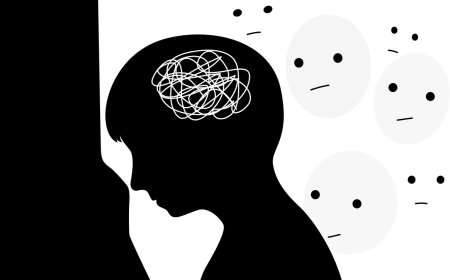
What appears as strong attachment to identity may, in some cases, reflect a deeper psychological response. When individuals experience uncertainty, fragmentation, or loss of self-definition, they often seek stability through collective identity.
In this sense, identity can function as compensation. It becomes a protective structure, not necessarily because it is fully understood or consciously chosen, but because it offers coherence in moments of internal ambiguity.
Expressions such as “this is who we are” or “our identity cannot be questioned” may not always signal confidence. They may signal vulnerability. The stronger the external defense, the more fragile the internal foundation may be.
This pattern becomes more pronounced in societies that have experienced historical disruption, cultural dislocation, or collective insecurity. Identity, in these contexts, expands in symbolic importance. It becomes a repository of meaning when other structures weaken.
However, this form of attachment carries a cost. When identity becomes untouchable, growth becomes constrained. Change is interpreted as betrayal. Reflection becomes a threat. The system protects itself, but at the expense of development.
Re-evaluating Authenticity
There is a paradox that demands attention. How can authenticity be used to justify continuity when continuity itself may conflict with progress?
In every living system, survival is linked to adaptation. Nature does not preserve what cannot evolve. What does not change eventually becomes irrelevant.
Yet culture is often treated differently. Identity is preserved as if it were an artifact, not a living process. It is maintained without sufficient attention to whether its components remain aligned with the realities of the present.
The value of authenticity does not lie in its age, but in its relevance. Some inherited elements reflect earlier psychological and social structures that no longer support development. When these elements are preserved without examination, they limit rather than strengthen identity.
A mature identity does not resist critique. It depends on it. It retains what enhances human potential and discards what restricts it. It is not fixed. It is refined.
This process resembles maintenance rather than preservation. It requires continuous evaluation, selective retention, and intentional renewal.
Identity as a Living System
Building a more effective identity does not require abandoning the past. It requires engaging with it differently.
Loyalty to identity is not demonstrated through repetition, but through development. It is not measured by how rigidly the past is held, but by how meaningfully it is extended.
Societies that evolve do not transmit identity as a closed structure. They transmit the ability to examine, reinterpret, and reconstruct it.
Identity, in this sense, shifts from being a defensive shield to a guiding framework. It becomes a system that supports expansion rather than limiting it.
The Final Measure
Identity will not be measured by its resistance to change, but by its capacity to generate relevance.
What strengthens individuals, enhances awareness, and aligns with dignity becomes part of a meaningful identity. What restricts growth and preserves outdated structures does not.
The question is no longer whether identity should be protected, but how it should be shaped.
Because identity is not what remains unchanged. It is what continues to become.
What's Your Reaction?