








































Life Is Not Time... It Is Impact
Life is not measured by the years you live but by the impact you leave behind. This article challenges the traditional view of life as a calendar, urging you to seek depth and sincerity in your experiences and make every moment a testament to your purpose.
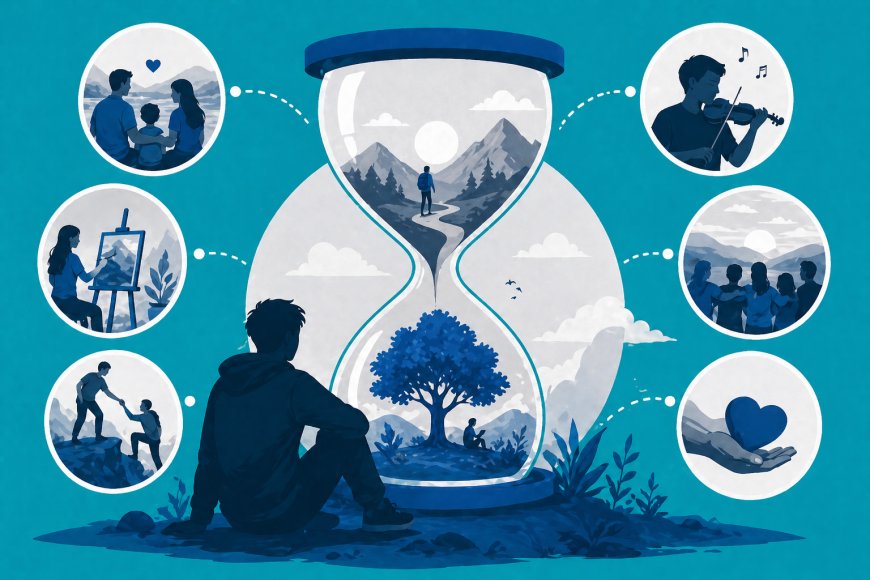
Life is often mistaken for time, reduced to numbers that advance without permission—years counted, days scheduled, hours consumed in routine. But time, in its raw form, is indifferent. It passes whether you live or not. It records movement, not meaning. And this is where the misunderstanding begins. Because to exist within time is not the same as to live. Life is not the duration between a beginning and an end. It is what happens within that duration—the depth of what is experienced, the intensity of what is felt, and the imprint that remains after the moment has passed.


There are those who live long lives without ever entering them. They move from one day to another with mechanical precision, fulfilling obligations, maintaining appearances, preserving stability. Yet nothing within them shifts. No internal expansion. No confrontation with the unknown. No moment that disrupts the familiar and demands presence. And in contrast, there are those whose years may be fewer, but whose experiences are dense. Moments that alter direction, encounters that redefine perception, decisions that carry weight. These moments do not pass quietly. They leave a mark. And that mark becomes the true measure of life.
This is why time alone cannot be used as a metric. Because time, without engagement, is empty. It accumulates without transforming. What gives it value is not its length, but its density—the degree to which it is inhabited. A single moment, fully lived, can contain more life than years spent in repetition. Not because it is longer, but because it is deeper.
At the center of this depth is experience. Not superficial experience, but the kind that disrupts comfort. To love in a way that exposes vulnerability. To lose and remain present to the loss. To fail without withdrawing. To move toward uncertainty without guarantees. These are not events to be avoided. They are the mechanisms through which life becomes real. Because reality, at its core, is not defined by ease. It is defined by engagement.
Maturity, then, does not arrive with age. It emerges through contact. Through immersion in situations that require response, that demand attention, that refuse to be navigated on autopilot. Time may pass, but without these encounters, nothing within the person evolves. The years accumulate, but the self remains unchanged.
This leads to a more precise understanding: life is not constructed from events themselves, but from the way those events are received. Two individuals can experience the same situation and emerge differently. One passes through it without awareness. The other allows it to pass through them—observing, feeling, extracting meaning. The difference is not in the event. It is in the level of presence.
To live, then, is an active process. It requires a decision. Not to control every outcome, but to enter each moment with attention. To resist the drift into routine where days become indistinguishable from one another. To interrupt repetition with intention. To feel rather than avoid, to engage rather than observe, to risk rather than remain unchanged.
This does not imply constant intensity. Life is not measured by dramatic peaks alone. It is shaped by the accumulation of moments that are fully experienced—whether quiet or intense, simple or complex. A conversation that is truly heard. A decision that is consciously made. A challenge that is faced directly. These are not extraordinary in appearance, but they are transformative in effect.
Because transformation is the core of impact.
And impact is what defines life.
Not the number of tasks completed, nor the efficiency with which time is managed, but the extent to which a person is altered by what they encounter—and the extent to which they, in turn, alter what they encounter.
This creates a dual movement. Life leaves an imprint on you, and you leave an imprint on life. The first is unavoidable. The second is a choice.
To live passively is to receive without responding. To move through experiences without allowing them to shape you, and without shaping anything in return. To live actively is to participate in this exchange—to allow each moment to refine you, and to act in ways that extend beyond the moment itself.
From this perspective, organizing time becomes secondary. What matters is organizing experience. Not how many hours are filled, but how those hours are used. Whether they deepen awareness, expand capacity, or contribute to something beyond immediate necessity.
Because in the end, what remains is not the timeline.
It is the residue.
What has changed within you. What has been created outside of you. What continues to exist after the moment has ended.
Life, then, is not something that happens to you.
It is something that is formed through you.
And its measure is simple, though not easy:
Not how long it lasted.
But how deeply it was lived—and how far its impact extends beyond you.
What's Your Reaction?