







































































The Crisis of Modern Awareness: When Everyone Becomes a Specialist
In the digital age, awareness has shifted from sober institutional practice to a cacophony of voices, where anyone can be an expert. This article explores the crisis of modern awareness and the crucial difference between a specialist and a transmitter.
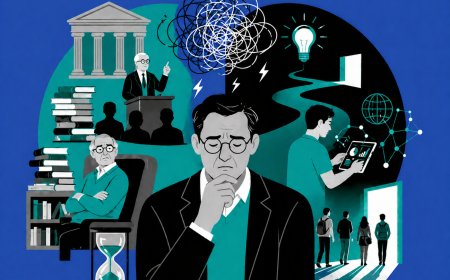
In a time when access to information was not easy, and people had no window other than television screens or radio waves, awareness was a structured institutional act. It was preceded by an official invitation, and surrounded by a sense of appreciation and respect. The specialist was hosted not to express a personal opinion or a subjective impression, but to present reliable science based on studies and experiments, speaking in the language of the profession rather than the language of mood.


His appearance was, in itself, an educational event. The audience treated his words as they would treat verified news. Awareness was not a popular act, but a disciplined practice supervised by professional media personnel, where guests were carefully selected, and every detail of timing and context was prepared so that the message would emerge clear, structured, and precise.
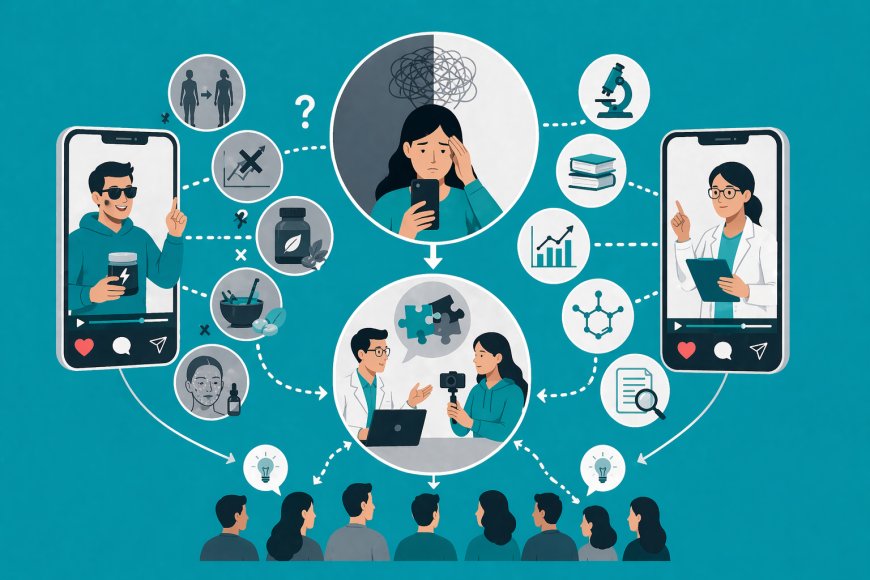
But time has changed. The tools have changed. Barriers have been broken, and the door has been opened wide. It is no longer institutions that determine who speaks in the name of awareness. Every smartphone has become a media platform, and every individual, regardless of the depth or limits of their specialization, can now speak, judge, and present what they believe to be educational without accountability.
Awareness is no longer exclusive to doctors, specialists, or academics. It has become a shared act, practiced by influencers, where information circulates like rumors, driven by speed, engagement, and visibility.
Here, a clear gap emerges: between understanding and transmission. Between those who comprehend the roots, structure, and context of knowledge, and those who deliver it as an attractive phrase designed to please, not to enlighten.
The difference is no longer in the information itself, but in the ability to evaluate its source, assess the quality of its references, and respect its complexity before simplifying it. This is where the real distinction appears: between one who shortens the path to understanding, and one who leads toward the illusion of understanding.
The danger, then, is not in the number of voices, but in the absence of reference, and the fading presence of the specialist amid the noise. We now face a new cognitive landscape where awareness is not necessarily more accurate, but certainly more widespread. The question remains: is this expansion a true growth in awareness, or merely a wider spread of superficial understanding?
The Conflict of Two Voices: When the Transmitter Outshines the Specialist
Transmission today is an undeniable reality. It is too fast to control, too vast to contain, and too powerful to ignore.
In the past, specialists moved slowly toward the audience, through institutional channels and formal approvals. Today, a transmitter can reach thousands, even millions, with a single action, without waiting, filtering, or regulation.
It is not surprising that some specialists feel provoked. They see in this scene a departure from discipline and a challenge to the scientific path they have spent years building. They ask: who gave him the right to speak?
Reality answers simply: the audience did.
Here lies the paradox. The specialist holds knowledge, but the transmitter holds reach. Attempts to silence this reality are ineffective, not because transmitters are always correct, but because they have become part of the system itself. Just as newspapers could not prevent blogs, and television could not stop digital platforms, this transformation follows its own logic.
More striking is that some transmitters, through clarity, simplicity, and a deep understanding of audience needs, have begun to communicate information more effectively than some specialists. Not necessarily in scientific depth, but in impact, comprehension, and retention.
The rigid language, complex explanations, and distant tone that some specialists maintain have been overtaken. Knowledge cannot fulfill its purpose unless it reaches people.
The question, therefore, is no longer who has the right to speak, but who can communicate truth without distortion.
The Future of Awareness: Integration, Not Exclusion
Looking forward, awareness will no longer be tied exclusively to the specialist. It will emerge through transmitters who may not hold formal credentials, but possess something equally powerful: the ability to translate knowledge into meaning that people can absorb.
This does not eliminate the role of the specialist. It transforms it.
The specialist can remain isolated, speaking within a limited circle, or adapt, reframe, and engage. The future does not belong to one side, but to integration:
- The specialist produces knowledge
- The transmitter simplifies and distributes it
- The specialist protects accuracy
- The transmitter extends reach
This is the model that balances depth with influence.
At the same time, responsibility shifts to the audience. In a world saturated with content, people must evaluate what they consume. Not through appearance or style alone, but through critical thinking:
Does this information have a source?
Does it have a foundation?
Is it explained with understanding, or decorated with persuasion?
Institutions, too, must adapt. Traditional awareness campaigns, built on static messages, are no longer sufficient. Awareness is becoming a system of influence, where content is created, delivered, evaluated, and continuously improved.
In the future, awareness will not be a role. It will be an ecosystem.
The transmitter will not be an amateur, but a professional.
The specialist will not be isolated, but integrated.
And the audience will not be passive, but an active participant in shaping truth.
What's Your Reaction?