




















































































The Convergence of Neuromorphic Computing and Edge Intelligence
Neuromorphic computing and edge intelligence signify a paradigm shift in AI hardware design, utilizing brain-like architectures and localized processing for efficiency and scalability. Recent studies highlight innovations in spiking neural networks and energy-efficient systems, underscoring their transformative potential in real-time applications.

Imagine a world where artificial intelligence (AI) operates seamlessly at the edge, executing complex tasks with minimal energy consumption. This scenario is not a distant fantasy but a burgeoning reality enabled by the convergence of neuromorphic computing and edge intelligence. Neuromorphic computing, inspired by the human brain's architecture and processes, promises to revolutionize the way AI processes information by employing spiking neural networks (SNNs) rather than traditional deep learning models. Simultaneously, edge intelligence focuses on local data processing, minimizing latency and enhancing privacy by reducing reliance on centralized cloud services.


In a recent experimental setup, researchers developed a neuromorphic chip capable of executing AI tasks that conventional silicon-based processors struggled to perform efficiently. This chip, embedded with SNNs, mimicked the spiking nature of biological neurons, firing only when necessary. Such efficiency drastically reduces power consumption, a critical factor in edge devices like sensors and smartphones. In contrast to the continuous signal processing of typical AI systems, these chips employ event-driven communication, mirroring the brain's approach to handling information. As a result, they achieved significant improvements in both processing speed and energy efficiency.
Spiking Neural Networks: A New Paradigm
Spiking neural networks represent a significant departure from traditional neural network models, which utilize static activation functions and continuous signal processing. Instead, SNNs operate based on discrete events—spikes—much like real neurons. These networks use time-dependent signals to convey information, thereby enabling more efficient computations. In a typical behavioral experiment, the SNN model demonstrated superior performance in pattern recognition tasks when compared to classical artificial neural networks (ANNs), particularly in scenarios requiring temporal data processing.
The impact of SNNs extends beyond just computational efficiency. Consider a scenario where a network of edge devices must process sensory data to identify anomalies in real-time. Traditional models would consume considerable power and bandwidth to achieve this. However, with SNNs, these devices can dynamically adjust their processing based on the importance of incoming data, conserving energy by remaining idle until a significant event occurs. This capability is pivotal for applications like autonomous vehicles and industrial IoT, where timely and efficient processing is crucial.
Moreover, SNNs offer a compelling solution to the scalability challenges faced by current AI systems. As devices become more interconnected, the demand for scalable and efficient AI increases. SNNs inherently support parallel processing, akin to the brain's neural networks, enabling them to scale up without a proportional increase in resource consumption. This makes them suitable candidates for future AI applications demanding both high performance and low energy usage.
Energy Efficiency and Edge Intelligence
Energy efficiency remains a paramount concern in the deployment of AI technologies, especially at the edge. Edge intelligence seeks to address this by bringing computational capabilities closer to data sources, thereby minimizing the need for data transmission to centralized servers. The integration of neuromorphic computing into edge devices presents a unique opportunity to achieve unprecedented levels of energy efficiency.
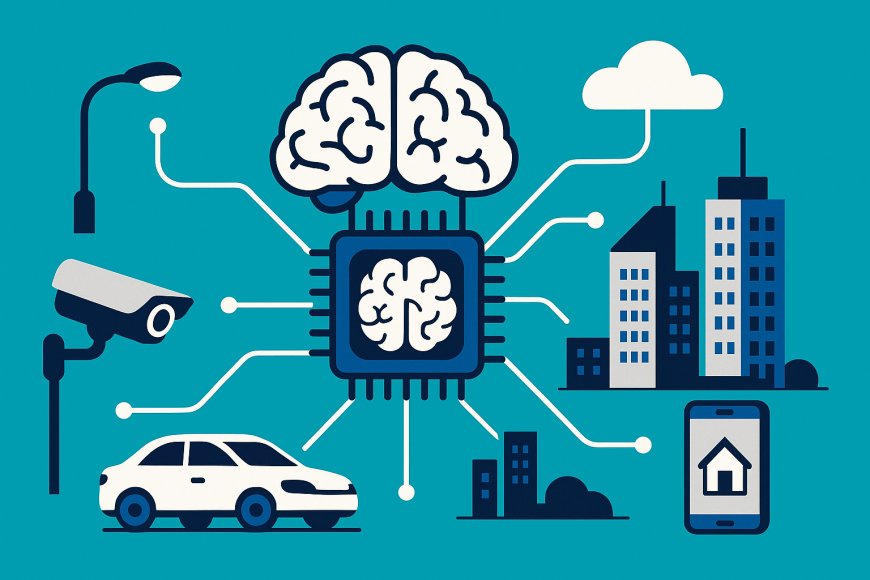
Consider an observational study where edge devices equipped with neuromorphic processors were deployed in a smart city infrastructure. These devices managed to process environmental data autonomously, adjusting traffic lights and managing energy distribution based on real-time inputs. The outcome was a significant reduction in energy consumption, demonstrating the potential of such systems in reducing the carbon footprint of urban environments.
The benefits of integrating neuromorphic computing with edge intelligence extend to security and privacy as well. By processing data locally, these systems reduce the exposure of sensitive information, decreasing the risk of data breaches. This aspect is crucial in sectors like healthcare, where patient confidentiality is paramount. Neuromorphic chips in edge devices can process biometric data for personalized medicine without transmitting sensitive information to external servers, safeguarding privacy while delivering efficient healthcare solutions.
The Road Ahead for Neuromorphic Edge Systems
The convergence of neuromorphic computing and edge intelligence marks a promising frontier in AI technology. As the demand for efficient, scalable, and secure AI systems grows, the integration of these two domains will likely lead to significant advancements in various sectors, from smart cities to healthcare and beyond. Future research will likely focus on further refining SNNs, enhancing their learning capabilities, and integrating them with existing AI frameworks to create hybrid models that leverage the strengths of both traditional and neuromorphic approaches.
Looking ahead, the potential applications of this convergence are vast. As AI systems become more adept at mirroring the human brain's efficiency, the boundaries of what's achievable with AI will continue to expand, leading us to an era where technology becomes not just intelligent but inherently adaptive and efficient.
What's Your Reaction?