Behavioral Economics: Reassessing Bias through the Lens of Scientific Inquiry
Examine the intricate mechanisms of bias within behavioral economics, emphasizing the importance of methodological rigor in discerning true causal relationships. Using case studies and hypothetical experiments, this piece elucidates how biases influence economic decision-making, urging a shift towards more precise inquiries and interventions. Such a shift holds the potential to redefine economic theories and practices, enhancing the field's ability to predict and influence human behavior more accurately. By integrating scientific methodologies, behavioral economics can move beyond superficial correlations, prompting a deeper comprehension of human choice.

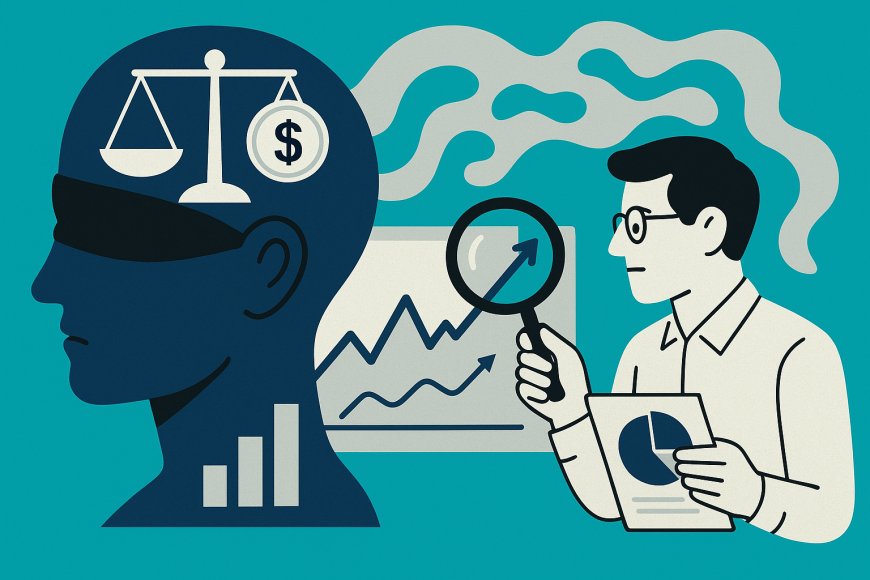
Imagine a bustling metropolis where every decision, from purchasing a morning coffee to investing in stocks, is subtly influenced by unseen forces. Behavioral economics, a field that intersects psychology and economics, suggests that biases, often invisible to the decision-maker, shape economic behaviors. These biases can lead to systematic errors in judgement, affecting everything from market trends to personal finance decisions. Yet, understanding these biases requires more than mere observation; it demands rigorous scientific inquiry.


Consider an experiment in which participants are asked to choose between two investment options. Despite one being objectively superior, researchers observe a consistent preference for the inferior choice. This anomaly, often attributed to cognitive biases such as loss aversion or overconfidence, illustrates the challenge of identifying true causal relationships in economic behavior. As biases often mimic causality, they can mislead researchers into drawing incorrect conclusions if not properly accounted for in experimental design.
The Illusion of Causality in Behavioral Economics
In a typical observational study, researchers might examine consumer spending patterns in response to fluctuating fuel prices. At first glance, the correlation appears straightforward: as fuel prices increase, discretionary spending decreases. However, this correlation may be confounded by underlying biases such as anchoring or emotional reactions to market volatility. These biases create an illusion of causality, obscuring the true mechanisms driving consumer behavior.
In a controlled study, participants might be presented with hypothetical scenarios involving changes in fuel prices and asked to predict their spending habits. By manipulating variables like emotional state and prior knowledge, researchers can isolate the effects of specific biases on decision-making. Such experiments reveal that biases often operate subconsciously, influencing choices in ways that are not immediately apparent. This nuanced understanding is crucial for developing interventions that can effectively mitigate bias-driven errors.
Moreover, the illusion of causality is not limited to individual decision-making. It extends to macroeconomic phenomena as well. For instance, a sudden economic downturn may be attributed to external shocks, yet underlying cognitive biases among policymakers and market participants can exacerbate its effects. Thus, disentangling causality from correlation in behavioral economics requires an intricate web of experimental validation and theoretical refinement.
Methodological Approaches to Bias Management
To confront the challenge of bias, behavioral economists must employ advanced methodological frameworks. One approach involves using randomized controlled trials (RCTs) to systematically vary conditions and observe resulting behavioral changes. In a hypothetical RCT, subjects could be exposed to varying degrees of financial risk or uncertainty, with the aim of pinpointing specific biases like hyperbolic discounting or status quo bias that distort rational decision-making.
Another promising methodology is the use of agent-based models (ABMs). These computational models simulate individual agents, each endowed with distinct biases, interacting within a virtual economy. By adjusting parameters related to bias, economists can observe emergent behaviors and potentially identify causal pathways that remain elusive in real-world scenarios. Such simulations provide a sandbox for testing interventions aimed at bias reduction.
Furthermore, integrating neuroscientific techniques, like functional magnetic resonance imaging (fMRI), into economic research offers insights into the neural underpinnings of bias. By examining brain activity during economic decision-making, researchers can uncover the cognitive processes that lead to biased choices. This interdisciplinary approach enhances our ability to predict human behavior and suggests novel strategies for mitigating bias in economic contexts.
Implications for Economic Theory and Practice
The incorporation of rigorous scientific methodologies into behavioral economics holds transformative potential. By moving beyond superficial correlations, economists can refine existing theories and develop novel models that more accurately capture the intricacies of human decision-making. This shift could lead to more effective policy interventions designed to improve economic outcomes.
For example, a deeper understanding of biases could inform the design of nudges—subtle policy measures intended to steer people towards beneficial behaviors. These nudges, grounded in scientific evidence, can enhance public welfare by correcting for biases that lead to suboptimal choices. Moreover, such insights could revolutionize financial advising, enabling professionals to devise strategies that align with clients' true preferences.
In the future, the integration of behavioral insights with technological advancements, like artificial intelligence, may further expand the frontier of economic research. By harnessing big data and machine learning, economists can develop predictive models that preemptively identify bias-driven anomalies in market behavior. This proactive stance could yield more resilient economic systems, capable of withstanding the unpredictable forces of human irrationality.
The journey of understanding bias in behavioral economics is far from over. As scientific methodologies continue to evolve, so too will our grasp of the hidden forces shaping economic decisions. This ongoing pursuit not only enriches economic theory but also promises to enhance the well-being of individuals and societies at large.
What's Your Reaction?