

















































































Challenging the Nodes and Edges: Rethinking Network Theory Assumptions
Network theory has long served as a foundational tool for understanding complex systems across disciplines. Yet, as data complexity escalates, established assumptions within network theory face renewed scrutiny. Traditional models often rely on static representations of nodes and edges, potentially oversimplifying dynamic interactions. By questioning these assumptions, researchers explore innovative models that integrate temporal dynamics, offering a more precise depiction of real-world networks. This examination not only redefines theoretical perspectives but also enhances predictive capabilities in diverse applications, urging a paradigm shift towards more nuanced approaches in network analysis.

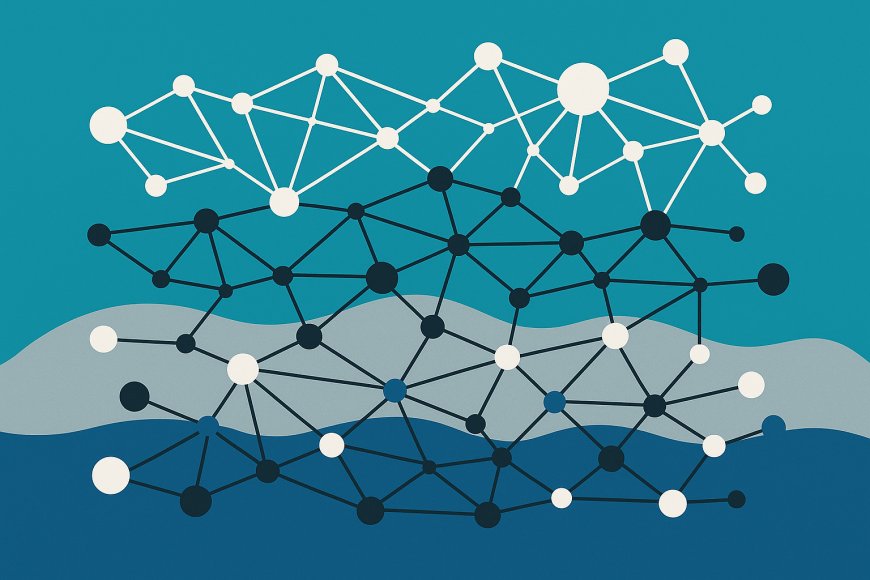
In the realm of complex systems, network theory has established itself as a cornerstone methodology, used to depict and analyze interactions across a multitude of domains, from social networks to biological systems. However, the conventional assumptions underlying network theory are increasingly questioned as data becomes more dynamic and complex. Traditional network models are often static, representing nodes and edges in a manner that may not fully capture the intricate, evolving interactions they intend to depict. This calls for a re-evaluation of the fundamental assumptions that have long governed our understanding of networks.


Consider a behavioral experiment where individuals within a network are observed for their social interactions. Classic network theory might represent these individuals as nodes, with edges illustrating the connections between them. This model assumes that the network's structure remains constant over time, an assumption which is often not true in dynamic social systems. Individuals come and go, relationships change, and interactions can be transient. Thus, static models may not adequately reflect the real-time dynamics of such systems, leading to misguided interpretations and predictions.
Dynamic Models: Introducing Temporal Dimensions
One of the fundamental critiques of traditional network models is their static nature, which often disregards temporal dynamics. The integration of time into network models is not just an enhancement but a necessity for representing real-world complexities. Imagine a study focusing on the spread of information within an online platform. The spread is not instantaneous nor static; it ebbs and flows with trends, user engagement, and external events. By incorporating temporal elements into network models, researchers can capture these fluctuations, providing a more accurate depiction of the underlying processes.
Temporal networks offer a framework where nodes and edges have lifespans or time stamps, allowing for a more granular analysis of network dynamics. Such models enable the examination of how the strength and frequency of connections change over time, reflecting the true nature of the system being studied. In an observational study on disease transmission, for instance, temporal networks can more effectively model how interactions vary with public health interventions, seasonal variations, or behavioral changes, leading to better-informed policy decisions.
The shift towards dynamic network models also influences our understanding of network robustness and vulnerability. In traditional static models, robustness is often assessed by removing nodes or edges and observing the impact on the network's connectivity. However, in a temporal context, the timing of these removals can significantly alter the outcomes. A network might appear robust when assessed statically, yet prove vulnerable when temporal dynamics are considered, as the removal of a critical node at a specific time could disrupt key functions.
Beyond Connectivity: Exploring Multifaceted Interactions
Network theory has typically focused on connectivity as a primary measure of network structure. However, this perspective can oversimplify the multifaceted nature of interactions within networks. In a typical observational study of ecosystems, species are traditionally represented as nodes, with predation or symbiosis depicted as edges. Yet, these interactions are not merely binary; they encompass a range of cooperative and competitive dynamics that evolve over time.
To address this complexity, researchers are exploring multilayer networks, which go beyond single-layer connectivity to incorporate multiple dimensions of interaction simultaneously. Each layer represents a different type of interaction or relationship, providing a comprehensive view of how entities within a network are interconnected. For example, in a multilayer network model of urban infrastructure, one layer might represent transportation links, while another depicts communication lines, offering insights into how disruptions in one layer can affect the others.
This approach challenges the traditional assumption that a singular type of interaction can adequately capture network dynamics. By exploring the interplay between multiple layers, researchers can identify emergent properties that are not apparent when interactions are considered independently. In financial networks, for instance, multilayer models can reveal systemic risks that arise from the interactions across different markets, informing better regulatory frameworks and risk management strategies.
Redefining Predictive Capabilities in Network Analysis
The questioning of established assumptions in network theory not only reshapes theoretical frameworks but also enhances predictive capabilities. Accurate predictions are contingent on the model's ability to reflect the real-world dynamics it represents. In a scenario where misinformation spreads across social media, static models may fail to predict the rapidity and reach of such spread due to their inability to account for the temporal and multifaceted nature of interactions.
Dynamic and multilayer network models offer more profound predictive insights by capturing the nuanced dynamics of information flow. These models can account for the varying influence of different network participants over time, adjusting predictions based on changing conditions and interactions. By doing so, they improve the accuracy of predictions in fields ranging from epidemiology to market analysis, allowing for more responsive and effective interventions.
The reassessment of network theory assumptions prompts a methodological evolution that extends beyond mere theoretical inquiry. As researchers delve deeper into the complexities of network dynamics, they pave the way for innovative applications that redefine how we understand and interact with interconnected systems. This evolution not only advances scientific knowledge but also enhances our capacity to address real-world challenges through more informed and adaptive network analyses.
Network theory stands at the cusp of a paradigm shift—one that encourages innovation and challenges traditional paradigms. By embracing dynamic and multifaceted approaches, researchers can unlock new potentials for understanding and managing complex systems. The future of network theory is not merely in refining existing models but in boldly questioning the very assumptions that have long constrained our understanding, leading to a more nuanced and effective exploration of interconnected realities.
What's Your Reaction?