























































































Water Scarcity and Its Geopolitical Ramifications
Water scarcity is not merely an environmental concern; it is a pressing geopolitical issue with profound implications on global stability, economic development, and international relations. As demand for water resources intensifies, conflicts over access and control are becoming increasingly common, reshaping geopolitical landscapes. Technological innovations and international cooperation offer potential solutions, yet the challenges of equitable distribution and sustainable management remain complex and contentious. Understanding water scarcity through a geopolitical lens is crucial for formulating policies that address both environmental and political dimensions.

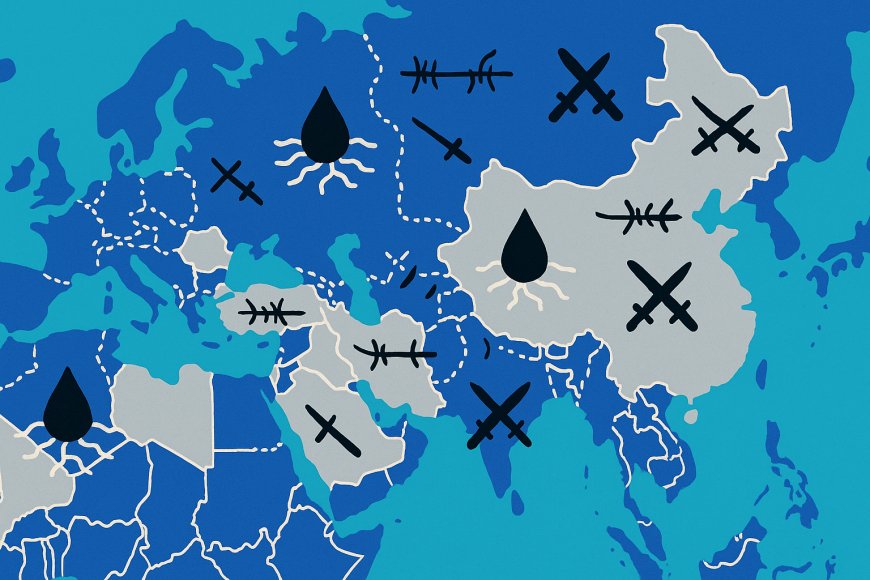
In a hydrologist's recent report, the world is facing a paradox of abundance and scarcity. Despite 71% of the Earth's surface being covered with water, a mere 0.5% is accessible fresh water suitable for human use. This scarcity is exacerbated by climate change, population growth, and poor resource management, leading to a phenomenon that is as much political as it is environmental. The implications of water scarcity extend far beyond local or regional issues, influencing global geopolitics and potentially altering international alliances and conflicts.


Consider a transboundary river basin shared by multiple countries, each with varying degrees of dependence on its water. In one hypothetical scenario involving nations X, Y, and Z, country X, being upstream, controls the flow of water to downstream neighbors Y and Z. This control places X in a position of power, potentially leveraging water flow to influence or coerce political decisions. The downstream countries, in turn, might respond by forming alliances or seeking external intervention to secure their water rights. Such dynamics illustrate how hydropolitics can drive diplomatic tensions and reshape geopolitical landscapes.
One notable study involved the simulation of water resource distribution in a politically volatile region. Researchers employed advanced predictive modeling to assess the impact of various climate scenarios on water availability in regions traditionally prone to scarcity. The models predicted a significant decrease in water availability under high-emission scenarios, which would likely exacerbate existing tensions and could even lead to conflict. This underscores the critical role that scientific predictions play in informing policy and preventing resource-driven conflicts.
The Geopolitics of Resource Control
Resource control has historically been a catalyst for conflict, and water is no exception. The geopolitical significance of freshwater resources cannot be overstated, as they underpin national economies, food security, and energy production. In regions where water bodies cross national borders, the potential for conflict is high. For example, in a research case focusing on a central Asian region, the allocation of water rights and accessibility has been a point of contention among bordering states, each seeking to maximize their share for agricultural and industrial use.
In another hypothetical analysis, consider a scenario where a regional power implements large-scale dam projects to enhance agricultural output and energy security. These projects, while beneficial domestically, reduce water flow to neighboring countries, thereby straining diplomatic relations. This frequently results in complex negotiations involving international bodies and third-party mediators. The outcome of such negotiations often hinges on the relative power and economic leverage of the involved nations, demonstrating the intricate relationship between resource control and geopolitical influence.
Technological advancements in water management offer promise but also complications. Desalination and water recycling technologies are touted as solutions, yet their implementation can be capital-intensive and politically sensitive. For instance, countries that can afford these technologies may gain a strategic advantage, further skewing the balance of power and resource distribution. Thus, while technology offers potential solutions, it also necessitates careful consideration of equity and accessibility to prevent exacerbating geopolitical tensions.
International Cooperation and Policy Implications
International cooperation is indispensable in addressing water scarcity, with policies ideally focusing on equitable resource allocation and sustainable management practices. Existing treaties and frameworks, like the United Nations Watercourses Convention, aim to facilitate cooperation over shared water resources, yet enforcement and compliance remain problematic issues.
In a collaborative study involving multiple international organizations, it was determined that integrated water resource management (IWRM) is a viable strategy for mitigating conflicts over water. IWRM emphasizes coordinated development and management of water, land, and related resources, aiming to maximize economic and social welfare without compromising the sustainability of vital ecosystems. However, the success of such strategies relies heavily on the political will and capacity of nations to adhere to agreed-upon frameworks and principles.
Another dimension of international cooperation is the role of cross-border infrastructure projects that facilitate mutual benefits. For example, the construction of joint water treatment facilities or shared irrigation systems can foster collaboration, build trust, and promote regional stability. Such projects not only address immediate water scarcity issues but also serve as confidence-building measures in geopolitically sensitive regions.
The path forward in addressing water scarcity through a geopolitical lens involves both innovation and diplomacy. As water scarcity intensifies, it demands a rethinking of traditional geopolitical strategies and a renewed focus on cooperative international relations. The challenges are formidable, yet the potential for cooperative solutions provides a hopeful outlook.
As the world grapples with the dual challenges of environmental degradation and geopolitical instability, the significance of water as a crucial resource becomes increasingly apparent. The future will likely see water play an even more pivotal role in shaping global politics, demanding innovative approaches and robust international cooperation.
What's Your Reaction?