The Convergence of Interactive Media and Cognitive Neuroscience
Interactive media is redefining entertainment by integrating cognitive neuroscience principles to enhance user engagement and learning. Advanced technologies are creating experiences that leverage neuroplasticity, reshaping how entertainment is both consumed and perceived.

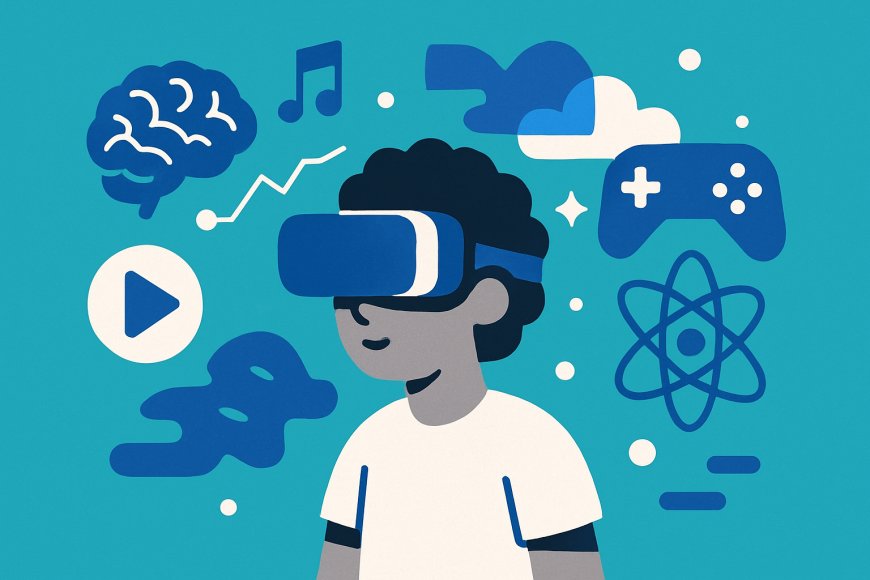
In a dimly lit room, a child donning a virtual reality headset navigates a vivid, interactive world. What she doesn't realize is that she's engaging more than just her imagination; she's intricately influencing her neural pathways. This scenario typifies the modern intersection of entertainment and cognitive neuroscience, where interactive media not only captivates but also molds cognitive functions.


The fusion of interactive media and cognitive neuroscience is not merely a technological evolution; it's a profound rethinking of how entertainment can impact the brain. Unlike traditional passive forms of media consumption, interactive platforms demand active engagement, fostering cognitive processes such as perception, attention, and memory. Through this engagement, users experience a form of learning that is deeply enriched by active participation.
Neuroplasticity in Interactive Experiences
The human brain is remarkably adaptable, a quality known as neuroplasticity. In the realm of interactive media, this adaptability is a canvas for innovation. Consider a cognitive training game designed to improve working memory. As participants engage with this game, they not only enjoy the narrative but also undergo subtle cognitive enhancements. The brain's ability to reorganize itself by forming new neural connections is harnessed, potentially improving cognitive functions far beyond the game's immediate context.
Yet, the implications of such media extend into more profound territories. Interactive exercises can potentially delay cognitive decline in older adults. In a controlled study, elderly participants who engaged with an interactive storytelling platform showed improved memory recall and processing speed. These findings suggest that the impact of interactive media is both deep and lasting, reshaping neural pathways in ways previously thought possible only through complex therapeutic interventions.
Interactive educational platforms for children further illustrate this principle. By embedding learning within a game-like context, these platforms stimulate both hemispheres of the brain, facilitating a holistic learning experience. The integration of visual, auditory, and kinesthetic learning modalities ensures that the brain's plasticity is engaged on multiple levels, enhancing retention and comprehension.
Immersive Storytelling and Emotional Engagement
Interactive media elevates storytelling to an entirely new dimension, utilizing cognitive neuroscience to evoke emotional responses that are both immediate and profound. In a typical virtual reality narrative, users are not merely observers but active participants. This immersive experience triggers a unique blend of emotional and cognitive engagement, creating memories that are as vivid as lived experiences.
Emotional engagement in interactive media is intricately linked to the brain's limbic system, which governs our emotional responses. By crafting narratives that demand emotional investment, creators of interactive media can evoke empathy, joy, fear, and awe within a controlled environment. For instance, in an emotional journey game designed for stress relief, participants reported significant reductions in anxiety levels, illustrating the power of immersive experiences to influence mental states.
The potential therapeutic applications are vast. Interactive simulations could serve as exposure therapy for phobias or PTSD, providing a safe space for individuals to confront fears with the support of therapeutic guidance. By manipulating emotional and cognitive responses, such media can facilitate psychological healing and resilience.
The Future of Entertainment and Cognitive Enhancement
As we stand on the cusp of a new era in entertainment, the integration of cognitive neuroscience into interactive media promises to redefine the landscape. With ongoing advancements in brain-computer interfaces, the boundary between human cognition and digital environments continues to blur. This convergence opens possibilities for personalized learning experiences that adapt in real-time to the user's cognitive state, offering tailored educational and therapeutic content.
The future may also see the emergence of platforms that harness neurofeedback, allowing users to influence media narratives through their own brain activity. This real-time interaction between the brain and digital environments could foster unprecedented levels of engagement and learning, further enhancing the neuroplastic potential of such media.
The journey into the future of interactive media and cognitive enhancement is not without challenges, but the potential rewards in education, therapy, and entertainment are immense. As we explore these uncharted territories, the promise of enriching lives through the convergence of technology and neuroscience remains a thrilling horizon.
What's Your Reaction?