























































































The Biological Alchemy of Soil Carbon Sequestration
Soil carbon sequestration is a pivotal process in mitigating climate change by capturing atmospheric carbon dioxide. Through complex interactions between plant roots, microbial communities, and organic matter, this natural mechanism enhances soil fertility and reduces greenhouse gases.

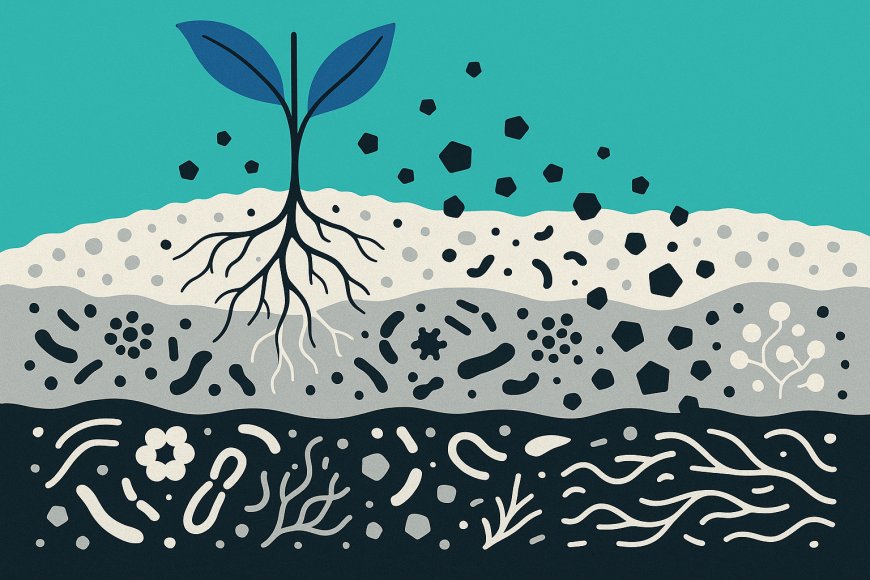
In the battle against climate change, soil carbon sequestration stands as an understated yet dynamic process. This natural mechanism not only curtails atmospheric carbon dioxide levels but also invigorates soil health and fertility. At its core, soil carbon sequestration involves the capture and stable storage of carbon dioxide within the soil matrix, a result of intricate biochemical interactions.


Consider a typical agroecosystem where plants actively contribute to carbon sequestration. Through photosynthesis, plants absorb atmospheric carbon dioxide, converting it into organic compounds. These compounds travel through the plant’s cellular architecture, eventually reaching the roots. Here, a fascinating symbiosis unfolds as the roots exude organic substrates, feeding the belowground microbial communities and facilitating carbon incorporation into soil organic matter.
The Role of Microbial Communities
The subterranean world teems with microbial life, playing a critical role in carbon sequestration. Microbial communities decompose organic residues, breaking down complex organic molecules into simpler forms. This decomposition process not only recycles nutrients but also influences the stabilization of carbon within the soil. As microbes metabolize organic matter, they contribute to the formation of soil aggregates, structures that physically protect carbon from rapid decomposition.
Imagine a moist temperate forest floor, where diverse microbial communities thrive. In this environment, fungal hyphae and bacterial colonies engage in a delicate balance of nutrient cycling. Fungi, with their extensive mycelial networks, facilitate the decomposition of lignin-rich materials, a carbon compound notoriously resistant to breakdown. Simultaneously, bacteria process more easily degradable organic matter, accelerating the carbon cycle and nutrient availability.
Through enzymatic activity, these microorganisms further enhance carbon stabilization. Enzymes break down organic polymers, aiding in the formation of humic substances—a complex of organic compounds that significantly contribute to carbon storage. This biochemical prowess underscores the vital role of microbial communities in promoting long-term carbon sequestration.
Impact of Agricultural Practices
The impact of agricultural practices on soil carbon sequestration cannot be overstated. Traditional tillage disrupts soil structure, aerating the soil and accelerating the decomposition of organic matter, thus releasing carbon dioxide back into the atmosphere. In contrast, conservation practices, such as no-till farming and cover cropping, bolster carbon sequestration by preserving soil integrity.
Envision a regenerative agricultural system where cover crops like clover blanket the soil surface. These cover crops not only suppress weeds but also enrich the soil with organic matter upon decomposition. The roots of cover crops exude various organic compounds, feeding soil microorganisms and enhancing the formation of stable soil aggregates. By maintaining a permanent vegetative cover, these systems reduce erosion and improve soil moisture retention, creating an optimal environment for carbon storage.
Furthermore, integrating agroforestry practices—combining trees with crops or livestock—offers additional sequestration benefits. Trees sequester carbon through their biomass, while their root systems contribute to belowground carbon stores. This multifunctional approach amplifies ecosystem resilience, supporting biodiversity and increasing carbon sequestration potential.
Challenges and Future Directions
Despite the promise of soil carbon sequestration, challenges persist. Accurate measurement of sequestered carbon and understanding the long-term stability of stored carbon remain critical research areas. Current methodologies employ isotopic tracing and remote sensing technologies, yet discrepancies in data interpretation call for standardized protocols.
Consider an experimental setup where isotopic carbon labeling is used to track carbon movement within a grassland ecosystem. By analyzing isotopic signatures, researchers can discern the fate of carbon as it transitions from plant material to microbial biomass and ultimately into stable soil organic matter. Such studies illuminate the mechanisms of carbon stabilization, informing sustainable land management practices.
Looking ahead, advancing our understanding of microbial genomics and soil microbiome dynamics could unlock new avenues for enhancing sequestration efforts. Harnessing the power of synthetic biology to engineer microbial communities with tailored functions could potentially accelerate carbon stabilization processes, offering a biotechnological approach to climate mitigation.
As we continue to explore the intricate processes of soil carbon sequestration, it is evident that the interplay between plant biology, microbial ecology, and agronomic practices holds the key to a sustainable future. By embracing these natural processes, we can forge pathways toward climate resilience and ecological balance.
What's Your Reaction?