
















































































The Cognitive Mechanics of Task Switching: Unveiling Hidden Costs
Task switching, a common behavior in modern work environments, involves complex cognitive processes that impact productivity. Scientific studies reveal hidden costs, such as cognitive load and attentional residue, that challenge the efficiency of multitasking.

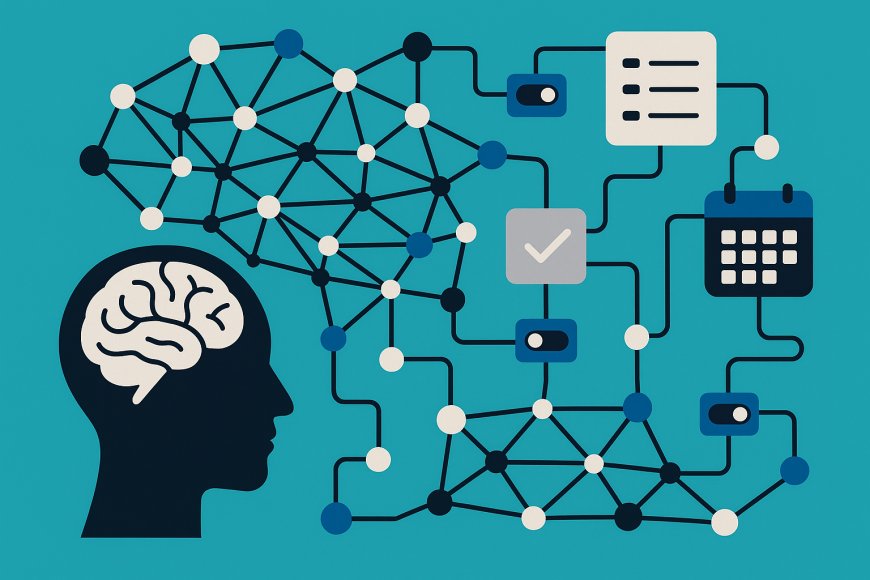
Imagine you're a scientist engrossed in writing a research paper. Suddenly, an email notification pops up. You decide to check it, thinking it will only take a minute. This scenario might seem innocuous, yet it exemplifies the cognitive mechanics of task switching—an often underestimated productivity killer. Task switching involves moving between distinct tasks, each demanding a different set of cognitive resources. Understanding these mechanisms can shed light on why it feels increasingly challenging to maintain focus in a hyper-connected world.


Task switching is more than a mere alternation between tasks; it necessitates engaging complex cognitive processes. Each task possesses its unique mental framework, requiring a shift in attention and cognitive resources. The brain must disassemble the current task model and reconstruct a new one for the incoming task. This cognitive detour incurs a 'switching cost,' a temporal and mental overhead that disrupts workflow. Researchers at an esteemed cognitive science institute designed an experiment involving participants performing tasks on a computer. When asked to switch tasks, participants showed increased reaction times and error rates compared to those who worked on a single task consistently.
The Cognitive Cost of Attention Residue
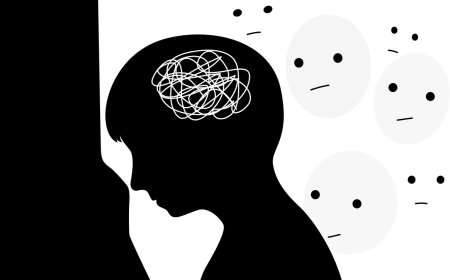
As participants in the experiment experienced task switching, an intriguing phenomenon termed 'attention residue' emerged. Attention residue occurs when a portion of cognitive focus remains tethered to a previous task, impairing the efficiency of engaging with a new one. This residual attention is not just a fleeting distraction but a cognitive artifact that lingers, reducing the ability to fully devote cognitive resources to the task at hand. As a result, the subsequent task bears the brunt of diminished cognitive engagement.
In another study conducted by a cognitive psychology laboratory, volunteers were instructed to complete a series of rapid task-switching activities. Electroencephalography (EEG) readings captured the brain's electrical activity, revealing prolonged neural activation related to the previous task. This suggests that even when attempting to focus entirely on a new task, unresolved cognitive traces of the prior task persist in the mind, hindering full cognitive deployment.
Attention residue exemplifies how task switching compounds cognitive load. The lingering mental presence of an earlier task competes for finite attentional resources, a phenomenon exacerbated by frequent interruptions. This explains why individuals often find themselves ruminating about the last email they read while attempting to concentrate on subsequent tasks. The cognitive burden of managing such fragmentation detracts from overall productivity, complicating efforts to achieve a state of deep work.
Task Switching and Mental Models
Task switching also involves the manipulation of mental models—cognitive constructs representing the task's structure and goals. Every task carried out in a workday requires a distinct mental model, each encompassing unique rules, objectives, and environmental cues. These models serve as cognitive maps, guiding individuals through task execution. However, frequent task switching demands constant recalibration of these models, a process that diminishes cognitive efficiency.
Consider a behavioral experiment where participants were tasked with alternating between solving mathematical problems and composing creative writing pieces. Each task engaged disparate mental models, requiring participants to shift from analytical reasoning to creative thinking. Performance metrics indicated a cognitive bottleneck: transitioning between tasks led to a temporary decline in proficiency as the brain struggled to recalibrate mental models.
The implications of this cognitive bottleneck are profound. As workers traverse between disparate tasks, the persistent need for mental model reconstruction erodes cognitive capacity. The repeated dismantling and reassembling of mental structures not only stalls productivity but also augments cognitive fatigue, a subtle yet pervasive barrier to sustained focus. This cyclical disruption underscores the necessity for revamped workplace practices that prioritize task cohesion and minimize unnecessary interruptions.
Addressing the Hidden Costs of Task Switching
The hidden costs associated with task switching prompt a reevaluation of work habits in contemporary environments. With mounting evidence highlighting the cognitive toll of frequent task alteration, organizations and individuals alike must consider strategies to mitigate these costs. Encouraging periods of uninterrupted work, often referred to as 'time blocking,' emerges as a promising approach. By allocating dedicated time slots for specific tasks, cognitive resources are concentrated, reducing the need for constant mental recalibration.
Additionally, the design of workspaces can play a pivotal role. Environments that minimize potential distractions and foster focus can act as counterbalances to the innate lure of multitasking. Equipping spaces with tools that support deep work—like noise-canceling headphones or visual barriers—provides tangible benefits by shielding cognitive processes from external interruptions.
As task switching continues to infiltrate professional settings, understanding its cognitive mechanics becomes imperative. The insights gleaned from scientific exploration of attention residue and mental models offer a blueprint for enhancing productivity in an age characterized by constant connectivity. By reshaping how tasks are structured and managed, a balance can be struck between the demands of a dynamic work environment and the cognitive limitations of the human brain.
In embracing these strategies, the future of work holds promise not only for enhanced productivity but also for a more harmonious integration of cognitive processes with professional demands. While task switching may never be entirely eradicated, a conscious shift towards mindful task management could redefine productivity paradigms, paving the way for a more focused and fulfilling professional experience.
What's Your Reaction?