

















































































Personal Branding: The Intersection of Self-Representation and Cognitive Science
Personal branding is not merely a marketing tool but a reflection of underlying cognitive processes. By examining the cognitive mechanisms that influence how individuals perceive and present themselves, we can better understand how personal brands are crafted. This exploration delves into the mental models and psychological frameworks that shape self-representation, offering insights into the dynamic interplay between self-perception and external perception. We will explore how cognitive biases, social contexts, and psychological theories inform personal branding and its impact on individual identity and societal perceptions. By integrating cognitive science with personal branding strategies, individuals can create more authentic and effective representations, ultimately reshaping their personal and professional trajectories.

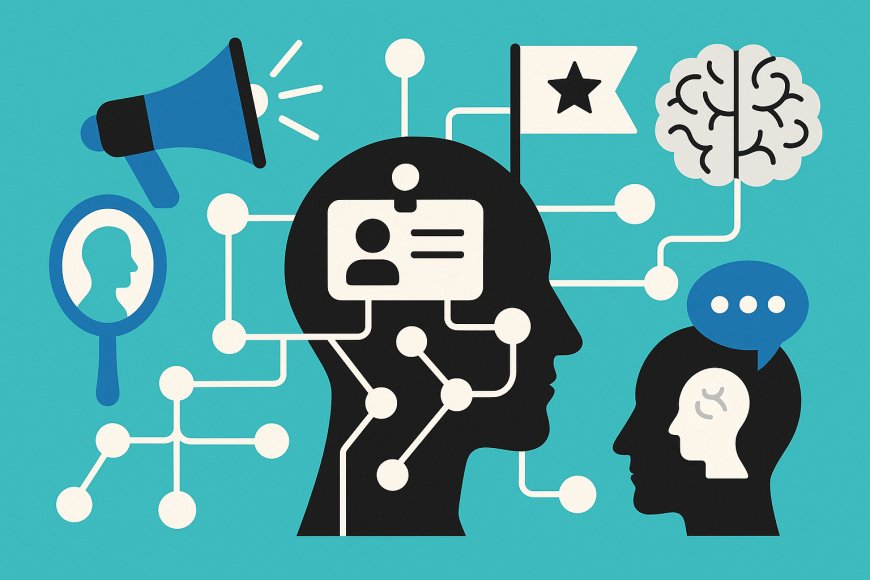
Imagine a scenario where an individual attends a networking event, attempting to present themselves as an expert in their field. They meticulously plan their attire, rehearse an elevator pitch, and wield social media profiles as digital extensions of their identity. This phenomenon, known as personal branding, transcends mere marketing strategies, embodying a confluence of cognitive science and self-representation.


Personal branding is fundamentally about perception. It's the process of molding how individuals see themselves and how they are seen by others. This dual nature is deeply rooted in cognitive mechanisms such as social cognition and identity formation. In a typical observational study, researchers at a leading cognitive science institution explore how individuals interpret social cues and feedback to construct a coherent self-narrative. They find that personal branding hinges on the intricate dance between internal self-perception and external validation.
Consider the cognitive bias known as the "halo effect," where first impressions color subsequent judgments. In personal branding, this bias can magnify certain traits or accomplishments, shaping public perception. Researchers at a renowned psychology university conduct an experiment to assess how initial interactions at a networking event influence long-term professional relationships. They discover that participants who project confidence and competence tend to be perceived positively, reinforcing their personal brand even if initial judgments are superficial.
Another integral aspect is social context. The narratives individuals craft are not in isolation but within a cultural and social framework. In a case study of emerging professionals in a multicultural urban setting, cognitive scientists examine how cultural norms shape personal branding strategies. They observe that individuals tailor their self-representation to align with or subtly challenge societal expectations, thereby navigating complex social landscapes. This dynamic illustrates the interplay between personal agency and cultural influence in shaping identity.
Identity Formation and Cognitive Mechanisms
Identity formation is a cognitive process influenced by personal experiences, societal interactions, and intrinsic self-reflection. At a behavioral psychology laboratory, researchers conduct longitudinal studies on identity development, observing how individuals integrate life experiences into their self-concept. They reveal that personal branding is a continuous negotiation between who individuals are and how they wish to be perceived.
Self-determination theory, a psychological framework, underscores the significance of autonomy, competence, and relatedness in identity formation. Researchers explore how these factors drive individuals to project particular images through personal branding. They find that individuals with a strong sense of autonomy often construct more authentic and resilient personal brands, resisting external pressures to conform. This autonomy enables the crafting of a brand that reflects true self rather than a socially desirable facade.
Consider a behavioral experiment where participants, influenced by peer feedback, modify their social media profiles. Psychologists observe that those with a higher degree of self-awareness exhibit greater consistency in their online and offline personas. This aligns with the theory that cognitive dissonance, the discomfort of conflicting beliefs, propels individuals toward congruence in personal branding.
The Role of Self-Perception in Branding
Self-perception theory suggests that individuals infer their attitudes and emotions by observing their behavior. This is critical in personal branding, where self-observation informs how individuals adjust their self-presentation strategies. In an experimental setup, cognitive scientists examine how the act of writing professional biographies influences self-perception. They discover that articulating achievements and goals prompts introspection, leading to a refined self-concept that aligns with personal branding objectives.
In another study, researchers investigate the impact of social media metrics on self-perception. Participants exposed to fluctuating online feedback reveal a tendency to recalibrate their self-image based on digital interactions. This underscores the cognitive feedback loop where self-perception is both a driver and outcome of personal branding efforts.
The narrative individuals construct about themselves is heavily influenced by their belief systems and cognitive processes. Branding strategies that resonate authentically with one's identity tend to foster a stronger connection with audiences. The cognitive model of 'self-schema' suggests that when individuals align their personal brand with deeply held beliefs, they exhibit greater coherence and authenticity in their self-presentation.
As individuals navigate the complexities of self-representation, they engage in a continuous dialogue between their internal world and external realities. By understanding the cognitive underpinnings of personal branding, they possess the tools to craft a narrative that is not only compelling but also reflective of their true self.
In this evolving landscape of self-presentation, the integration of cognitive science offers individuals the potential to forge identities that are both authentic and adaptive. The journey of personal branding is not merely about external perception but about a deeper understanding of one's self, revealing the intricate dance between identity, perception, and authenticity. As this intersection of cognitive science and personal branding continues to unfold, it challenges individuals to rethink how they project themselves, paving the way for innovative and meaningful self-representation.
What's Your Reaction?