
































































The Evolutionary Roots of Moral Decision-Making in Modern Society
Examining how evolutionary influences shape moral decision-making processes in contemporary society, focusing on recent studies that explore the interplay between innate predispositions and cultural adaptation in shaping ethical behavior.

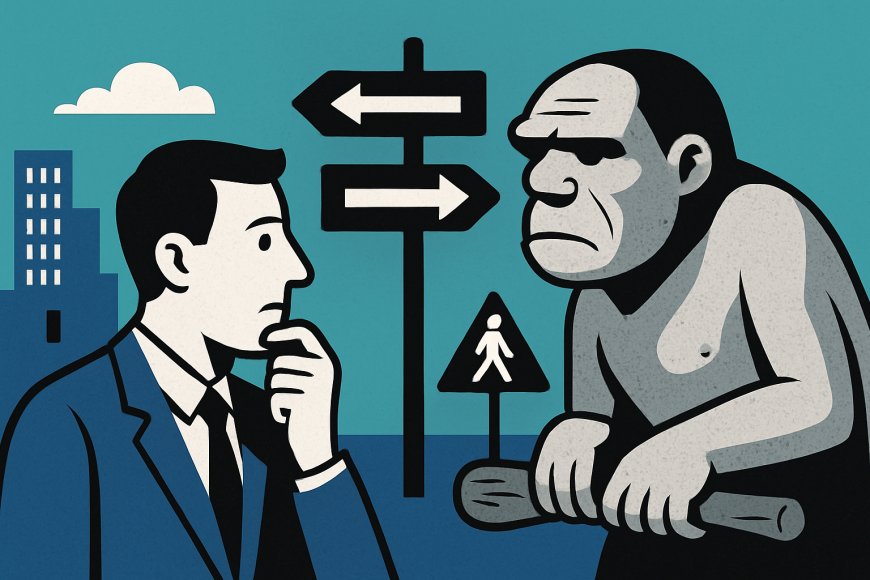
In a bustling urban environment, an individual faces a choice: to assist a stranger in distress or continue with their routine, indifferent to the plight of another. This familiar scenario encapsulates the intricate web of moral decision-making, a process deeply rooted in our evolutionary past. The question of how evolutionary processes influence our ethical choices is the subject of burgeoning research in contemporary social sciences. Recent studies delve into the interplay between innate predispositions and cultural adaptations, revealing the profound impact of evolution on human morality.


Moral decision-making is not a static phenomenon; it is an evolutionary mosaic of cognitive and emotional processes shaped by millennia of adaptation. This evolutionary perspective suggests that our moral intuition—our gut feelings about what is right and wrong—is a byproduct of natural selection, fine-tuned to enhance group cohesion and cooperation. In experimental setups, researchers at a prominent university observed subjects' responses to moral dilemmas involving resource distribution. Participants consistently favored equitable outcomes, suggesting an ingrained preference for fairness that transcends cultural and temporal boundaries.
Innate Predispositions and Moral Intuition
Evolutionary psychology posits that certain moral predispositions are innate, originating from primal survival strategies. These predispositions manifest as moral intuitions, quick and automatic judgments that guide our ethical decisions. Consider a behavioral experiment where participants are presented with the classic trolley dilemma: divert a runaway trolley to save five people at the expense of one. The majority opt to pull the lever, an instinctual decision favoring the greater good. This decision aligns with utilitarian principles, suggesting an evolutionary bias towards maximizing group welfare.
Yet, the evolutionary origins of moral intuition are not solely utilitarian. In studies examining in-group and out-group dynamics, individuals displayed a propensity to prioritize the well-being of their immediate social circle, even at the expense of outsiders. This phenomenon, rooted in tribal survival tactics, underscores the dual nature of moral intuition: balancing altruism with tribalism. Evolutionary theorists argue that this duality reflects the adaptive necessity of fostering in-group loyalty while maintaining flexibility to cooperate with strangers when beneficial.
Such intuitions are further influenced by emotional responses. In a neuroscience study involving brain imaging, participants reacting to moral transgressions exhibited heightened activity in the amygdala, a region associated with emotional processing. This finding highlights the interplay between emotion and moral intuition, emphasizing that our ethical decisions are not purely rational but are also shaped by instinctive emotional responses honed by evolutionary pressures.
Cultural Adaptations and Ethical Norms
While innate predispositions provide a foundation, cultural adaptations play a crucial role in shaping moral decision-making. The transmission of ethical norms through cultural learning allows societies to adapt moral frameworks to new challenges. In a comparative study across diverse cultures, researchers documented variations in moral norms concerning honesty, reciprocity, and punishment. These differences reflect cultural adaptations to local environmental and social conditions, illustrating how societies calibrate morality to maintain social order.
For example, in collectivist societies where community well-being is paramount, moral norms emphasize harmony and group cohesion. Conversely, individualistic cultures prioritize autonomy and personal rights. Such cultural variations highlight the flexibility of moral decision-making, enabling societies to evolve ethical systems that address specific societal needs and challenges. This adaptability is a testament to the dynamic interplay between biology and culture, showcasing how cultural evolution complements biological evolution in the development of moral systems.
In an observational study of moral education practices, researchers found that societal narratives and educational systems play pivotal roles in reinforcing ethical norms. By shaping perceptions of right and wrong from an early age, cultures instill values that align with broader societal goals. These findings underscore the importance of cultural transmission in perpetuating ethical standards, ensuring that moral systems remain relevant as societal conditions evolve.
Implications for Modern Ethical Challenges
Understanding the evolutionary roots of moral decision-making offers valuable insights into contemporary ethical challenges. As societies grapple with issues such as inequality, environmental degradation, and technological advancements, an evolutionary perspective can inform policy and education strategies that align with human predispositions while promoting ethical progress.
In practical terms, fostering cross-cultural dialogue and cooperation can mitigate the tribal tendencies rooted in our evolutionary past. By promoting empathy and understanding across diverse groups, societies can cultivate inclusive moral frameworks that transcend parochial biases. This approach not only addresses immediate ethical challenges but also prepares humanity for future moral dilemmas, ensuring that our evolutionary heritage continues to serve as a foundation for ethical innovation.
As we look towards the future, the integration of evolutionary insights into moral philosophy and social policy offers a promising avenue for addressing the ethical demands of an increasingly interconnected world. By acknowledging the biological and cultural dimensions of morality, we can craft solutions that resonate with our evolutionary instincts while aspiring to ethical ideals that elevate human society.
What's Your Reaction?