















































































The Science of Empathy: Analyzing Emotional Reciprocity in Human Relationships
Empathy, a crucial component of human relationships, is analyzed through the lens of emotional reciprocity. This article examines the scientific underpinnings of empathy, the role of mirror neurons, and the impact of cultural factors on emotional exchanges, offering insights into the complex dynamics of interpersonal bonds.

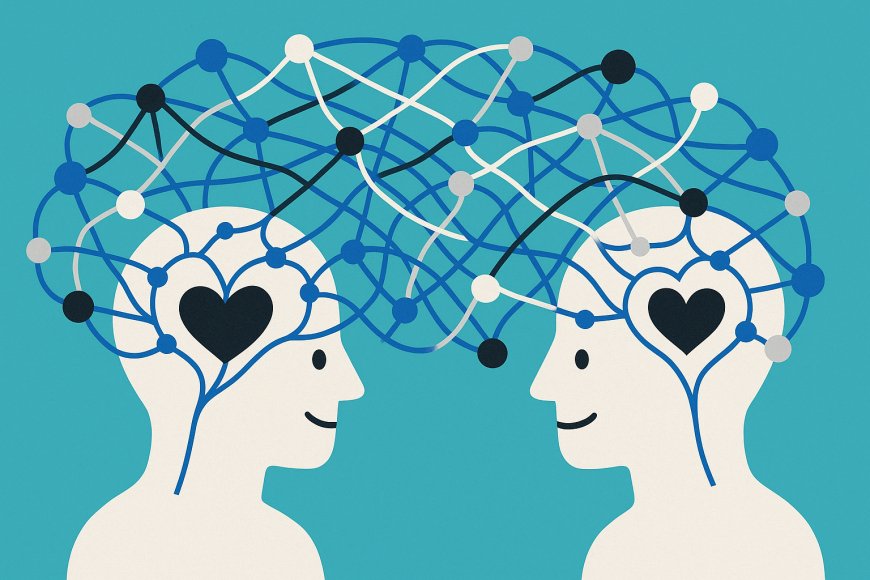
Human relationships are intricately woven with threads of empathy, a powerful yet often misunderstood emotional force that binds individuals together. Empathy is not merely a passive emotional resonance; it is an active, dynamic process that enables individuals to perceive, understand, and resonate with the emotions of others. Despite its fundamental role, the scientific basis of empathy, particularly its manifestation through emotional reciprocity, remains an area ripe for exploration.


Contrary to popular belief, empathy involves more than simply sharing feelings. It encompasses cognitive and affective dimensions that facilitate emotional exchanges between individuals. The intricate interplay between these dimensions underpins the phenomenon of emotional reciprocity, a mutual exchange of emotional states that reinforces social bonds. Understanding the mechanisms of empathy requires a deep dive into the neurophysiological and psychological processes that enable this phenomenon.
Neural Mechanisms Underlying Emotional Reciprocity
Central to the scientific exploration of empathy are mirror neurons, specialized brain cells that are activated both during the performance of an action and observation of the same action performed by another. This mirroring capability extends to emotional experiences, providing a neural basis for emotional reciprocity. In an experimental setup, participants exposed to visual stimuli depicting emotional expressions showed activation in mirror neuron circuits, suggesting these neurons play a crucial role in empathetic processes.
In another study, functional magnetic resonance imaging (fMRI) was utilized to observe brain activity in subjects as they engaged in conversations with varying emotional content. The results indicated that emotional understanding during dialogue was associated with synchronized neural activities in brain regions implicated in both self-awareness and social cognition. This synchronization hints at a neural mechanism through which emotional reciprocity is facilitated, underscoring the biological underpinnings of empathy.
Beyond the realm of mirror neurons, the interplay of other neural components, such as the anterior insula and the anterior cingulate cortex, further enriches the landscape of empathetic exchanges. These brain regions are implicated in processing the emotional salience of experiences, reinforcing the notion that empathy is deeply rooted in complex neural architectures.
The Role of Cultural Contexts in Empathy
Empathy does not exist in a cultural vacuum; it is profoundly shaped by social norms and cultural contexts. In a cross-cultural study examining expressions of empathy in diverse communities, researchers found significant variation in the expression and perception of empathy. For instance, cultures with collectivist orientations often emphasize community and interdependence, fostering heightened sensitivity to emotional cues and promoting emotional reciprocity.
Conversely, cultures that prioritize individualism might focus on personal autonomy, which can impact empathetic interactions. In individualistic settings, empathy may manifest as a more cognitive process, emphasizing understanding over shared emotional experiences. This cultural variability highlights the need for a nuanced approach to studying empathy, accounting for the diverse ways it is expressed and perceived across different societies.
Additionally, language plays a critical role in the transmission of empathy. In multilingual settings, linguistic nuances can either enhance or hinder empathetic exchanges. A case study focusing on bilingual individuals demonstrated that language choice can influence empathetic responses, with participants displaying higher levels of empathy when communicating in their native tongue. This suggests that language proficiency and cultural familiarity are integral to the effectiveness of emotional reciprocity.
Implications for Interpersonal Relationships
The scientific exploration of empathy and emotional reciprocity has profound implications for understanding and improving human relationships. In therapeutic contexts, fostering empathy can enhance the effectiveness of interventions, particularly in settings where emotional rapport is crucial. Therapists utilizing empathy-based techniques often report improved patient outcomes, highlighting the practical importance of understanding empathy scientifically.
Moreover, empathy training programs have shown promise in diverse fields, from conflict resolution to business management. By cultivating empathetic skills, individuals can enhance their emotional intelligence, leading to more effective and harmonious interactions. In organizational settings, fostering an empathetic work environment can improve collaboration, reduce conflict, and increase overall productivity.
In educational contexts, incorporating empathy training into curricula can benefit students by fostering social and emotional skills that are essential for personal and professional success. Educators who prioritize empathetic teaching strategies often find that students develop better communication skills and increased social awareness, preparing them for the challenges of an interconnected world.
Empathy remains a complex and multifaceted construct, crucial for the fabric of human relationships. As science continues to unravel the mechanisms of empathy, the potential for transformative applications in various domains becomes evident. By embracing empathy's complexity and cultural variability, future research can further illuminate the pathways to deeper emotional connections.
What's Your Reaction?