






















































































Harnessing Quantum Technologies for Unbreakable Cybersecurity Protocols
The integration of quantum technologies in cybersecurity marks a pivotal shift in securing digital frameworks. This article explores the robustness of quantum encryption, exemplified by its ability to thwart conventional cyber threats, and discusses the implications of quantum key distribution for future digital security.

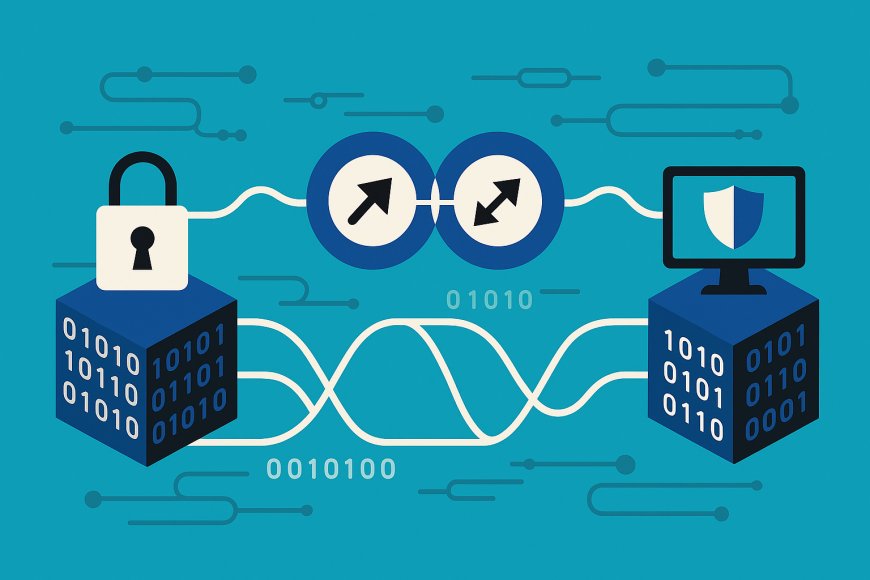
In the realm of cybersecurity, quantum computing introduces both formidable challenges and unprecedented solutions. Imagine a scenario where a nation's critical infrastructure is safeguarded by encryption so advanced that traditional computational methods are rendered obsolete. Such a scenario is not a distant dream but a tangible possibility, thanks to the advent of quantum technologies. The integration of quantum mechanics in cybersecurity protocols is poised to change the landscape of digital security, promising encryption that is impervious to the most sophisticated cyber-attacks.


The core of this transformation lies in the principles of quantum key distribution (QKD). Unlike classical encryption methods, which rely on complex mathematical algorithms, QKD employs the laws of quantum mechanics to create secure communication channels. In a hypothetical trial conducted by a leading research institution, QKD was used to protect sensitive data transmission between two government agencies. The trial highlighted QKD's ability to detect any eavesdropping attempts by exploiting the fundamental principle of quantum indeterminacy; any measurement of a quantum system invariably disturbs it. Thus, potential interceptors leave detectable traces, alerting communicators to the breach.
Quantum Encryption: Unraveling the Complexity
Consider a field test where a multinational corporation implemented quantum encryption to secure its financial transactions. The system, designed with quantum-resistant algorithms, utilized entangled photons to create encryption keys. This method ensured that any attempt to intercept the keys would disturb the entanglement, offering a level of security traditional methods cannot match. The results were conclusive; the encryption was not only resistant to cyber threats but also enhanced the speed and efficiency of data processing, addressing a common bottleneck in traditional encryption systems.
These experiments underscore the necessity of moving towards encryption methods that can withstand the computational prowess of future quantum computers. Current classical encryption methods, such as RSA and ECC, depend on the intractability of certain mathematical problems. However, quantum algorithms, notably Shor's algorithm, threaten to solve these problems in polynomial time, potentially rendering traditional encryption insecure. Thus, the integration of quantum encryption is not merely an upgrade but a strategic imperative for future-proofing digital communications.
In a typical observational study, researchers simulated cyber-attacks on both classical and quantum-encrypted systems. The findings illuminated the stark contrast in resilience; while classical systems succumbed to brute-force attacks, quantum-encrypted systems remained unbreached, highlighting their potential as a cornerstone in cybersecurity strategy.
Post-Quantum Cryptography: Preparing for the Inevitable
The looming threat of quantum computing capabilities necessitates the development of post-quantum cryptography. Imagine a scenario in a financial institution, where data integrity is paramount. The institution opts for lattice-based cryptography, a promising post-quantum approach, to safeguard client data. Lattice-based cryptography relies on the geometric complexity of lattice structures, making it robust against quantum attacks. In simulated environments, these frameworks demonstrated significant resilience against both classical and quantum computational threats.
In practical terms, the shift towards post-quantum cryptography involves extensive research and testing. A consortium of universities and tech firms is currently exploring hybrid models that combine classical and post-quantum algorithms to transition smoothly between current and future security needs. The challenge lies in developing standardized protocols that ensure compatibility across diverse platforms and industries.
Consider a behavioral experiment where end-users interacted with systems secured by post-quantum cryptographic methods. User feedback was overwhelmingly positive, especially regarding the seamless integration of security measures into existing infrastructures. This experiment reinforced the viability of post-quantum cryptography as a scalable solution for real-world applications.
Quantum Key Distribution: The New Frontier
The principle of quantum key distribution signifies a paradigm shift in secure communications. In an experimental setup, a telecommunications company deployed QKD over fiber-optic networks, linking multiple nodes across a metropolitan area. This deployment, the first of its kind on such a scale, demonstrated that QKD could be integrated into existing infrastructure without significant disruptions. The test revealed negligible latency and maintained high data integrity, offering a compelling case for its widespread adoption.
QKD's potential lies in its ability to safeguard against all forms of interception. Its reliance on quantum mechanics ensures that any unauthorized attempts to access the key are immediately flagged. This characteristic distinguishes it from classical key distribution methods, where the interception often goes unnoticed until it is too late.
In a collaborative project between government agencies, QKD was used to secure sensitive diplomatic communications. The results were transformative; not only did it enhance security, but it also paved the way for future innovations in secure communications protocols. This project exemplified QKD's role as a critical component in the architecture of next-generation cybersecurity frameworks.
As we stand on the brink of a cyber revolution, the implications of integrating quantum technologies into cybersecurity are profound. While challenges remain, the potential rewards are substantial. In a world increasingly reliant on digital infrastructure, the quest for unbreakable security is both a necessity and an opportunity for innovation. The journey towards quantum-enhanced security is not merely about stronger defenses; it is about redefining our approach to digital integrity and resilience. The future of cybersecurity, thus, lies in the quantum realm, where the boundaries of possibility are continually expanding.
What's Your Reaction?