Beyond the Surface: Redefining Personal Branding Through Scientific Inquiry
Personal branding transcends mere self-representation, intertwining cognitive science, social perception, and identity. This article explores how experimental research methodologies reveal the intricacies of personal branding, impacting societal interactions and professional environments.

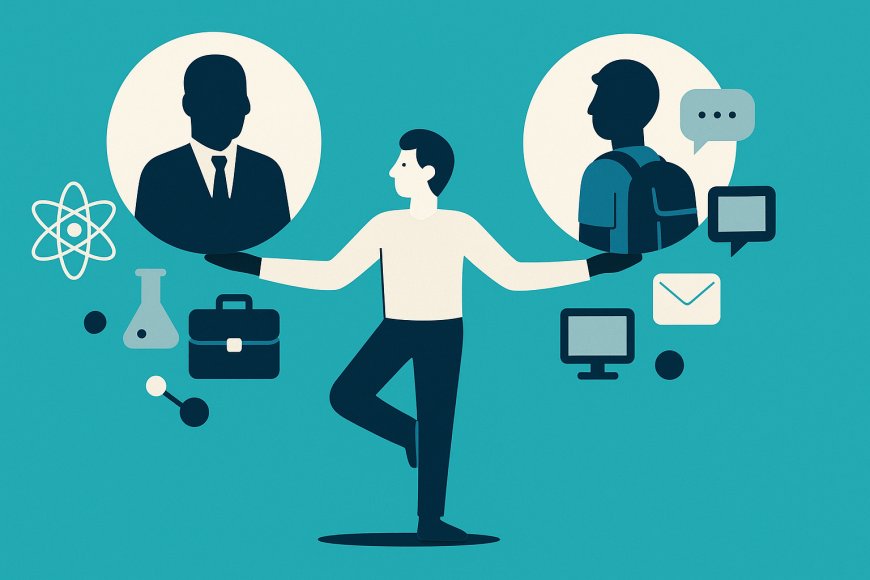
At a bustling urban park, observers might notice two individuals engaged in a peculiar social exercise. One carries a polished briefcase with logos of prestigious institutions emblazoned, while the other sports a simple backpack. Both are involved in a behavioral experiment designed to explore personal branding's nuanced impact on social interactions. This seemingly mundane scenario is part of a broader inquiry into how individuals project identity and how this projection is perceived and interpreted by society.


Personal branding, often viewed through a lens of marketing and self-promotion, is fundamentally rooted in the cognitive processes that govern identity formation and perception. In a typical observational study, researchers might analyze how subtle cues, such as attire and accessories, influence others' perceptions, forming intricate networks of assumptions and biases. These biases, though often unconscious, play a critical role in forming a coherent identity narrative that aligns with personal and societal expectations.
Psychological Underpinnings of Identity Representation
Consider a scenario where participants are exposed to varied stimuli involving personal branding artifacts—logos, slogans, and personalized messages. Behavioral scientists meticulously measure the neural responses these stimuli evoke using advanced neuroimaging techniques. The findings often reveal a complex interplay of cognitive biases, where viewers ascribe certain traits or competencies to individuals based solely on their perceived brand.
In another experimental setup, a controlled environment simulates social media interactions, examining how curated personal profiles affect peer perception. The researchers focus on the neural correlates of identity perception, such as how the prefrontal cortex activates in response to authenticity versus contrived self-representation. These insights are not merely academic; they offer tangible implications for individuals navigating the intricate web of personal branding in digital spaces.
Furthermore, the psychological theories underpinning identity representation extend beyond self-perception. By understanding these processes, individuals can strategically craft personal narratives that resonate with their intended audience, enhancing both professional and social engagements. This strategic crafting is crucial in environments where first impressions significantly impact opportunities and outcomes.
The Influence of Cognitive Biases on Social Perception
A series of experiments at a leading research institution investigates the role of cognitive biases in shaping personal branding efficacy. Participants engage in mock interviews, their profiles anonymously assessed by panels unaware of their true backgrounds. The results demonstrate a consistent trend: pre-existing stereotypes and biases heavily influence perceived competence and likability, regardless of the individual's actual qualifications or experiences.
In a related study, researchers deploy machine learning algorithms to analyze vast datasets from professional networking platforms. The algorithms detect patterns and uncover implicit biases in how users engage with different personal brands. Such insights are invaluable for developing strategies to mitigate these biases, promoting a more equitable platform for personal and professional growth.
This convergence of technology and psychology underscores the importance of recognizing cognitive biases in personal branding. By leveraging insights from scientific inquiry, individuals and organizations can better navigate the intricacies of identity representation, fostering environments where authentic self-expression flourishes without the hindrance of unwarranted bias.
Reimagining Personal Branding in Professional Contexts
In corporate settings, personal branding extends beyond individual identity, influencing organizational culture and dynamics. A research initiative might involve employees participating in workshops that explore personal branding's impact on team cohesion and leadership perception. Results from such studies frequently highlight a correlation between cohesive personal branding and enhanced team performance, where individuals who successfully align their identities with organizational values often emerge as more effective leaders.
Case studies from various industries illustrate how strategic personal branding facilitates career advancement. For instance, in the field of technology, professionals who adeptly communicate their technical competencies through personal branding achieve faster recognition and career progression. Such findings emphasize the strategic dimension of personal branding as a tool for navigating and succeeding in competitive professional landscapes.
Moreover, as workplaces become increasingly diverse, the versatility of personal branding becomes more apparent. A well-crafted brand transcends cultural and linguistic barriers, uniting teams under shared values and objectives. This transcultural branding approach is not merely advantageous but essential in fostering global collaborations and innovative thinking.
As individuals and organizations continue to explore new dimensions of personal branding, the integration of scientific methodologies offers a robust framework for understanding and enhancing identity representation. The insights derived from these inquiries not only inform personal strategies but also contribute to a broader societal understanding of identity and representation.
Looking ahead, the intersection of personal branding and scientific inquiry promises to redefine how individuals perceive and project their identities. As methodologies evolve, so too will the strategies for crafting authentic and impactful personal brands. This evolution presents opportunities to challenge conventional narratives and explore new avenues for personal and professional fulfillment.
What's Your Reaction?