


















































































The Power of Community-Led Research for Social Change
Understand how empowering communities to lead research can create more accurate data, better policies, and lasting social impact.
During 2018 and 2019, we implemented multiple consumer behavior study campaigns within sales outlets, and the results of one of these campaigns were published in the International Journal of Food and Health. This type of research opens significant opportunities for public health and behavioral science researchers to understand real-world behaviors, improve lifestyle patterns, and support decision-makers in making evidence-based decisions rather than relying on coercive policies or interventions that may lead to unintended consequences.


As I often emphasize, consumer behavior observed directly in sales outlets is more accurate than any dataset collected in isolation, and far closer to reality than assumptions developed in closed meeting rooms.
At the same time, many studies aimed at understanding shoppers are conducted by food companies globally to attract consumers, increase demand, and sustain loyalty. These studies are not based on traditional academic or superficial market research. They rely heavily on experimental methodologies and behavioral frameworks such as nudging. Without this depth, the outcomes are often ineffective or misleading.
The real concern arises when local food companies depend on foreign consulting firms, or even local academic centers, to conduct such research without sufficient understanding of the social and economic context of the target population, or without practical field experience. This gap often leads to conclusions that are technically sound but contextually irrelevant.
Effective research in this domain requires scientists who understand not only how to collect data, but which data truly influence consumer decisions. It requires moving beyond rigid application of imported methodologies, and instead integrating the perspectives, preferences, awareness, and behaviors of the local population.
What is needed is high-quality research built on clear, transparent, and replicable methodologies that can produce meaningful and actionable change.
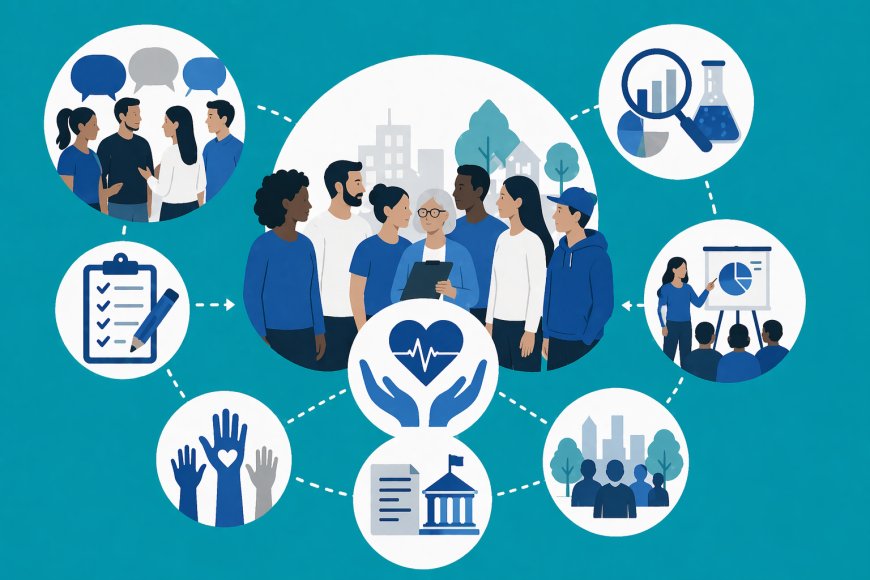
To create studies that generate real societal impact, the community itself must be involved. It should participate in defining research priorities, shaping questions, and contributing to decisions and policies that affect it.
Over five years, at Sharik Research Association, we worked to develop a model for community participation in research. This effort led to a mature framework that outlines how society can be actively engaged in identifying priorities and addressing them through scientific methods grounded in real data that reflect actual needs.
This model has helped build a strong and reliable relationship between Sharik and the community, enabling the production of high-quality scientific research and actionable insights that support decision-making. More importantly, it contributes to elevating the standard of research in the Kingdom, positioning it not only as a consumer of methodologies, but as a potential exporter of innovative, context-driven scientific approaches.
What's Your Reaction?