







































































Why Dual Majors are a Game-Changer for Modern Students
Learn how dual majors in different fields can equip students with diverse skills, making them more competitive and innovative in the job market.
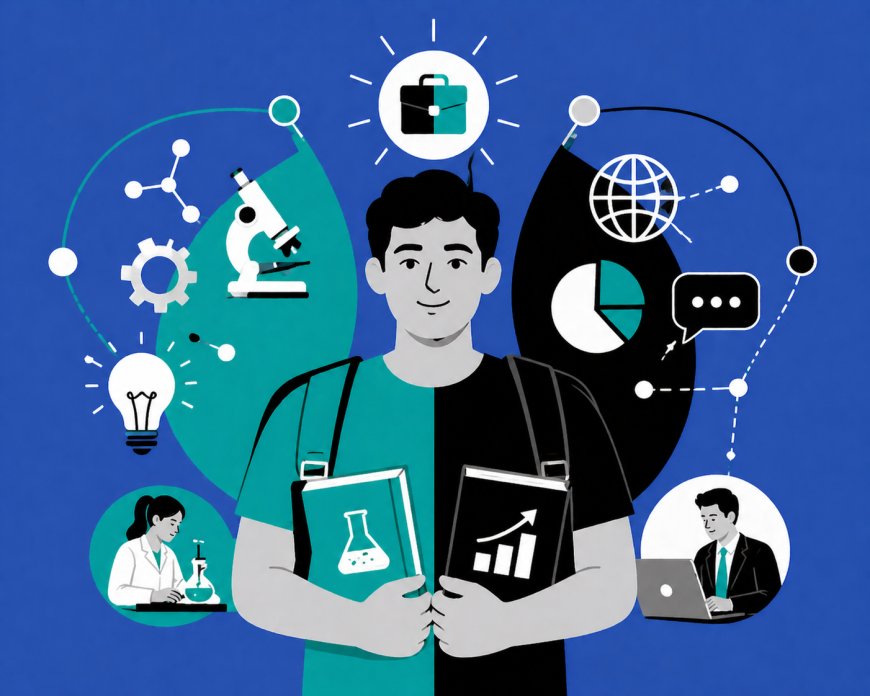
There is a moment in every academic journey where a student realizes that knowledge, as it was presented to him, is incomplete. Not because it is wrong, but because it is confined. During high school in the scientific track, and later through a bachelor’s degree in applied medical sciences, the focus was clear, structured, and deeply specialized. Physics, biochemistry, mathematics, and advanced domain-specific subjects were not only the foundation, but the entire framework. The objective was precise: achieve a high GPA, accumulate strong technical knowledge, and become ready for the labor market. This path appeared logical, even optimal, because it followed a system that rewards depth within boundaries.


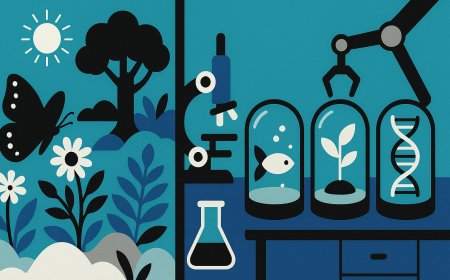
That perception began to shift during postgraduate study. While pursuing a master’s degree in the same specialization, a simple academic requirement introduced a disruption. The choice of a subject outside the core discipline was not intended as a transformation, but it became one. Among many options, psychology was selected, not out of necessity, but curiosity. What followed was not merely exposure to a new field, but a realization: the distance between disciplines is artificial. The connections between them are structural, but they remain hidden when education is designed in isolation.
Psychology, as a field, revealed dimensions that were directly relevant to scientific practice—decision-making, behavior, perception, communication. These are not peripheral concepts. They influence how research is conducted, how results are interpreted, and how knowledge is translated into real-world impact. Yet, despite this relevance, such connections were not emphasized during earlier academic stages. The system had separated what reality integrates.
This realization leads to a fundamental question: why are students not given the flexibility to construct their own intellectual architecture? Why must a student remain confined within a single track when the problems they will face in reality do not respect these boundaries? Why can a student not graduate with a combination such as health sciences and marketing, or engineering and behavioral science, when the labor market increasingly demands exactly this type of integration?
The answer lies not in the inability of students, but in the design of academic systems. Traditional education models were built around specialization for efficiency. Each field developed its own methods, language, and evaluation criteria. Over time, this created depth, but also fragmentation. Students became experts in narrow domains, while the ability to connect across domains became incidental rather than intentional.
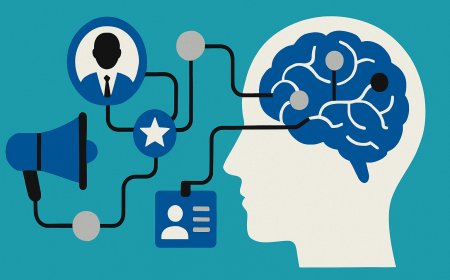
Yet the modern labor market operates differently. It does not reward knowledge in isolation. It rewards the ability to apply knowledge within complex, multidimensional environments. A graduate in pharmacy or medical device engineering, for example, may find himself working as a representative for a pharmaceutical or medical technology company. His success in this role depends not only on understanding the product, but on his ability to communicate, persuade, negotiate, and influence decision-makers. These are not technical skills alone. They are behavioral and strategic.
The gap becomes evident here. The graduate possesses deep technical knowledge, but limited exposure to marketing, communication, or behavioral dynamics. He is required to operate at the intersection of disciplines he was never formally trained to combine. This is not a failure of the individual. It is a limitation of the system that prepared him.
Introducing structured dual specializations offers a direct response to this limitation. For students in literary disciplines, exposure to scientific methods enhances their ability to test hypotheses, analyze data, and draw evidence-based conclusions. For students in scientific disciplines, engagement with humanities and social sciences develops their ability to construct arguments, understand audiences, and influence behavior. This integration does not dilute expertise. It strengthens it by adding dimension.
The benefits extend beyond individual capability. Employers increasingly seek individuals who can operate across functions, who understand both the technical and the strategic aspects of their roles. Graduates with dual competencies are more adaptable, more capable of transitioning between roles, and more likely to move into leadership positions. Their career progression often follows an experiential path, shaped by the ability to integrate knowledge, rather than a purely linear academic trajectory.
Globally, this approach is already institutionalized. Universities in countries such as Australia and the United States offer structured dual major programs, with clear academic criteria. Students are required to maintain a strong GPA, often above 3.0 out of 4.0, and to obtain approval from academic departments. Importantly, these programs are not left unmanaged. Academic advisors play an active role, guiding students, monitoring performance, and ensuring that the combination of disciplines enhances rather than compromises academic achievement. Students are also encouraged to develop skills beyond the classroom, recognizing that learning is not confined to formal instruction.
Within Saudi Arabia, early adoption of this model has begun. Institutions such as King Fahd University of Petroleum and Minerals and Prince Mohammad bin Fahd University have introduced elements of dual specialization. These initiatives represent important steps, but they remain limited in scope. Expanding such programs across public universities would not only align education with market demands, but also unlock a new model of learning—one that reflects the complexity of reality.
The objective is not to produce students who know a little about everything, but to produce individuals who can connect deeply across fields. Integration, when designed properly, does not reduce rigor. It redistributes it. It allows students to see problems from multiple perspectives, to design solutions that are both technically sound and socially effective, and to operate in environments where knowledge alone is insufficient.
In the end, the question is not whether dual specialization is beneficial.
The evidence suggests that it is.
The question is whether academic systems are willing to evolve.
To move from isolation to integration.
From predefined paths to constructed ones.
And from delivering knowledge—
to enabling its combination.
What's Your Reaction?