


















































































Causal Inference in Particle Physics: Beyond Correlation and Randomness
This article explores the nuanced application of causal inference in particle physics, moving beyond mere correlation and randomness. Delving into methodologies, experimental setups, and theoretical implications, it provides a comprehensive analysis of how causality can be discerned in the subatomic world.

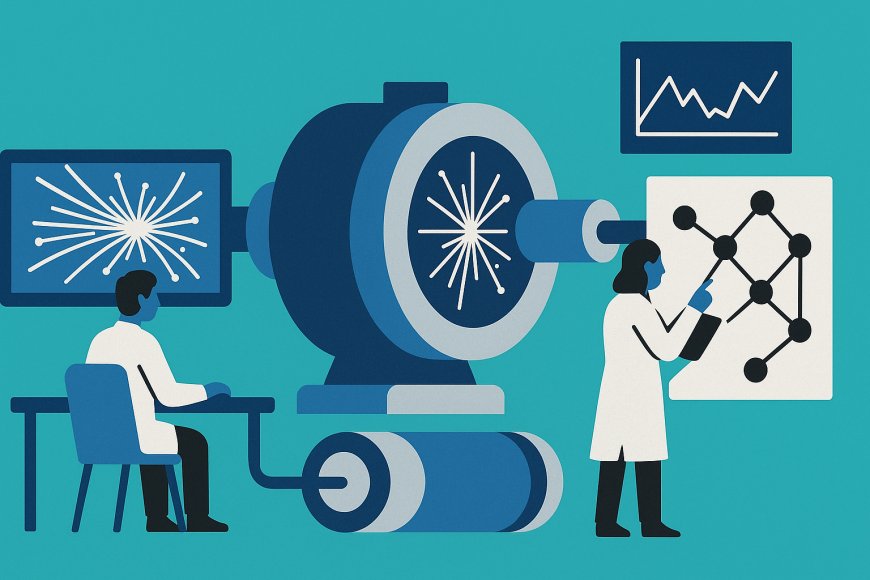
Deep within the confines of high-energy laboratories, an anomaly repeatedly emerges. Two particles, seemingly unrelated, exhibit correlated behaviors. A seasoned physicist might dismiss this as mere coincidence, yet there's a methodological challenge that beckons: discerning causality in a domain dominated by probabilistic laws. This task, while complex, is crucial in particle physics, where understanding the nature of interactions can unravel fundamental truths about the universe.


Traditional experimental setups in particle physics often prioritize correlation over causation. Consider a collider experiment where thousands of particle collisions are observed. Each event produces vast amounts of data, with intricate patterns hidden within. Yet, without a robust framework for causal inference, the distinction between coincidence and causality remains elusive. It is in this context that particle physics encounters a pivotal methodological impasse. How can one separate genuine causal relationships from mere coincidental correlations when randomness prevails?
Causal Structures in High-Energy Experiments
In high-energy physics, the notion of causality is elusive due to the probabilistic nature of quantum mechanics. However, researchers endeavor to decode these causal structures by deploying novel methodologies. One approach involves leveraging machine learning algorithms to analyze collision data, searching for patterns that defy mere chance. This is not about uncovering deterministic laws but identifying consistent causal frameworks amidst probabilistic chaos.
Consider an experimental setup where particles collide at varying energies. By systematically altering these energies and analyzing the resulting collisions, scientists can infer potential causality rather than mere correlation. A particle accelerator serves as a prime setting for such investigations. Here, researchers scrutinize the resulting data, using statistical models to assess whether observed effects are likely to be causally linked to specific experimental conditions.
To further illustrate, imagine a scenario involving neutrino interactions. In a typical observational study, detectors capture neutrino interactions across different media. The task is to discern whether changes in interaction rates are genuinely caused by alterations in media properties rather than random fluctuations. Through rigorous statistical analysis and controlled experimentation, researchers can begin to map out potential causal mechanisms underpinning these interactions.
Methodological Challenges and Innovations
The methodological landscape in particle physics is not without its hurdles. To unravel causality, complex statistical techniques and controlled experimental designs are paramount. One innovative approach is the use of counterfactual reasoning. By simulating alternative scenarios through computational models, researchers can explore "what if" questions, thus teasing out causal relationships that evade direct observation.
In another experimental setup, physicists might employ a double-blind methodology. Consider a situation where particle decay rates are studied under different magnetic field strengths. By concealing the field strengths from both researchers and data analysts, the study minimizes bias, allowing for a clearer examination of causal influences.
Moreover, Bayesian networks offer a promising avenue for causal inference. By representing conditional dependencies between variables, these networks enable researchers to visualize potential causal pathways, thus facilitating a deeper understanding of particle interactions. This methodological innovation bridges the gap between observed data and underlying causal structures, providing a scaffold for hypothesis testing in the probabilistic domain of quantum physics.
Theoretical Implications and Future Directions
The quest for causality transcends immediate experimental needs, influencing fundamental theoretical constructs in particle physics. Understanding causality in particle interactions could shed light on profound questions about the nature of reality itself. For instance, discerning causal links could offer insights into symmetry breaking and the emergence of mass, thereby informing theoretical advancements such as supersymmetry or quantum gravity.
Looking ahead, the confluence of quantum mechanics and causality presents an exciting frontier. As methodologies refine, the opportunity to integrate causal inference with emerging technologies such as quantum computing becomes increasingly feasible. This integration could revolutionize data analysis, offering unparalleled precision in identifying causal patterns amidst quantum uncertainty.
The pursuit of causality in particle physics is not merely an academic exercise; it is pivotal in shaping our comprehension of the universe at its most fundamental level. As experimental techniques evolve and theoretical frameworks expand, the quest for causality promises to unlock new dimensions of understanding, challenging our perceptions of randomness and determinism in the quantum world.
What's Your Reaction?