























































































Bias and Validity in Marketing: A Methodological Examination
Bias and validity are pivotal considerations in marketing research methodology. This article delves into the complex interplay of these elements, exploring their impact on data interpretation and decision-making processes. Utilizing realistic scenarios, it illustrates the consequences of unchecked bias and the importance of maintaining validity in marketing studies. The discussion extends to practical applications in campaign strategies and consumer behavior analysis, offering insights into refining marketing methodologies for enhanced accuracy and effectiveness.

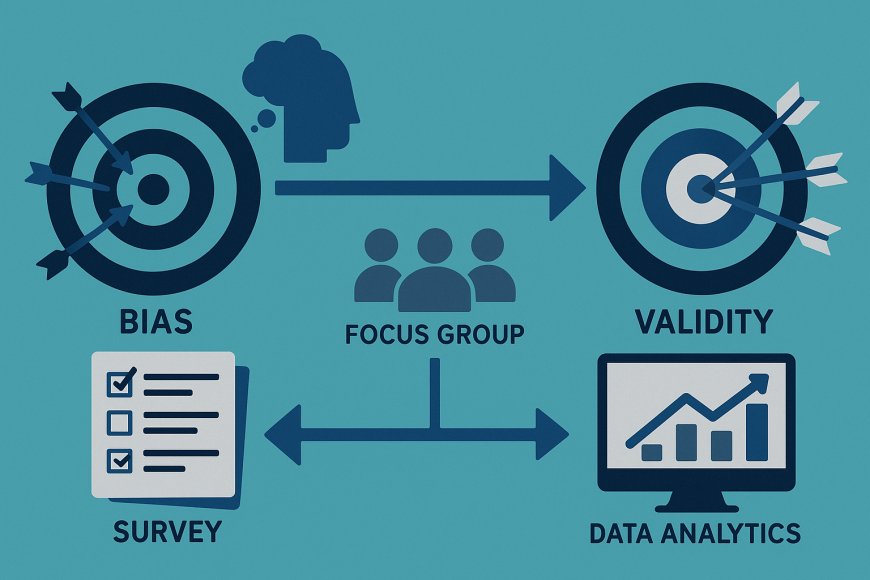
In a typical market research study, an innovative product is being introduced. Sales teams are keen to understand consumer response through surveys, focus groups, and data analytics. Here, the concepts of bias and validity are not merely theoretical concerns but practical imperatives. Marketing strategies hinge on accurate data interpretation, where any skew can lead to costly missteps.


Consider a scenario where a beverage company aims to launch a new flavor. They employ a survey to gauge consumer interest. The survey results indicate overwhelming enthusiasm. However, upon release, sales lag. An investigation reveals the initial survey was conducted in a region with a cultural predilection for the particular flavor, introducing regional bias. This scenario underscores the necessity of ensuring population validity—the degree to which the sample reflects the broader target market.
The Nature of Bias in Marketing Research
Bias, an inclination or prejudice for or against a particular outcome, permeates marketing studies in numerous forms. Selection bias occurs when the sample is not representative of the population. For instance, digital surveys might over-represent younger, tech-savvy demographics, skewing results. In a study exploring brand perception among teenagers, failing to account for non-digital natives introduces significant bias.
Response bias presents another challenge. It arises when participants provide inaccurate responses, consciously or subconsciously. In marketing, this is evident when consumers exaggerate satisfaction in post-purchase surveys to conform to social desirability norms. Ensuring anonymity and using indirect questioning can mitigate this issue.
Confirmation bias can also distort marketing analyses. This occurs when data analysts harbor preconceived notions, subtly shaping their interpretation. For instance, if a team believes a new product excels, they might unconsciously emphasize positive feedback while discounting negative reviews. Objective data analysis protocols and diverse team input are critical in overcoming this bias.
Ensuring Validity in Marketing Methodologies
Validity in marketing research ensures that the study accurately measures what it intends to. Construct validity, a subset, examines whether the tools used truly reflect the concept under scrutiny. For instance, if a campaign aims to measure "brand loyalty," using only purchase frequency as a metric might overlook emotional attachment, leading to flawed conclusions.
Internal validity refers to the study’s capacity to establish a causal relationship between variables. Consider a case where a marketing team attributes a sales spike directly to a new ad campaign. Without controlling for external factors—such as concurrent promotions or economic shifts—causality claims remain speculative.
External validity, or the generalizability of findings, is paramount for applying research insights broadly. A campaign evaluated only during specific holidays might yield skewed results if applied universally throughout the year. Cross-temporal studies can enhance external validity, offering a comprehensive view of consumer behavior.
Addressing Bias and Validity in Marketing Strategies
Real-world marketing strategies must integrate these methodological insights to enhance efficacy. A technology firm launching a new gadget might use A/B testing to refine its advertising approach. By randomly assigning consumers to different ad variants, the firm minimizes selection bias and enhances internal validity.
Cross-cultural validity is another consideration. A global brand must tailor its messaging to resonate across diverse markets. Suppose a fast-food chain introduces a new menu item. Testing in only one cultural context risks misinterpreting potential success in others. Thus, conducting culturally diverse focus groups is essential.
In implementing these strategies, marketers often employ predictive analytics. This data-driven approach relies on historical data to forecast future trends. However, the algorithms must be continually refined to account for evolving biases and maintain validity across datasets.
The future of marketing lies in intricate data integration and methodological rigor. As data volume and complexity surge, maintaining bias-free, valid research remains an evolving challenge. Marketers must remain vigilant, adapting methodologies to ensure accurate insights and competitive edge.
What's Your Reaction?