



































































AI Skill Acquisition: Redefining Learning Algorithms
In recent years, the landscape of artificial intelligence (AI) has been rapidly evolving, challenging traditional models of skill acquisition. The development of advanced learning algorithms is revolutionizing how machines learn and adapt, reflecting a shift towards more flexible, human-like learning processes. This article examines innovative approaches in AI skill acquisition, questioning long-held assumptions in machine learning. By analyzing unique experimental setups and theoretical frameworks, we unravel the intricacies of AI education, emphasizing the necessity of rethinking conventional educational models. The future of AI stands to benefit significantly from these novel methodologies, heralding a new era in both technology and cognitive science.

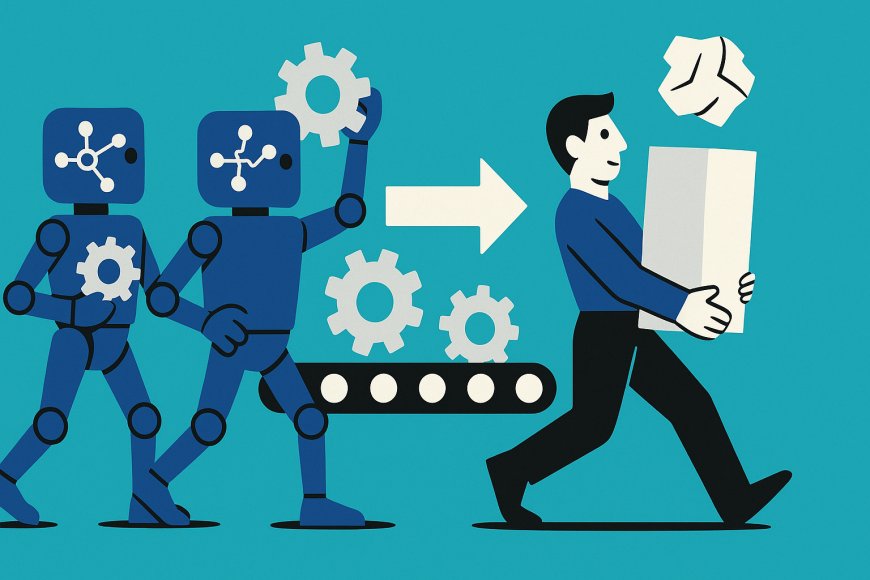
Imagine a scenario where an AI agent, traditionally constrained by pre-defined learning pathways, demonstrates the ability to autonomously adapt to novel tasks without prior task-specific programming. This is not merely a futuristic concept but an emerging reality of AI skill acquisition. Recent advancements in artificial intelligence are challenging the conventional belief that learning algorithms must rely on extensive pre-processed data and strictly supervised environments. Instead, AI systems are being designed to emulate more flexible, human-like learning processes, thereby aligning closer with how humans acquire skills.


In a typical observational study focusing on reinforcement learning, an AI agent is placed in a dynamic environment with minimal initial programming. The agent begins with limited task-specific knowledge but is enabled with a learning algorithm that allows it to experiment, fail, and adapt based on feedback received from its environment. Such setups underscore a departure from rigid algorithmic frameworks towards more adaptive models. This shift represents a fundamental reconceptualization of how machines can learn, suggesting a move towards systems that closely mimic human cognitive adaptability.
Innovative Approaches in AI Education
Consider a behavioral experiment where AI agents utilize meta-learning, often described as "learning to learn," to improve performance across varied tasks. Meta-learning algorithms enable machines to extract general strategies from tasks, allowing them to apply these strategies to new, unseen challenges. These algorithms mark a significant departure from traditional task-specific models, which require separate learning phases for each new task. By fostering an environment where AI systems can generalize learning protocols, researchers are enabling machines to approach problems with a level of adaptability previously thought exclusive to biological organisms.
In another study, researchers developed a series of collaborative tasks designed to improve the skill acquisition processes in multi-agent systems. By introducing competition and cooperation dynamics, these tasks aim to refine communication protocols among AI agents, facilitating skill sharing and collective problem-solving. This is analogous to human learners working in groups, where social interactions play a crucial role in enhancing individual and collective learning outcomes. The success of such experiments demonstrates the potential of integrating social learning paradigms into machine learning frameworks, thereby expanding the horizons of AI education.
Furthermore, the implementation of adversarial environments, where AI systems face constantly evolving challenges, is reshaping the landscape of AI skill acquisition. These environments, akin to real-world scenarios where conditions are unpredictable and often hostile, force AI agents to develop robust problem-solving strategies. Such setups help refine machine capability in dealing with complexity and uncertainty, demanding a high degree of cognitive flexibility and robust learning mechanisms.
Questioning Long-held Assumptions
The evolution of AI skill acquisition challenges the conventional wisdom that machine learning requires vast quantities of labeled data to function effectively. In practice, unsupervised and semi-supervised learning approaches are gaining traction, allowing AI systems to learn from unlabeled or partially labeled data sets. This paradigm shift questions the necessity of exhaustive data annotation and opens new avenues for developing learning algorithms that can operate under data scarcity.
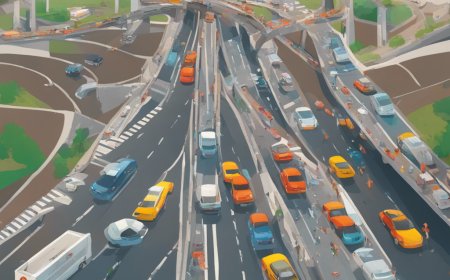
A compelling example lies in the realm of autonomous vehicles, where AI systems must quickly adapt to ever-changing environments without having access to exhaustive pre-labeled data sets. Through a combination of unsupervised learning techniques and real-time data processing, these vehicles are increasingly capable of navigating complex environments autonomously. Such instances illustrate the effectiveness of new AI learning strategies in tackling real-world challenges with limited data.
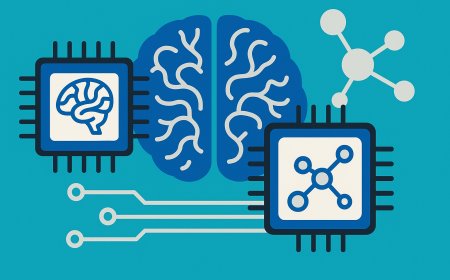
Moreover, the reliance on neural networks’ architecture is being re-evaluated in light of these developments. Researchers are exploring hybrid models that integrate symbolic reasoning with deep learning approaches, aiming to enhance the interpretability and transparency of AI decision-making processes. This integration of symbolic and connectionist paradigms signals a potential harmonization of two traditionally opposing methodologies, advancing the field of AI towards more comprehensive and human-like reasoning capabilities.
A New Era in AI Learning
The ongoing transformation in AI skill acquisition highlights a critical intersection between technology and cognitive science, suggesting a future where machines learn with an unprecedented level of sophistication. As AI systems continue to incorporate adaptive learning algorithms, the gap between human and artificial learning capabilities is poised to narrow significantly.
These advancements not only redefine the boundaries of AI education but also prompt a broader reevaluation of traditional educational models. By integrating innovative AI methodologies into human learning frameworks, there is a potential for substantial advancements in education systems worldwide. The future promises an era where AI and human intelligence co-evolve, fostering a symbiotic relationship that could radically enhance our understanding of learning itself.
What's Your Reaction?