










































































The Paradox of Scientific Simplicity: Harnessing Complexity for Educational Clarity
This article explores the paradoxical relationship between scientific complexity and educational simplicity. It examines how educators can leverage complex scientific phenomena to construct simplified, yet accurate, educational models. By analyzing pedagogical strategies, it reveals innovative approaches to transform intricate mechanisms into comprehensible learning experiences, enhancing students' critical thinking and fostering deeper understanding. The discussion includes theoretical insights and practical applications, highlighting the potential for complex scientific concepts to serve as powerful educational tools. A forward-looking perspective is offered, contemplating future advancements in educational methodologies embracing this paradox.

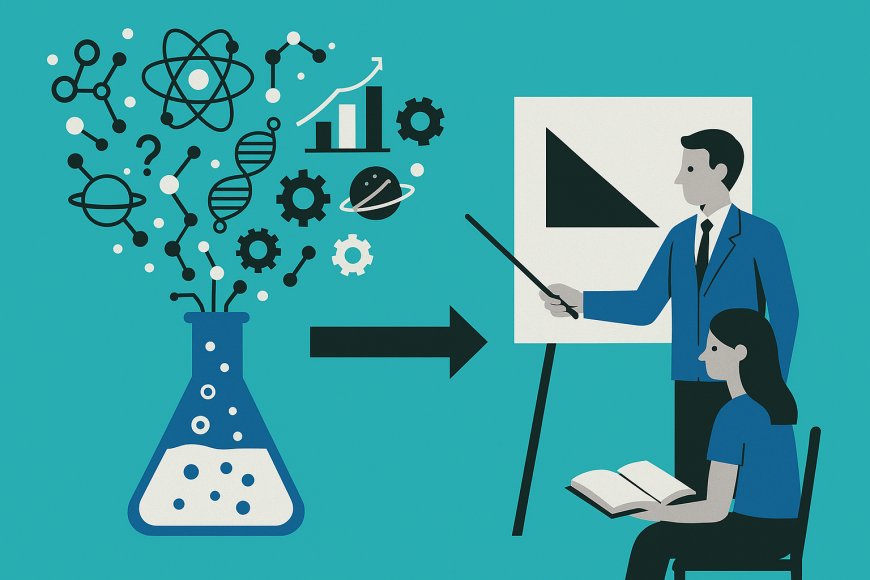
In the landscape of scientific education, a curious paradox emerges: complexity often serves as the crucible from which clarity is forged. Consider a classroom scenario where students grapple with the intricacies of thermodynamics. At first glance, the dense equations and abstract principles seem insurmountable. However, it is through engaging with these complexities that students can develop a more profound understanding of the subject. The challenge for educators lies in transforming this inherent complexity into coherent, digestible educational content.


Traditional educational approaches have often favored simplification, albeit at the risk of distorting the essence of scientific phenomena. This is particularly evident in the use of models and analogies that prioritize ease of understanding over scientific fidelity. While simplifying models can facilitate initial comprehension, they may inadvertently lead to misconceptions if not carefully constructed. Thus, the real educational innovation lies in the capacity to harness complexity without compromising accuracy, offering students a gateway to authentic scientific inquiry.
Leveraging Complexity for Educational Innovation
In modern educational settings, there is a growing recognition of the value of complexity in fostering deeper learning. The intricate dance of particles in quantum mechanics, for example, challenges students to think beyond classical paradigms, encouraging a shift from rote memorization to conceptual exploration. By engaging with such complex topics, students are encouraged to develop critical thinking skills and an appreciation for the nuanced nature of scientific knowledge.
An effective pedagogical strategy involves presenting complexity as a puzzle to be unraveled, rather than an obstacle to be simplified away. In a typical physics class, students might be introduced to the phenomenon of quantum entanglement through a series of progressively challenging problems. This approach allows them to build their understanding incrementally, integrating new information with existing knowledge frameworks.
Furthermore, educators can utilize technology to simulate complex scientific processes, thereby providing students with experiential learning opportunities. Virtual labs and interactive simulations offer a dynamic platform for students to experiment with variables and observe outcomes in real time, bridging the gap between theoretical concepts and practical application.
Constructing Accurate yet Accessible Models
The construction of educational models that faithfully represent complex scientific mechanisms is a delicate balance. In a chemistry class, for instance, visualizing molecular interactions at the atomic level can be daunting. However, by employing accurate simulations and visual aids, educators can demystify these interactions, making them more accessible without sacrificing scientific integrity.
Consider a behavioral experiment where students model the diffusion of particles. By using computer simulations to manipulate variables such as temperature and concentration gradients, students can observe diffusion in action. This hands-on approach helps solidify their understanding of kinetic molecular theory, highlighting the relevance of complexity in scientific exploration.
Moreover, interdisciplinary teaching methods can enrich the learning experience by connecting scientific concepts across different domains. Linking biology with physics through the study of biophysics, for example, enables students to see the interconnectedness of scientific disciplines, reinforcing the importance of complexity in comprehensive education.
The Future of Scientific Education: Embracing Complexity
As educational methodologies continue to evolve, the integration of complexity into the learning process promises to redefine scientific education. Future advancements may include the development of adaptive learning systems that tailor educational content to individual students’ cognitive processes, ensuring that complexity is introduced in a manner that aligns with their unique learning trajectories.
In contemplating this future, it becomes clear that the embrace of complexity is not merely a pedagogical trend, but a fundamental shift towards a more authentic representation of science in education. By harnessing the paradox of simplicity and complexity, educators can cultivate a generation of learners equipped to navigate the intricacies of scientific inquiry with confidence and curiosity.
What's Your Reaction?