









































































The Cognitive Mechanics Behind Skill Acquisition: A Scientific Dissection
Skill acquisition involves intricate cognitive mechanics that propel individuals beyond rote learning, integrating complex neural pathways and adaptive neuroplastic responses. These mechanisms underscore how experiences, practice, and feedback converge to create expertise. Exploring the nuances of these cognitive processes reveals profound insights into optimizing educational techniques, enhancing performance, and fostering lifelong learning. Innovative educational strategies rooted in understanding these mechanisms promise to transform how knowledge is imparted and acquired, offering pathways for personal and professional growth.

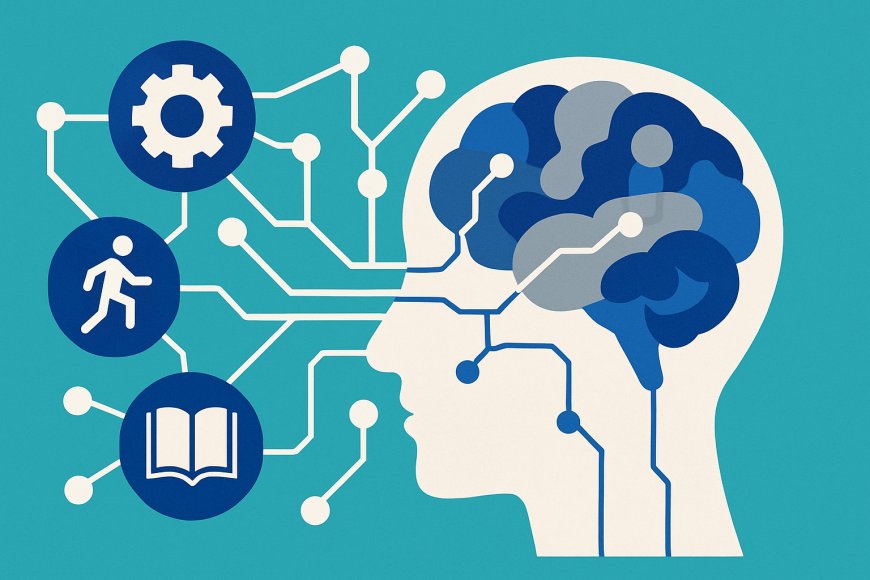
Imagine a musician performing flawlessly on stage. Behind this apparent ease lies a sophisticated process of skill acquisition, deeply rooted in cognitive mechanics. Skill acquisition is not merely about repetition but involves the intricate dance of neural pathways and cognitive adaptations.


Consider the scenario of a novice pianist. Initially, the learning process is deliberate, with conscious attention on each note. This stage requires the activation of working memory and the prefrontal cortex, areas responsible for attention and executive functions. Over time, with persistent practice, these tasks transition to the basal ganglia, reflecting a shift from conscious to automatic processing. This neuroplastic transformation signifies the essence of skill acquisition, where the mind rewires itself to enhance efficiency and proficiency.
The Role of Neuroplasticity in Skill Acquisition
Neuroplasticity, the brain's ability to reorganize itself by forming new neural connections, plays a pivotal role in skill acquisition. In a typical observational study on jugglers, neuroimaging reveals increased grey matter in areas associated with visual and motor coordination after just a few weeks of practice. This phenomenon illustrates how the brain physically alters its structure to accommodate new skills, reinforcing the notion that practice is not simply a mental exercise but a biological one.
Such adaptations are not limited to physical skills. Cognitive tasks, such as learning a new language, also elicit neuroplastic changes. The hippocampus, crucial for memory formation, shows increased activity and structural changes as linguistic proficiency develops. This adaptability underscores the brain's dynamic nature and its ability to continuously evolve in response to learning demands.
The implications of neuroplasticity in skill acquisition extend beyond individual learning. Educational methodologies can harness these insights to design curricula that promote active engagement and sustained practice, facilitating deeper learning experiences and cognitive resilience.
Feedback Mechanisms and the Refinement of Skills
Feedback is integral to the process of mastering a skill. In a behavioral experiment where participants learned to play a novel musical instrument, those receiving immediate, constructive feedback exhibited accelerated skill advancement compared to those without regular input. This scenario highlights the critical role of feedback in reinforcing correct neural patterns and correcting errors.
The cerebellum, an area of the brain associated with fine motor skills and error correction, becomes particularly active when processing feedback. This activity suggests that the brain continuously refines its motor outputs based on sensory inputs, a process that supports the transition from novice to expert performance.
The concept of "desirable difficulty," where challenging conditions during practice enhance learning, further exemplifies the role of feedback. By encouraging learners to engage with complex tasks and receive immediate feedback, educational frameworks can foster an environment conducive to long-term skill retention and expertise development.
Transfer of Learning and Its Cognitive Underpinnings
The transfer of learning, or the ability to apply acquired skills to new contexts, is a testament to cognitive versatility. In studies involving chess players, those with extensive playing experience demonstrate superior problem-solving abilities in unrelated domains. This phenomenon can be attributed to the development of high-level cognitive strategies that extend beyond the original skill set.
At the neural level, such transfer involves the prefrontal cortex, which coordinates complex cognitive processes and integrates information across different areas of the brain. This integration facilitates the application of learned principles to novel situations, showcasing the brain's capacity for adaptive learning.
Understanding the mechanisms behind learning transfer can revolutionize educational practices, emphasizing the importance of teaching strategies that encourage broad cognitive development rather than rote memorization. This shift can enhance learners' ability to adapt and thrive in diverse environments.
In the pursuit of optimizing skill acquisition, understanding the cognitive mechanics involved offers profound implications for education and beyond. By leveraging insights from neuroscience and cognitive science, educators can craft methodologies that not only impart knowledge but also nurture the adaptive, resilient minds needed for future challenges. The journey of learning is not static; it is a dynamic, evolving process that continuously shapes the brain's architecture and capacities.
What's Your Reaction?