Deconstructing the Myth of Objectivity in the Creator Economy
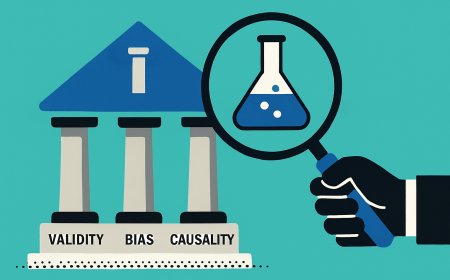
The creator economy, a modern economic sector driven by individuals who monetize their content creation, challenges traditional concepts of objectivity. In scientific methodology, objectivity refers to the unbiased and impartial analysis of data and phenomena. However, within the creator economy, the subjective experiences and biases of content creators often influence the perception and acceptance of their work. This article delves into the methodologies used to analyze the creator economy, addressing how subjective biases impact economic and scientific interpretations. Through hypothetical scenarios and case studies, the article elucidates the complex interplay between creator-driven content, consumer perceptions, and economic outcomes, ultimately questioning the applicability of traditional objectivity in this dynamic sector. The future of this economy may depend on developing new methodological frameworks that account for the inherently subjective nature of creative work, reshaping our understanding of bias and objectivity in economic analysis.

The creator economy is evolving into a formidable force within the global economic landscape, shaping industries, consumer behavior, and cultural trends. Unlike traditional economic structures, the creator economy thrives on individual content creators who monetize their personal brands, experiences, and skills across digital platforms. This shift raises profound questions about the role of objectivity, traditionally a cornerstone of scientific methodology, in analyzing and understanding this dynamic sector.


In scientific terms, objectivity refers to the ability to analyze phenomena without the influence of personal biases or subjective interpretations. It is the pursuit of an unbiased perspective, a principle that underpins empirical research. However, the creator economy inherently blurs the lines between subjectivity and objectivity. The content created is deeply personal, reflective of the individual's unique perspective, and often driven by personal narratives and experiential authenticity. Objectivity, in this context, becomes both a methodological challenge and a philosophical conundrum.
Subjectivity as a Driving Force
Consider a scenario where a digital content creator, armed with a vast following on social media, produces content that significantly influences consumer behavior in the fashion industry. The creator's recommendations, based on personal style and subjective taste, become economic drivers. In this case, subjectivity becomes a critical component of economic influence, challenging the traditional objective models of consumer behavior.
In the academic realm, this presents a methodological paradox. How does one objectively assess the economic impact of subjective content? Traditional economic models, which rely on objective data inputs and outputs, struggle to encapsulate the nuances of creator-driven markets. Subjectivity, often viewed as a bias in scientific methodology, is a defining characteristic of the creator economy, necessitating a reevaluation of how bias is understood and measured within this context.
Hypothetical case studies can offer insight. Imagine a behavioral experiment where researchers attempt to quantify the impact of a popular creator's product endorsements on sales metrics. The challenge lies in discerning the objective from the subjective, as consumer responses are inherently linked to personal affinity with the creator's persona. This interdependence complicates efforts to isolate variables and maintain objectivity.
Redefining Economic and Scientific Validity
The concept of validity, which in scientific research refers to the credibility and reliability of findings, encounters similar challenges in the creator economy. Validity traditionally demands replicable results and objective data; however, in creator-driven markets, variability is inherent. Each creator's influence is unique and context-dependent, influenced by cultural, social, and individual factors.
In a typical observational study examining the economic trends within this sector, researchers might track the growth trajectories of various content creators across platforms. The validity of these findings hinges on recognizing the subjective nature of the content. A viral video, for instance, might skew data due to its unique appeal, rather than representing a consistent economic trend.
Consequently, economic interpretations drawn from the creator economy require a nuanced understanding of validity that accommodates subjective variability. New methodological frameworks must emerge, embracing the complexity and unpredictability inherent in creator-driven content. Such frameworks would prioritize adaptability and contextual analysis over traditional replicability and objectivity.
Implications for Scientific Methodology
The methodological implications of the creator economy extend beyond economic analysis, challenging core scientific principles. The pursuit of objectivity, a hallmark of scientific rigor, faces redefinition in contexts where subjective experiences and personal narratives drive economic and social change.
Incorporating qualitative methodologies, such as ethnographic studies and narrative analysis, may prove beneficial. These approaches offer alternative avenues for understanding the creator economy, valuing subjective insights as pivotal data points rather than biases to be eliminated. Anonymized case studies, detailing the interplay between creators and their audiences, provide rich, context-specific insights that quantitative data may overlook.
The creator economy's influence stretches across sectors, from marketing strategies to consumer psychology, necessitating an interdisciplinary approach. By merging economic analysis with sociological and psychological perspectives, researchers can better navigate the subjective-objective dichotomy, enriching our comprehension of this burgeoning economic frontier.
As we look to the future, the creator economy challenges traditional scientific methodologies to evolve, embracing the subjective nature of human experience as a legitimate lens for economic analysis. This shift holds the potential to redefine objectivity and bias, not as obstacles, but as integral components of a more holistic understanding of modern economic dynamics.
What's Your Reaction?