






































































The Cognitive Paradox in Behavioral Economics: Rationality Meets Irrationality
Behavioral economics challenges traditional economic theories by focusing on the irrational behaviors influencing economic decisions. This article explores the cognitive paradoxes where human rationality and irrationality intersect, providing deep insights into economic decision-making processes and their implications for future research and policy.

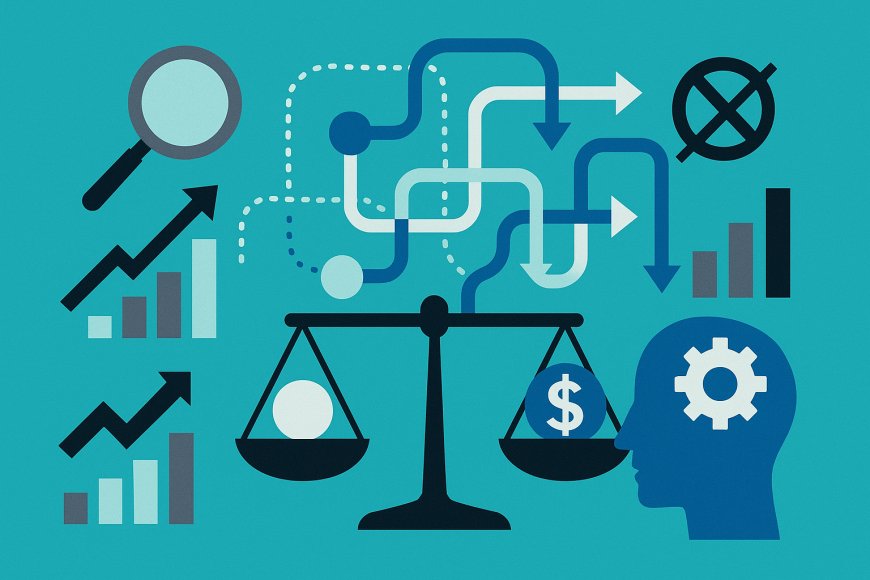
The foundational principles of behavioral economics pose profound challenges to the classical economic notion of human rationality. Traditional economic models often assume individuals make decisions based on logical evaluation of available information, maximizing utility. However, behavioral economics reveals a contrasting narrative, one where cognitive biases and irrational behaviors frequently steer decision-making processes. This divergence is not merely academic; it profoundly influences economic policy and market dynamics.


To illustrate, consider an experiment involving consumer choices in a typical retail environment. Shoppers are presented with a selection of equally priced goods. Classic economic theory would predict selections based purely on utility maximization. Yet, behavioral experiments consistently highlight deviations; consumers often rely on heuristics or exhibit brand loyalty without rational basis. Such scenarios underscore the cognitive dissonance between rational choice theory and actual consumer behavior.
The Role of Cognitive Biases in Economic Decisions
In dissecting economic decisions, cognitive biases emerge as critical factors. These biases, systematic patterns of deviation from norm or rationality in judgment, play a pivotal role in how individuals process information. The availability heuristic, where people assess the probability of events based on readily available information rather than all pertinent data, is a prime example. In financial markets, this might result in overvaluation of stocks with recent media exposure, irrespective of intrinsic value.
Take a behavioral experiment examining investment choices among amateur investors. Participants are divided into two groups, each receiving information about stock performance. One group receives comprehensive data, while the other gets only selective, high-profile news. Despite similar assets, the latter group shows a propensity to invest in stocks extensively covered in the press, evidencing the availability heuristic.
Another significant bias is loss aversion, the tendency to prefer avoiding losses over acquiring equivalent gains. This bias is often observed in insurance markets where customers purchase extensive coverage to avoid potential losses, even when statistically improbable. In a field study involving home insurance decisions, researchers found individuals more willing to overpay for coverage against rare events due to an exaggerated perception of risk.
Rationality and Irrationality: A Cognitive Dichotomy
Exploring the dichotomy between rationality and irrationality reveals a paradox in cognition. Humans are not inherently irrational; rather, rationality is bounded by information processing limitations and emotional responses. Bounded rationality, a concept introduced by behavioral theorists, suggests that while individuals aim to make rational decisions, they operate under constraints that limit their capacity to process and analyze all available information.
Consider a workplace scenario where employees must choose between two benefit packages. One package offers a substantial immediate bonus, while the other provides long-term, incremental benefits. Despite the long-term package offering greater overall value, immediate gratification often sways the decision. This reflects bounded rationality, where cognitive limitations and present bias influence choices.
The intersection of rationality and irrationality is further exemplified in public policy decisions. Policymakers often rely on rational models for predictions and interventions, yet public responses frequently defy these models. A case study in tax compliance shows that despite rational incentives to evade taxes, social norms and moral considerations influence compliance rates. Such findings challenge the assumption that economic actors are solely rational agents.
Implications for Future Research and Policy
The juxtaposition of rationality and irrationality has significant implications for future research in behavioral economics. Understanding this interplay is crucial for designing more effective policies and interventions. Research focused on identifying and mitigating cognitive biases can lead to better market predictions and consumer protection mechanisms.
Future studies might explore the integration of behavioral insights into economic modeling, allowing for more nuanced predictions of market behavior under varying conditions. In policy design, recognizing the impact of behavioral factors could enhance the effectiveness of interventions, such as nudges, to guide public behavior without restricting freedom of choice.
As behavioral economics continues to evolve, its insights into the human mind's economic rationality and irrationality offer valuable lessons for navigating the complexities of decision-making. By acknowledging the cognitive paradoxes inherent in economic behavior, researchers and policymakers alike can foster environments that accommodate the intricate realities of human decision-making, ultimately leading to more robust economic systems.
What's Your Reaction?