The Science of Personal Branding: Cognitive Mechanisms and Identity Construction
Personal branding harnesses cognitive principles to shape social perception and identity. Understanding the cognitive mechanisms behind personal branding reveals insights into self-representation and the construction of identity.

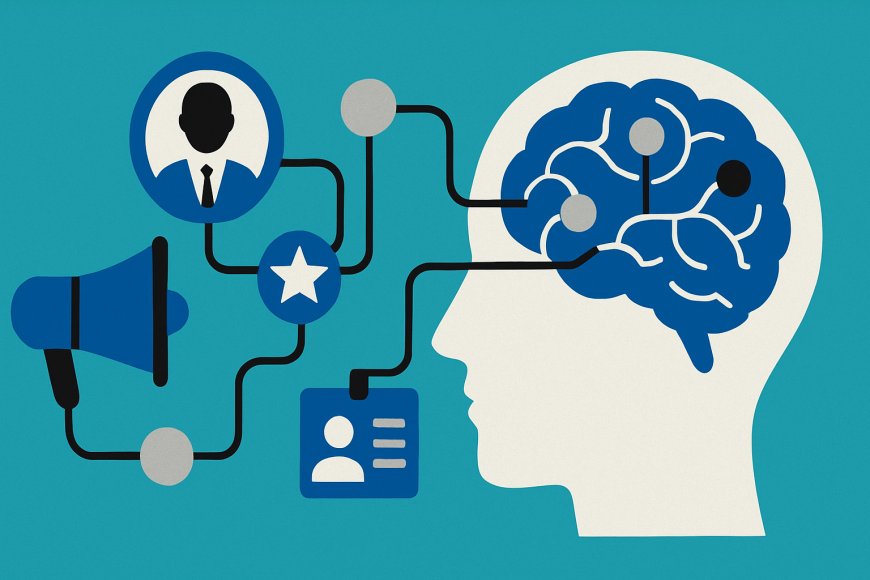
Consider an entrepreneur who meticulously curates their LinkedIn profile. Every word, headline, and image selected serves a specific purpose: to portray an image of competence, reliability, and innovation. This scenario finds its underpinnings in a complex web of cognitive processes that transform personal branding into a science. Personal branding transcends simple self-promotion, leveraging cognitive mechanisms to construct and project identity in a manner that resonates with others.


At its core, personal branding is an exercise in social cognition. Social cognition is the study of how people process, store, and apply information about others and social situations. It involves a network of cognitive processes, including perception, attention, memory, and reasoning. These processes work in tandem to create an individual’s social identity, influencing how they are perceived by others. In the context of personal branding, these cognitive mechanisms become tools for crafting a desired persona, embedding oneself into the social fabric in a specific, controlled manner.
Neurocognitive Underpinnings of Self-Representation
In a behavioral experiment, individuals are asked to describe their own traits and those of a fictional character. Brain imaging reveals that self-descriptive tasks activate areas like the medial prefrontal cortex (mPFC), a region associated with self-referential processing. This neural activity underpins the process of self-representation by enabling individuals to integrate personal experiences with broader social narratives.
The mPFC does not operate in isolation. It works alongside the temporoparietal junction (TPJ) and the posterior cingulate cortex (PCC), regions involved in perspective-taking and autobiographical memory, respectively. This neural network facilitates the construction of a coherent self-narrative, essential for personal branding. By understanding these neural pathways, individuals can more effectively tailor their personal brand, ensuring it aligns with their authentic self while meeting social expectations.
Additionally, the amygdala plays a role in emotional processing and social judgments. Its involvement in personal branding is significant; it affects how individuals perceive and react to the emotional tone of their own branding messages. Emotionally resonant narratives tend to be more persuasive, enhancing the effectiveness of a personal brand.
Social Identity Theory and Cognitive Dissonance
In a typical observational study on social identity theory, individuals are observed as they engage in branding exercises. Participants frequently adjust their self-presentation based on perceived social norms and group dynamics. This adjustment process is underpinned by cognitive dissonance, a psychological phenomenon where individuals experience discomfort when their actions contradict their beliefs or identities.
Such dissonance drives individuals to modify their self-presentation to achieve alignment between their perceived and projected identities. The iterative process of reconciling cognitive dissonance through personal branding fosters a stable self-concept over time. This dynamic interplay between internal beliefs and external perceptions exemplifies the intricate cognitive processes involved in crafting a personal brand.
Personal branding, therefore, becomes a balancing act. It requires maintaining an authentic core while adapting to external social feedback. Cognitive dissonance acts as a regulatory mechanism, ensuring that personal branding remains both authentic and socially palatable.
The Role of Mirror Neurons in Social Feedback
Consider a study exploring the role of mirror neurons in observing and mimicking social behavior. Participants exhibit increased neural activity in mirror neuron systems when engaging in social interactions that involve personal branding. These neurons, located in the premotor cortex and inferior parietal lobule, are crucial for understanding and emulating the actions and intentions of others.
Mirror neurons facilitate empathy and social learning, allowing individuals to anticipate and interpret social feedback. In personal branding, this neural mechanism enables individuals to adjust their self-presentation effectively based on social cues. Through this feedback loop, individuals refine their brand to better fit the expectations of their audience, ensuring more effective communication and identity projection.
This process underscores the importance of social adaptability in personal branding. The ability to dynamically adjust based on social feedback is crucial for maintaining a relevant and impactful personal brand. Mirror neurons contribute to the empathy and flexibility necessary for this ongoing refinement.
Personal branding is not merely a superficial exercise in self-promotion; it is deeply rooted in cognitive science and social psychology. The mechanisms of perception, memory, and emotional processing provide a framework for understanding how individuals can construct and project their identities effectively. As personal branding becomes increasingly relevant in digital and professional spaces, the insights gleaned from cognitive science offer valuable guidance for crafting authentic and resonant identities. Future research may further elucidate these cognitive processes, paving the way for more sophisticated and empathetic approaches to self-representation.
What's Your Reaction?