Neural Networks: Redefining the Scope of AI Learning
Neural networks represent a paradigm shift in artificial intelligence, emulating human cognitive processes to enhance machine learning. This article explores the architecture of neural networks, their learning mechanisms, and the profound implications for AI development.

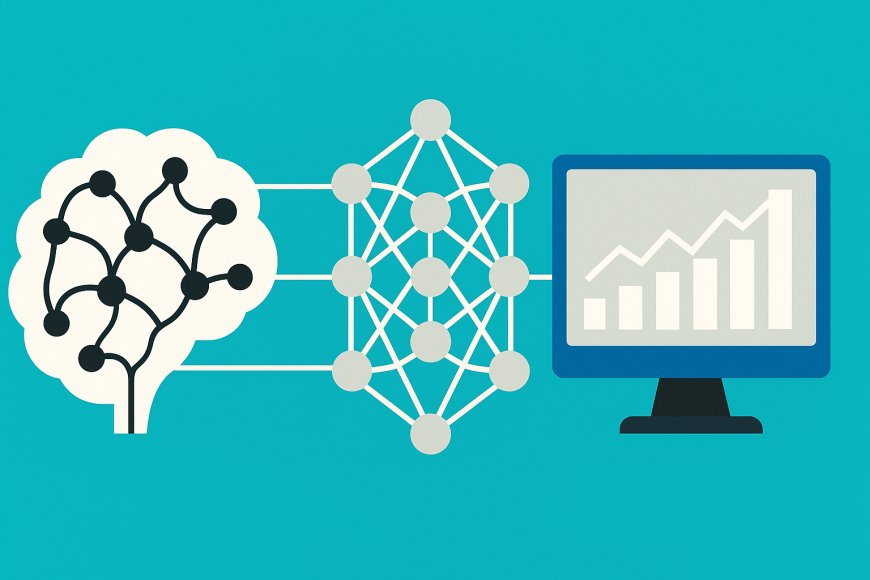
In the realm of artificial intelligence, neural networks have emerged as a cornerstone technology, driving significant advancements in machine learning and data processing. A neural network mimics the intricate architecture of the human brain, embodying a system of interconnected neurons that communicate through weighted connections. This structural semblance to biological counterparts enables neural networks to perform complex tasks such as image recognition, language translation, and even predictive analytics with a degree of effectiveness previously unattainable by traditional algorithms.


Consider a scenario in which a neural network is deployed to distinguish between different species of birds. As an initial step, the network is trained using a vast dataset of bird images, each annotated with corresponding labels. The network processes these images through multiple layers, each extracting and refining features such as color, shape, and texture. Through a process called backpropagation, the network iteratively adjusts the weights of its connections to minimize error in its predictions. Over time, the network develops a nuanced understanding akin to human perception, capable of accurately classifying new, unseen bird images.
The Architecture of Neural Networks
The foundational structure of a neural network comprises layers of nodes, each representing artificial neurons. These neurons are organized into input, hidden, and output layers. Input layers serve as the network's sensory system, receiving raw data that the network will analyze. Hidden layers, often numbering in the dozens or even hundreds, perform the intricate computations necessary to recognize patterns and extrapolate features. Each neuron in these layers applies a linear transformation followed by a non-linear activation function, facilitating a dynamic, adaptable learning process.
In a typical computational experiment, a neural network designed to analyze financial market trends processes an array of input variables such as historical prices, trading volumes, and economic indicators. The hidden layers uncover latent patterns that are not immediately obvious to human analysts, enabling the network to predict future market fluctuations with remarkable precision. The output layer then consolidates these insights into actionable predictions or classifications.
The architecture of neural networks is highly customizable, allowing for variations such as convolutional networks for image processing or recurrent networks for sequential data analysis. These specialized architectures expand the capabilities of neural networks, tailoring their applicability to specific domains and tasks.
Learning Mechanisms and Adaptability
The learning process of a neural network is iterative and occurs through the adjustment of synaptic weights, akin to the strengthening or weakening of synapses in the human brain. This process is guided by a loss function, a mathematical representation of the difference between predicted and actual outcomes. By minimizing this loss, neural networks refine their predictions and improve their accuracy over successive iterations.
In a behavioral experiment simulating decision-making, a neural network is exposed to a game environment where it must choose optimal strategies to maximize a reward. Initially, the network makes random decisions, akin to a novice player. With each round, it learns from its successes and failures, gradually converging on strategies that yield the highest rewards. This form of reinforcement learning exemplifies the network's adaptability and self-improvement capabilities.
The adaptability of neural networks is crucial in environments characterized by dynamic and evolving data patterns. This trait underpins their effectiveness in domains such as autonomous driving, where real-time decision-making is imperative in diverse and unpredictable conditions. Neural networks equipped with reinforcement learning capabilities can adjust to new scenarios, enabling autonomous systems to navigate complex environments with minimal human intervention.
The Implications for AI Development
The transformative potential of neural networks extends beyond their technical capabilities, heralding a new era in artificial intelligence. Their proficiency in handling vast datasets and extracting meaningful patterns positions them as indispensable tools in fields ranging from healthcare to cybersecurity. For instance, in medical diagnostics, neural networks analyze radiographic images to identify abnormalities with exceptional precision, augmenting the capabilities of human practitioners and expediting clinical decision-making.
In the context of cybersecurity, neural networks monitor network traffic for anomalous patterns indicative of potential security breaches. Their ability to learn from both historical and real-time data allows them to detect and respond to threats swiftly, bolstering the robustness of defense mechanisms in an increasingly digital world.
Despite their remarkable capabilities, neural networks are not without limitations. Their reliance on substantial computational resources and training data presents challenges in terms of scalability and accessibility. Moreover, the interpretability of neural networks remains a significant hurdle, as their decision-making processes are often seen as opaque, complicating the justification of their outputs.
As the frontiers of artificial intelligence continue to expand, the role of neural networks will undoubtedly evolve, driven by advancements in computational power and innovative algorithmic strategies. The continued exploration of their potential holds promise for breakthroughs that may redefine our understanding of machine intelligence and its integration into society.
Neural networks epitomize the confluence of biological inspiration and computational ingenuity, offering a glimpse into the future of artificial intelligence. Their ongoing evolution presents opportunities not only to enhance machine capabilities but also to deepen our understanding of cognition and learning. As research progresses, the potential for neural networks to transform industries and enrich human experiences remains boundless, inviting us to imagine a world where intelligent machines collaborate seamlessly with their human counterparts.
What's Your Reaction?