
































































Synthesizing Evolution: Challenging the Notions of Natural Selection in Synthetic Biology
Synthetic biology challenges traditional views of evolution by introducing engineered organisms that bypass natural selection. This article examines the implications of human-directed evolution, questioning the role of randomness and environmental adaptation in living systems.

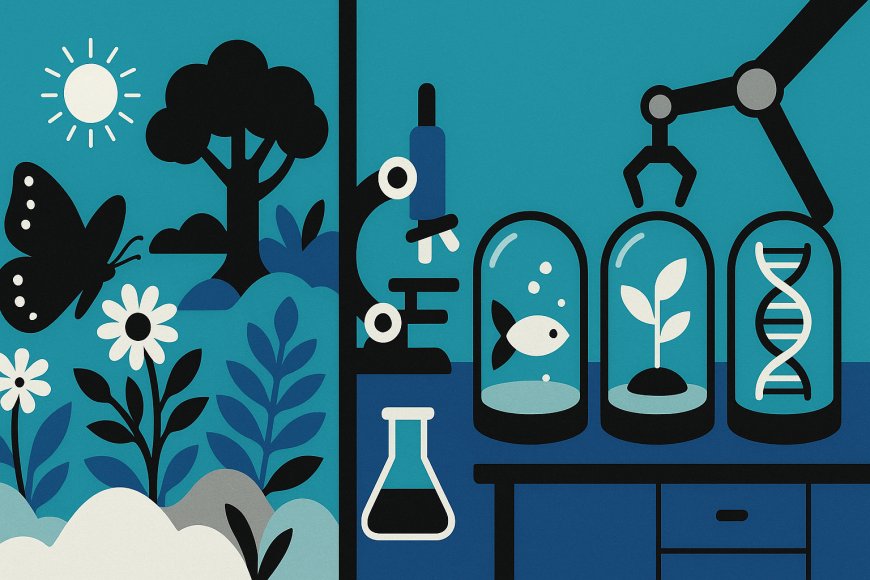
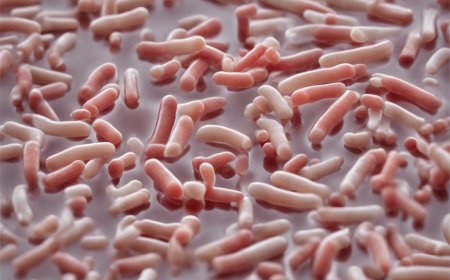
Consider a laboratory populated with genetically modified bacteria that thrive in environments where their natural counterparts perish. These organisms, engineered to resist extreme conditions, challenge the foundational principles of natural selection. Synthetic biology does not merely replicate biological functions; it reconstructs them, offering a paradigm where organisms are designed to meet specific human needs, bypassing the slow, incremental changes that characterize natural evolution.


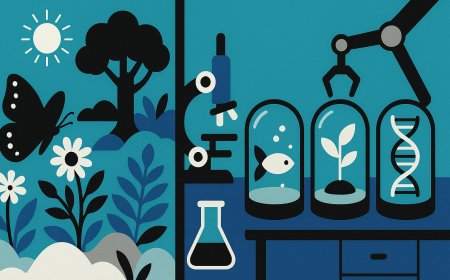
In essence, synthetic biology allows for the direct manipulation of genetic material, enabling the creation of organisms with traits unseen in nature. This raises profound philosophical and practical questions. Can this form of human-directed evolution substitute for the adaptive processes honed over billions of years? Are we entering an age where the boundaries of evolution are determined by human intent rather than environmental pressures?
Redefining Evolution: Genetic Precision in Synthetic Biology
Synthetic biology's precision engineering presents a stark contrast to the randomness inherent in natural selection. By designing genetic circuits with the specificity of digital logic gates, researchers can predictably alter cellular behavior. In a controlled experiment, yeast cells might be engineered to fluoresce in the presence of a particular toxin, providing an immediate visual cue for contamination. This level of precision would take countless generations to evolve naturally.
These engineered organisms exemplify a shift from reactive to proactive evolutionary strategies. Traditional evolution relies on random mutations and natural selection's slow culling process. Synthetic biology, however, can introduce beneficial traits directly, aligning with human-defined objectives. The implications extend beyond laboratory applications to agriculture, medicine, and environmental management, where engineered organisms could be leveraged for targeted solutions.
Yet this precision raises ethical questions about the role of unpredictability in evolutionary success. Random genetic mutations have allowed species to adapt to unforeseen environmental shifts. By eliminating this randomness, are we inadvertently weakening the resilience of engineered organisms to future challenges?
The Ethics of Human-Driven Evolution
At the heart of synthetic biology lies a profound ethical debate. Is altering an organism's genetic makeup an overreach of human influence, or a necessary evolution of technological capability? In agriculture, for instance, genetically modified crops might be designed to resist pests without the need for chemical pesticides. However, the widespread cultivation of such crops may inadvertently reduce biodiversity, creating monocultures vulnerable to pest mutations or climate change.
Furthermore, the ease of genetic modification blurs lines between natural and artificial life, raising questions about the moral status of engineered organisms. In a hypothetical scenario, consider a genetically engineered bacterium designed to clean oil spills. While its utilitarian purpose is clear, what are the ecological consequences if such an organism were to proliferate uncontrollably?
Thus, synthetic biology demands a reevaluation of evolutionary ethics. Balancing technological advancements with ecological stewardship requires a nuanced approach, acknowledging both the potential benefits and unforeseen consequences of human-directed evolution.
Rethinking Adaptation: Synthetic Biology's Impact on Evolutionary Theory
Synthetic biology forces a reconsideration of classical evolutionary theory. Traditionally, organisms adapt through a gradual accumulation of advantageous traits. However, synthetic biology can instill complex traits in a single generational leap. For example, engineered algae might be optimized for biofuel production, overshadowing their natural counterparts in efficiency.
This capacity for rapid adaptation raises questions about the enduring relevance of Darwinian models. Are natural selection and genetic drift still applicable when human intervention can dictate evolutionary outcomes? In this context, synthetic biology presents a parallel evolutionary mechanism, accelerating the timeline of genetic change beyond natural constraints.
The implications extend to the concept of fitness landscapes, where engineered organisms might occupy ecological niches unachievable through natural means. This reconceptualization challenges biologists to redefine evolutionary success not just as survival, but as adaptability to human-imposed environments.
As synthetic biology continues to evolve, it serves as both a tool and a challenger to traditional evolutionary paradigms. The field encourages a reimagining of adaptation, emphasizing the interplay between natural resilience and human ingenuity.
In contemplating the future, synthetic biology represents both a promise and a caution. The ability to design life with precision and purpose challenges the randomness of natural evolution, offering new avenues for solving human and ecological problems. Yet, it necessitates a careful consideration of ethical boundaries and the unforeseen consequences of human intervention in the natural world. As we forge this new evolutionary path, the balance between innovation and responsibility will define the future of synthetic biology and its role in shaping the living world.
What's Your Reaction?