






















































































When Strategy Becomes a Burden: The Gap Between Planning and Execution
This article exposes the crisis of strategic paralysis where excessive planning becomes an obstacle to success. It outlines seven symptoms of this managerial sickness and offers a new mindset that prioritizes flexible, swift execution over perfect plans.

There is an idea deeply rooted in institutions, repeated in management books and reinforced by consultants, that success begins with planning, that a clear vision, defined goals, and structured frameworks are enough to guarantee progress. On the surface, this idea appears logical, even necessary. But when tested against reality, it reveals a fundamental flaw. Many organizations possess detailed strategies, extensive documents, and carefully designed plans, yet remain unable to produce tangible results. They move extensively in thought, but remain static in action.


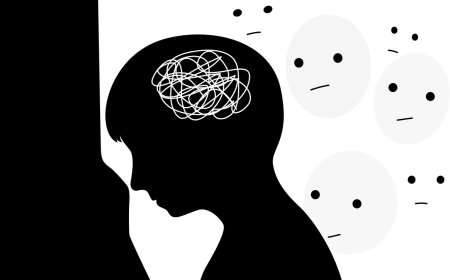
The issue is not the absence of planning, but its transformation into an end rather than a means. Strategy becomes a performance. Meetings multiply, documents expand, discussions deepen, but execution is delayed. The organization enters a loop where thinking replaces doing, and analysis substitutes progress. What was meant to guide action begins to consume it.
This condition can be described as the illness of strategy.
It does not appear as failure in the traditional sense. On the contrary, it often exists in environments that seem highly organized, intellectually active, and analytically strong. But beneath this surface lies a paralysis. Decisions are postponed in pursuit of perfection. Action is delayed until all variables are accounted for. And since reality never stabilizes, the moment of execution never arrives.
At the core of this illness is a misconception about how success is achieved. There is a belief that the future can be fully predicted, that if a plan is detailed enough, it can be executed exactly as designed. But reality does not operate in this way. It is dynamic, unpredictable, and resistant to static models. A plan that appears optimal today may become irrelevant tomorrow.
True strategy, therefore, is not the creation of a fixed path.
It is the ability to move within uncertainty.
This requires a shift from static planning to adaptive execution. Instead of attempting to eliminate uncertainty before acting, effective systems engage with it. They begin with direction, not perfection. They test assumptions through action, not discussion. They refine their path based on feedback, not forecasts.
This is where many institutions fail.
They pursue the perfect model instead of the workable one. They seek completeness before initiation. And in doing so, they sacrifice speed, learning, and momentum. The result is not better decisions, but delayed ones.
Another critical symptom of this condition is the expansion of goals. Organizations often attempt to achieve multiple objectives simultaneously—growth, quality improvement, market expansion, innovation—without prioritization. This creates fragmentation. Resources are spread thin, attention is divided, and no single objective receives the focus required for success. Evidence consistently shows that systems with fewer, clearer goals outperform those with extensive, unfocused strategies.
At the same time, rigidity becomes a hidden constraint. Once a plan is established, there is often resistance to change, even when reality contradicts the original assumptions. This resistance is not always rational. It is often psychological—the reluctance to admit that the initial plan was incomplete. But clinging to a flawed strategy does not preserve it. It amplifies its failure.
Flexibility, then, is not a weakness in strategy.
It is its core strength.
Execution is not a linear process. It requires continuous adjustment, simplification, and recalibration. What matters is not how accurately the plan predicts the future, but how effectively the system responds to it.
Another dimension of the illness appears in decision-making structures. When too many individuals are involved in strategic decisions, clarity diminishes. Each perspective adds complexity, each opinion introduces delay, and the process becomes slower. While collaboration is valuable, decision authority must remain defined. Without this, execution becomes diffused, and accountability disappears.
Equally damaging is the separation between those who design the strategy and those who execute it. When plans are created by individuals disconnected from operational reality, they often fail to account for practical constraints. The result is a strategy that appears coherent on paper but collapses in application. Effective systems integrate planning and execution. Those who build the strategy must understand its implementation, and those who execute it must be involved in shaping it.
Perhaps the most overlooked factor is operations.
Many strategies focus on outcomes—products, services, expansion—without considering the ongoing requirements needed to sustain them. A concept may be viable in theory, but operationally unsustainable. Costs, maintenance, scalability, and resource allocation are not secondary considerations. They determine whether a strategy can survive beyond its initial phase.
To avoid this illness, the solution is not to eliminate planning, but to reposition it.
Planning must be reduced in proportion and increased in precision. A minimal framework is sufficient to define direction. Beyond that, execution must take precedence. A practical principle emerges here: limited planning, immediate action, continuous adjustment.
Start before you feel ready.
Define fewer goals, but pursue them fully.
Adjust quickly when reality shifts.
Ensure that those who plan are accountable for execution.
And consider operational realities from the beginning.
In this model, strategy becomes dynamic. It evolves through interaction with reality rather than remaining fixed in abstraction. It becomes a living process, not a static document.
Ultimately, success is not determined by the quality of the plan.
It is determined by the quality of execution.
And execution does not wait for perfection.
It begins with movement.
What's Your Reaction?