











































































The Four Cognitive Archetypes of the Information Age
Discover the four cognitive archetypes?producer, transmitter, connector, and harvester?who shape the knowledge economy and navigate the challenges of information surplus. Learn what sets them apart.
We live in a moment where knowledge is no longer scarce. It flows endlessly, across screens, platforms, and voices that compete not to deepen understanding, but to capture attention. In such an environment, the critical question is no longer how to access knowledge, but how to relate to it. Not all who speak about ideas understand them. Not all who understand them can use them. And not all who use them can transform them into value.


This distinction is no longer intellectual—it is structural. It determines who shapes the future and who merely observes it.
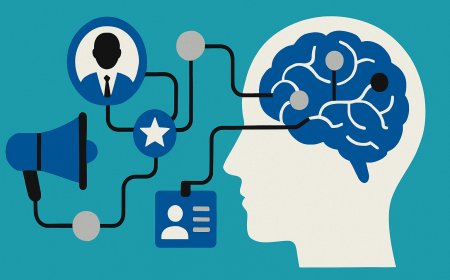
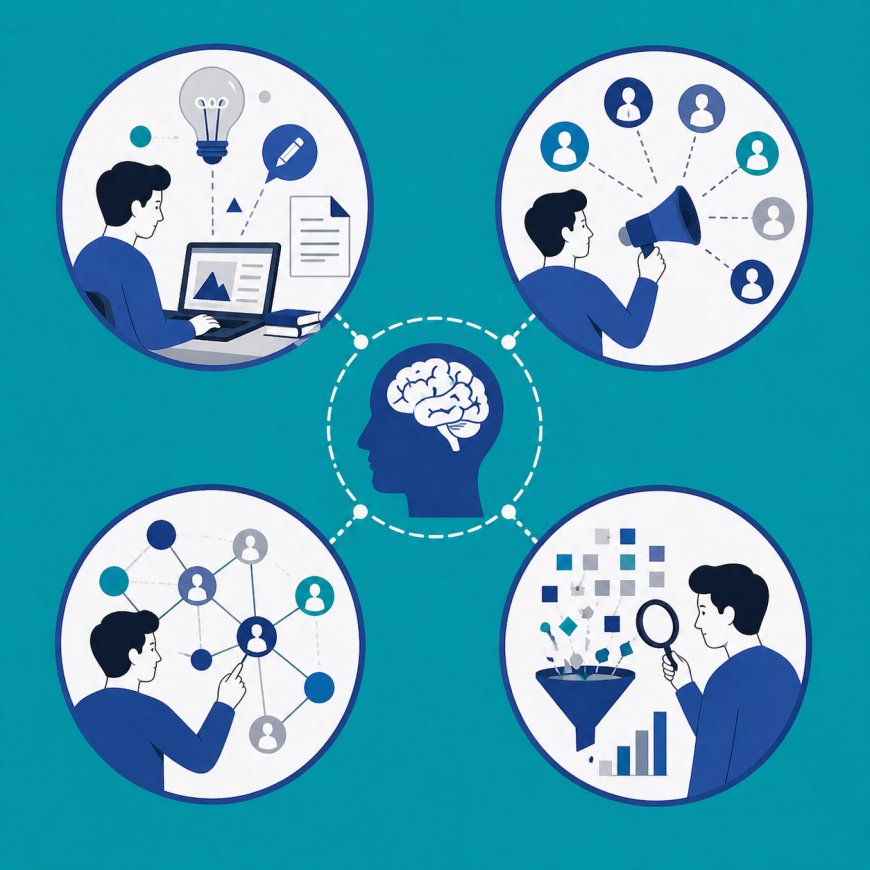
At the center of this landscape, four archetypes emerge. They are not defined by titles or roles, but by how they interact with knowledge itself. And understanding them is essential, because every individual—and every nation—operates through a mix of these types.
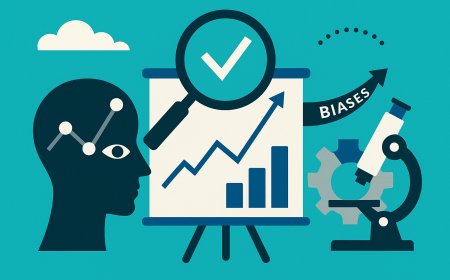
The first is the knowledge producer. This is the rare mind that does not settle for what exists. It questions gaps, explores what has not yet been articulated, and builds concepts where none previously existed. The producer is not driven by visibility, but by necessity—the need to resolve ambiguity, to construct meaning, to create intellectual infrastructure. What distinguishes this type is not intelligence alone, but depth. They do not repeat ideas; they originate them. They do not circulate knowledge; they expand it.
The second is the knowledge transmitter. This is the most visible figure in the digital age. Skilled in language, presentation, and emotional resonance, the transmitter excels at repackaging ideas for mass consumption. But there is a critical limitation: transmission is not creation. The transmitter often operates at the level of surface understanding, presenting knowledge without fully inhabiting it. This creates an illusion of depth, where audiences feel informed without being transformed. And over time, this illusion becomes dangerous. It replaces substance with spectacle, and understanding with familiarity.
The third is the knowledge connector. This type moves differently. Instead of remaining within a single domain, the connector navigates across disciplines, identifying relationships where others see separation. They bring together ideas from different fields—science, philosophy, economics—and reshape them into new frameworks. Their strength lies not in depth alone, but in synthesis. They build bridges that allow knowledge to move, adapt, and find new applications. In a fragmented world, this ability becomes increasingly valuable.
But the fourth type is the most decisive—and the rarest.
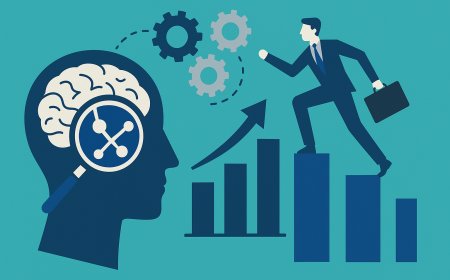
The knowledge harvester does not stop at understanding or connecting ideas. They translate knowledge into function. They take what is abstract and give it form—products, systems, platforms, solutions. Where others discuss, they implement. Where others analyze, they construct. They understand that knowledge, without embodiment, remains incomplete. That ideas must leave the realm of language and enter the realm of impact.
This is where the true gap emerges.
Modern societies are saturated with transmitters. They are celebrated, followed, and amplified. Their ability to simplify and distribute ideas makes them visible. But visibility is not value. The result is a paradox: an abundance of content, yet a shortage of solutions. Conversations multiply, but transformation remains limited.
Meanwhile, producers, connectors, and especially harvesters operate with less visibility, but greater consequence. They shape industries, build systems, and redefine how knowledge interacts with reality. They do not compete for attention. They compete with complexity.
This imbalance has implications beyond individuals. It extends to how nations design their future.
In a world where competition is no longer defined by natural resources, but by cognitive capacity, knowledge becomes the primary strategic asset. But not all forms of knowledge contribute equally. Data alone does not create advantage. Information alone does not generate value. Only when knowledge is produced, connected, and ultimately harnessed does it become transformative.
This requires a shift in how systems are designed.
Investing in knowledge producers becomes foundational. Without them, there is no new intellectual capital to build upon. But production alone is insufficient. Without connectors, knowledge remains isolated. Without harvesters, it remains theoretical.
This is why the most advanced systems do not merely accumulate knowledge. They cultivate specific types of minds. Minds that can originate, integrate, and execute.
The role of transmitters, while necessary, must be recalibrated. They are essential for education and communication, but they cannot be the center of strategic thinking. A society that confuses articulation with innovation risks becoming dependent on external creation. It becomes fluent in explanation, but weak in construction.
The deeper question, then, is not about knowledge itself.
It is about identity.
What kind of thinker are you becoming? One who consumes and repeats? One who understands and connects? Or one who builds and transforms?
Because ultimately, knowledge is not defined by what you know.
It is defined by what you do with what you know.
And at scale, this becomes a civilizational question. Nations are not built by those who admire ideas, but by those who operationalize them. Not by those who quote, but by those who construct.
The future, then, does not belong to those who speak the most about knowledge.
It belongs to those who turn it into reality.
What's Your Reaction?