






















































































Climatic Frontiers: The Scientific Underpinnings of Geopolitical Shifts
Climate change serves as a potent catalyst reshaping geopolitical relations. This article delves into the intricate scientific phenomena driving these shifts, focusing on resource scarcity, migration patterns, and the reconfiguration of global power structures. As rising temperatures impact agricultural yields and exacerbate water scarcity, nations grapple with food security and border tensions. Meanwhile, the retreat of Arctic ice opens new maritime routes, challenging existing territorial claims and resource access. The article explores how these scientific mechanisms not only influence policy but also redefine power dynamics, urging policymakers to integrate environmental considerations into strategic decisions. The future of geopolitics hinges on understanding and leveraging these climatic factors to mitigate conflict and foster cooperation.

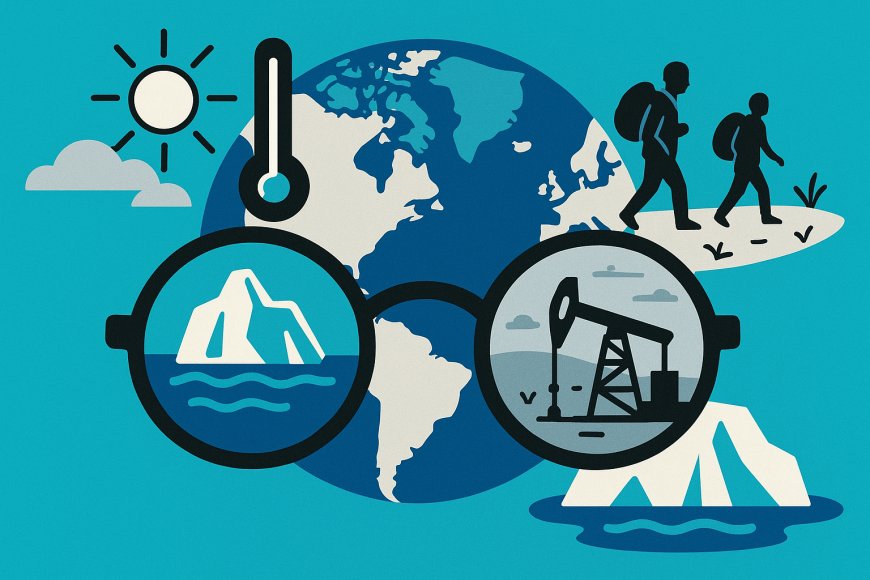
In the early 21st century, an unexpected geopolitical pivot emerges from a seemingly innocuous source: climate change. As scientific communities refine their understanding of climate dynamics, the interplay between environmental shifts and geopolitical relations becomes increasingly pronounced. This is not merely an academic observation but a reality unfolding across the globe, where climatic variations orchestrate the rise and fall of nations.


Consider the agricultural plains of Sub-Saharan Africa. In a typical observational study, scientists document how changing precipitation patterns directly affect food production. Droughts and floods, once rare phenomena, now occur with unnerving frequency, leading to crop failures and heightened food insecurity. This scientific evidence underscores a crucial reality: food scarcity is no longer a localized issue but a catalyst for regional instability, driving migration and resource conflicts. The resultant geopolitical friction is palpable as nations vie for dwindling resources, transforming climate change from an environmental concern to a significant geopolitical disruptor.
Resource Scarcity and Geopolitical Realignments
Resource scarcity, exacerbated by climate change, plays a central role in reshaping geopolitical landscapes. In a detailed soil composition analysis, researchers identify shifts in agricultural productivity due to alterations in climate patterns. Regions once fertile now face declining yields, prompting nations to reassess their agricultural strategies and trade dependencies. This scientific analysis reveals a sobering truth: as food becomes scarce, economic dependencies intensify, leading to realignments not just within but also between nations.
Examine a hypothetical scenario in which a major grain-exporting nation experiences a significant drop in production due to prolonged drought conditions. Neighboring countries, reliant on these imports, face economic strain, prompting diplomatic efforts to secure alternative food sources. Such scenarios highlight the geopolitical ripple effects initiated by climate-induced resource scarcity. Scientific models predicting these changes pave the way for nations to strategize accordingly, emphasizing the need for international cooperation and sustainable resource management.
Water scarcity provides further impetus for geopolitical tensions. Hydrologists, through extensive river flow measurements, note significant reductions in water availability in key transboundary rivers. This scientific evidence propels nations into diplomatic negotiations, often fraught with tension, as they navigate competing demands for a dwindling resource. The scientific data thus not only informs but also compels political discourse, urging nations to prioritize sustainable water management to avert conflict.
Climate Migration and Security Challenges
Climate-induced migration emerges as a potent force in redefining geopolitical relations. In one climate modeling experiment, researchers simulate future population displacement due to rising sea levels and increased storm intensity. These models indicate significant societal shifts, with millions forced to relocate from vulnerable coastal regions. The scientific projections highlight a stark reality: migration, driven by environmental factors, presents a formidable challenge to national security and political stability.
Examine a coastal nation grappling with rising sea levels. As communities are displaced, pressures mount on urban infrastructures and social services in receiving areas. This influx intensifies political tensions, potentially leading to domestic unrest and cross-border conflicts. Scientific insights into migration patterns thus become essential for crafting informed policy responses, highlighting the intertwining of environmental and geopolitical strategies.
Security concerns extend beyond mere resource allocation. Climate change alters traditional defense paradigms as nations recognize the strategic importance of environmental security. In military strategy sessions, environmental scientists are increasingly at the table, advising on the implications of climate for national defense. This integration of scientific expertise into geopolitical strategy underscores the evolving nature of security in an era defined by climate variability.
Arctic Opportunities and Sovereignty Disputes
The Arctic, once an inhospitable frontier, now stands as a testament to the geopolitical implications of climate change. As polar ice recedes, scientific teams document new maritime routes emerging. These passages promise to overhaul global shipping logistics, reducing transit times and cutting costs. Yet, they also spark sovereignty disputes as nations assert territorial claims over newly accessible waters.
Consider a scenario where an Arctic nation capitalizes on these openings, enhancing its strategic position in global trade. This realignment of maritime boundaries necessitates international legal frameworks to address evolving territorial claims. The scientific mapping of these routes, combined with environmental impact assessments, informs diplomatic negotiations, ensuring that geopolitical strategies align with environmental realities.
Beyond navigation, the Arctic's resource potential, from untapped oil reserves to rare minerals, beckons economic exploration. Geologists conduct surveys revealing vast deposits beneath the ice, intensifying geopolitical competition. Here, the intersection of scientific discovery and geopolitical ambition becomes unmistakable as nations engage in a modern-day resource race. The strategic implications of these findings are profound, necessitating cooperative frameworks to manage shared resources responsibly.
The geopolitical narrative is increasingly interwoven with climatic phenomena. As scientific understanding deepens, so too does the necessity for integrated approaches to policy and strategy. The path forward requires an acknowledgment of the intricate linkages between climate and power, forging alliances that transcend traditional boundaries to address shared environmental challenges.
In a world redefined by climate, the future of geopolitics is contingent upon the marriage of scientific insight and political acumen. As nations navigate these uncharted waters, the role of science becomes ever more pivotal in crafting a cooperative, sustainable future.
What's Your Reaction?