



















































































The Architecture of Trust: Analyzing Methodological Principles for Authentic Research
This article explores the intricate concepts of trust and authenticity within scientific research. By dissecting the methodological principles of validity, bias, and causality, it elucidates how these factors shape the reliability of scientific findings. Employing detailed scenarios and anonymized case studies, the piece examines the interplay between researcher intent and the authenticity of results. The discussion extends to contemporary challenges and the evolving landscape of scientific inquiry, emphasizing the importance of rigorous methodological practices to foster trust in research outcomes.

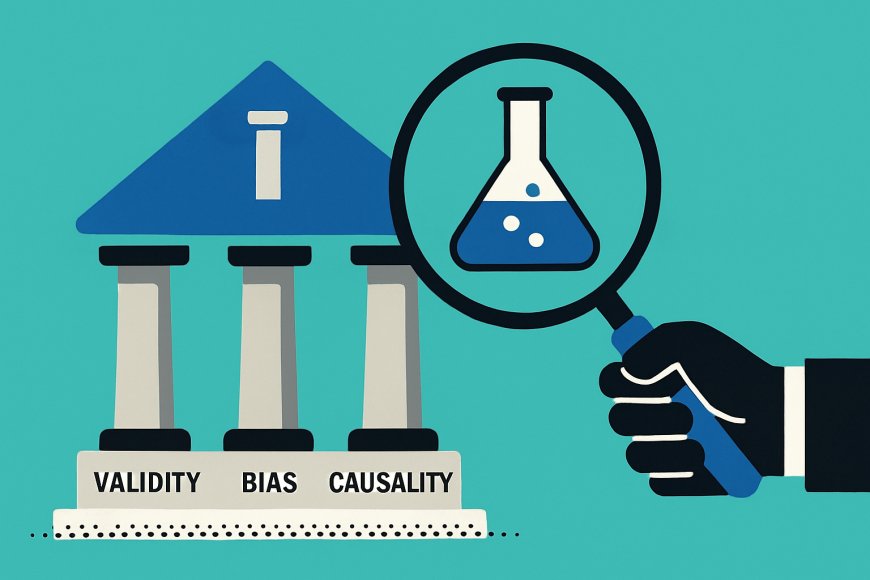
In the world of scientific inquiry, the notion of trust is not merely an abstract ideal. It is a quantifiable construct, critical to the authenticity and reliability of research findings. Consider a behavioral experiment where scientists aim to understand the effects of social isolation on cognitive function. The integrity of such a study is contingent upon its methodological rigor, underscoring the importance of clear causality and minimized bias. Without these, conclusions drawn might falter under scrutiny, rendering them less credible.


Authenticity in research hinges upon stringent adherence to methodological principles. Validity, bias, and causality form the triad of effective and trustworthy scientific investigation. These concepts, while traditionally understood in a theoretical context, manifest tangibly in every phase of research. As such, they demand not only comprehension but also active engagement.
Ensuring Validity: The Bedrock of Trustworthy Research
Validity encompasses the precision with which a study reflects the real-world phenomena it seeks to measure. In a typical observational study assessing climate change impacts on biodiversity, the validity of results depends heavily on the design and implementation of data collection methods. Ensuring that samples accurately represent the population is crucial. The employment of robust statistical techniques further bolsters the validity by eliminating extraneous variables that could skew results.
Another critical aspect of validity is experimental or internal validity. This involves tightly controlled conditions to ascertain that observed effects are indeed due to the manipulations rather than external factors. Consider an agricultural study investigating the efficacy of a new fertilizer. Here, the internal validity ensures that the improvements in crop yield are directly attributable to the fertilizer application and not other extraneous influences, like climate conditions.
The challenge of external validity, or generalizability, cannot be overstated in fields such as psychology. For instance, when outcomes from lab-based studies on human behavior are applied to wider populations, the context of the lab setting may limit broader applicability. Rigorous sampling and replication across diverse settings help address these concerns, ensuring that findings maintain validity across contexts.
Bias: The Imperceptible Distorter of Authenticity
Bias represents a pervasive threat to the authenticity of scientific research. This insidious phenomenon can manifest at various levels, be it selection bias, measurement bias, or publication bias. For example, in pharmaceutical research, selection bias may occur when participant samples are not representative of the broader population, skewing efficacy results of a new drug.
Measurement bias arises when instruments or procedures used to collect data favor certain outcomes. A classic case involves the underreporting of dietary intake in nutritional studies, leading to skewed understanding of correlations between diet and health outcomes. Corrective measures, such as cross-validation with alternative data sources, are essential to mitigate such biases.
Publication bias, often driven by the preference for positive results, distorts the scientific literature landscape, impeding the authenticity of what is considered evidence. A meta-analytical approach, which aggregates data from multiple studies, can illuminate hidden biases and provide a more balanced view of research findings.
Causality: The Guiding Principle of Scientific Inquiry
Causality is the linchpin that guides scientific inquiry towards meaningful conclusions. It is the difference between correlation and causation, the latter being the more rigorous and informative relationship. In a study on economic policies' impact on poverty reduction, establishing causality verifies that observed changes in poverty levels are indeed the result of policy interventions.
Randomized controlled trials (RCTs) are often heralded as the gold standard for establishing causality. These trials, through random assignment and control groups, minimize confounding variables, thus allowing for a clear attribution of effects to the intervention in question. However, fields like sociology or ecology frequently rely on non-experimental data, where establishing causality requires sophisticated statistical methods such as propensity score matching or instrumental variable analysis.
The quest for causality extends to complex systems, where multiple interdependencies blur straightforward cause-effect relationships. Consider an ecological study exploring the interplay between predator-prey dynamics and environmental changes. Causality here is multi-layered, requiring nuanced models that account for feedback loops and non-linear interactions.
The journey towards authentic and trustworthy scientific inquiry is ongoing. As methodologies evolve, so too must the frameworks that support trust in research. Rigorous adherence to principles of validity, bias reduction, and causality remains crucial, serving as the foundation upon which credible scientific knowledge is constructed.
The future of scientific research holds promise as it embraces new methodologies and technologies. However, this advancement must not overshadow the core principles that ensure research authenticity and trust. As researchers continue to refine their methods, the architecture of trust within scientific inquiry will only become stronger, fostering a deeper understanding and appreciation of the intricate dance between knowledge and discovery.
What's Your Reaction?